Metering – Instrument Projects

Arduino String Instrument

Arduino String Instrument

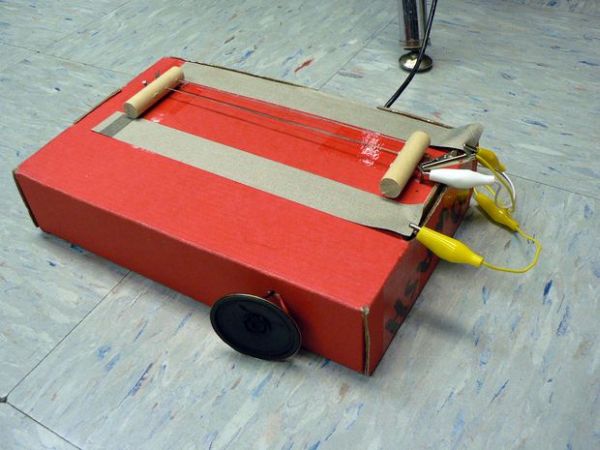
Sure you can use LDR’s, potentiometers and buttons to generate sounds, but what about strings? When I began thinking about an Arduino string instrument, I realized what I wanted to create was a soft potentiometer.  I found my inspiration from Hannah Perner-Wilson’s Fabric Potentiometer http://www.kobakant.at/DIY/?p=543. Step 1: Parts Step 2: How it Works Each string is […]

Arduino String Instrument Continue Reading

Arduino Board Water Meter

DIY Arduino Board Water Meter

Working with the interaction design team, a bunch of us at Teague have been tinkering with measuring water, analyzing usage data in realtime to affect behaviors, and storing it to see patterns over time. At the heart of the exploration was a need to cheaply measure water from the tap.  Water meters vary quite drastically in price

DIY Arduino Board Water Meter Continue Reading

Arduino Memsic 2125 Accelerometer

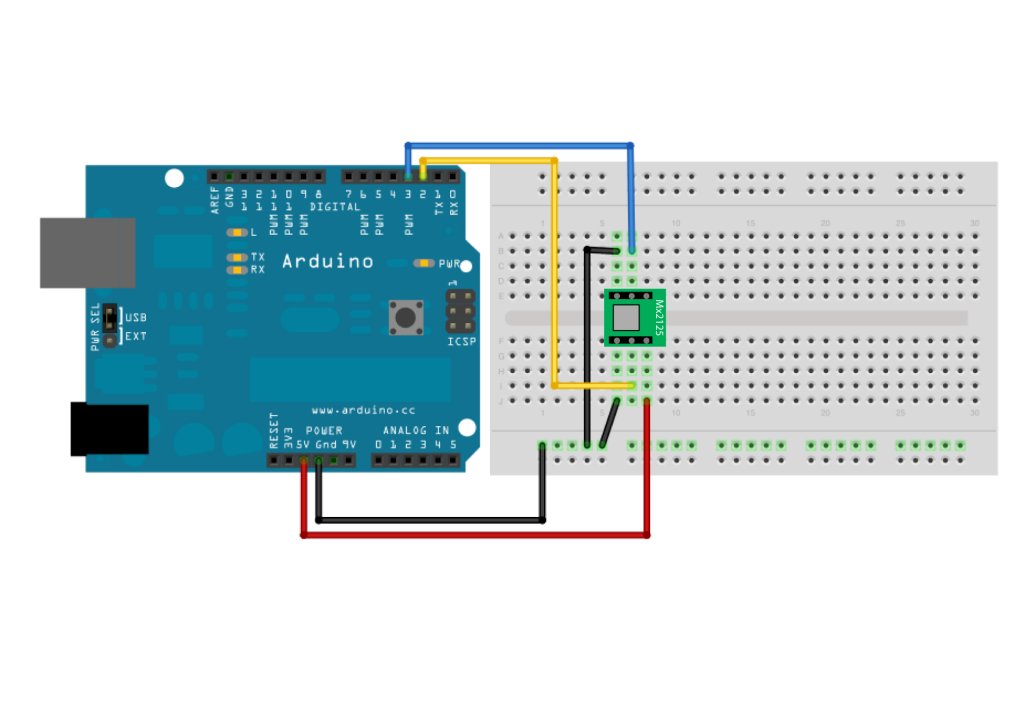
Memsic 2125 Accelerometer using Arduino

The Memsic 2125 (datasheet) is a two-axis accelerometer capable of measuring acceleration up to plus or minus 2g. It has a simple digital interface: two pins (one for each axis) emit pulses whose duration corresponds to the acceleration of that axis. By measuring the length of that pulse, in microseconds, using the Arduino’s pulseIn() function,

Memsic 2125 Accelerometer using Arduino Continue Reading

Arduino Quasi real time oscilloscope

Quasi real-time oscilloscope using Arduino

Recently I was reviewing one of my oldest project, and decided to “refresh” previous design by taking full advantage of the new arduino Leonardo board.  Based on AtMega32U4, which include PGA (programmable gain amplifier), oscilloscope’s  analog front end doesn’t require external OPA this time, end could be build in 1-2 hours on prototype board, using

Quasi real-time oscilloscope using Arduino Continue Reading

Tactile Feedback Compass Belt

How to Make a Tactile Feedback Compass Belt

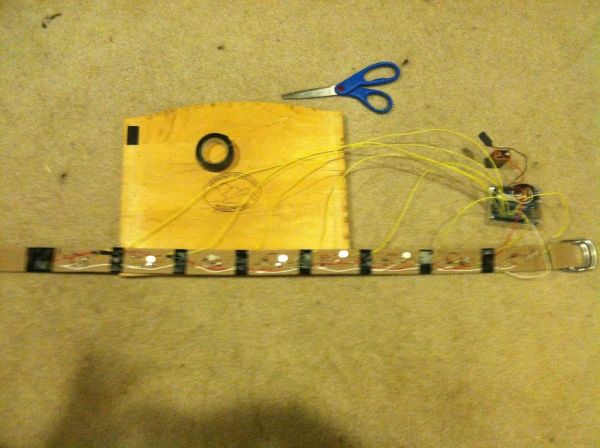
Have you ever wondered how migratory birds manage to have such an amazing sense of direction despite being so generally clueless? They can sense the Earth’s magnetic field with what is basically a compass built into their body. Wouldn’t it be cool to feel what that’s like? The following instructions are loosely based off of

How to Make a Tactile Feedback Compass Belt Continue Reading

Scroll to Top