
Arduino Programmer Projects

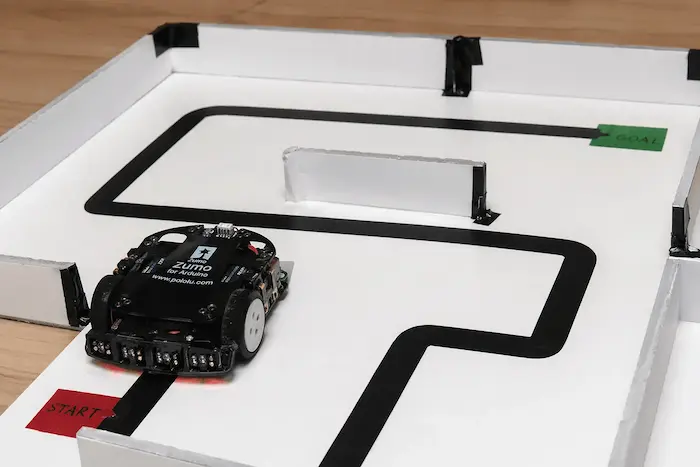
Zumo robot solving maze on marked track

Arduino Zumo Robot Maze Solver using Arduino Uno with Proteus Simulation

Introduction The Arduino Zumo Robot Maze Solver is a smart microcontroller project built around the Arduino Uno and simulated in Proteus. Its job is simple but impressive: the robot moves through a maze, detects the correct route, and then finds the shortest path to the goal. This makes it a strong learning project for anyone […]

Arduino Zumo Robot Maze Solver using Arduino Uno with Proteus Simulation Continue Reading
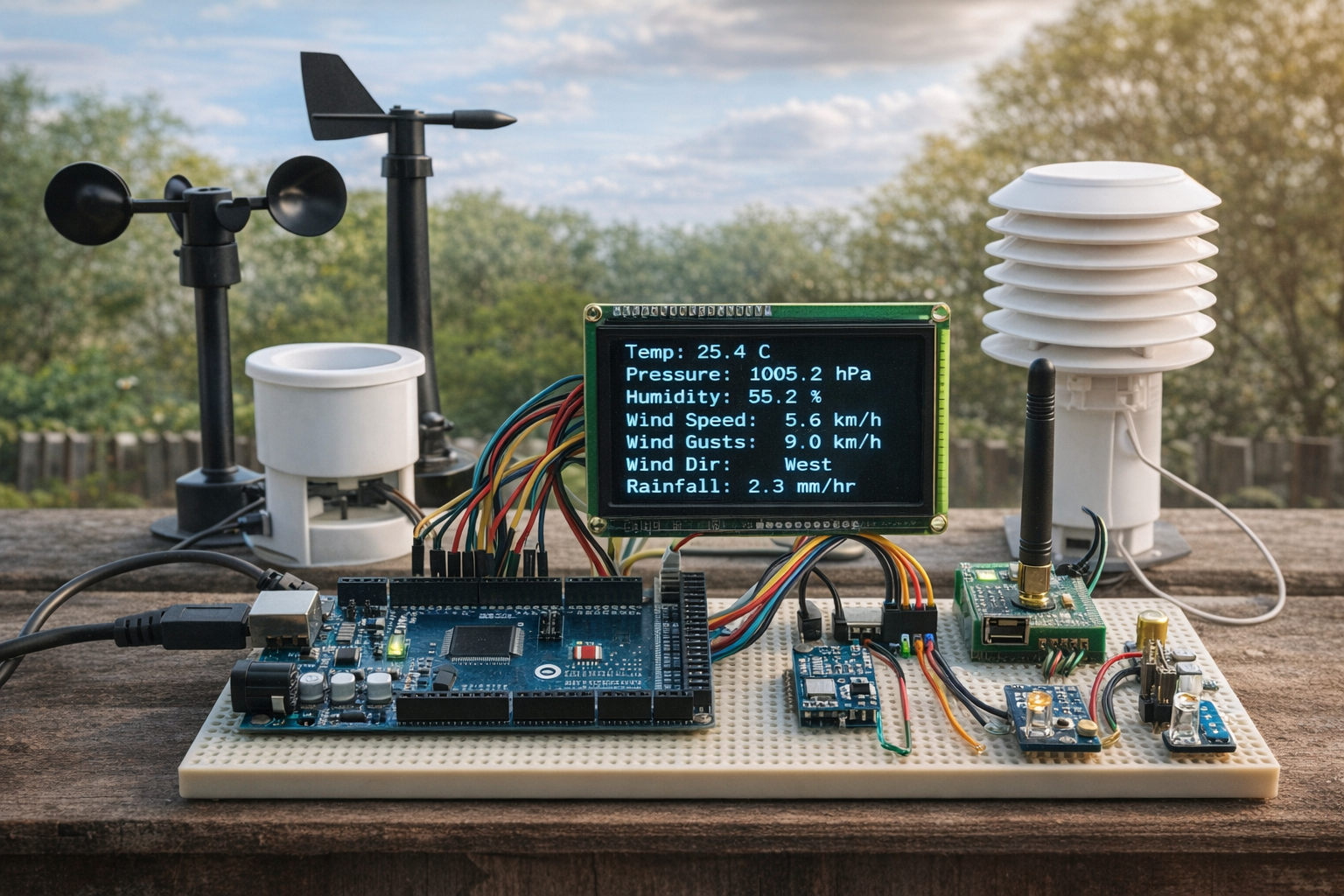
Arduino Mega IoT weather station with sensors

Basic Weather Station using Arduino Mega with Proteus Simulation

Introduction Building a microcontroller project like a weather station is one of the best ways to understand real-world embedded systems and IoT-based monitoring. This project demonstrates a Basic Weather Station using the Arduino Mega, simulated entirely in Proteus simulation software. The system collects environmental data such as temperature, humidity, pressure, wind speed, wind direction, and

Basic Weather Station using Arduino Mega with Proteus Simulation Continue Reading
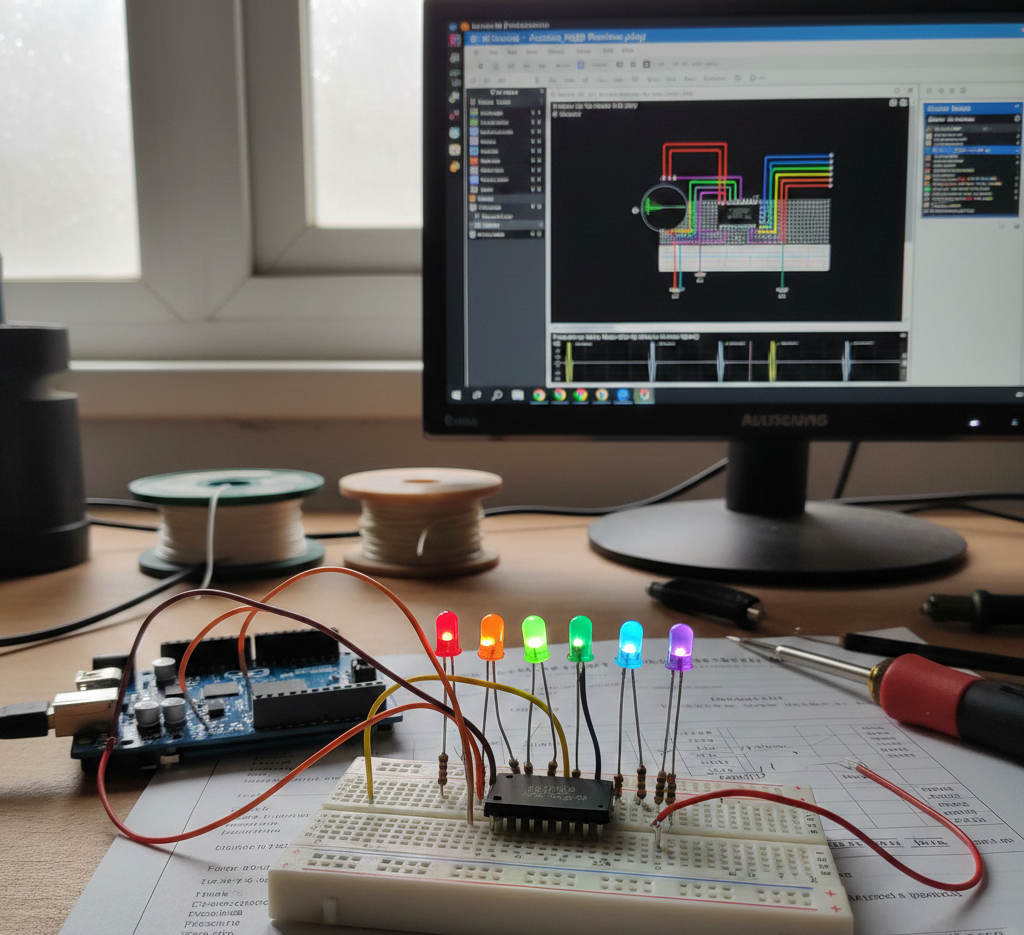
Arduino RGB Proteus simulation showing RGB LED rainbow

Arduino & RGB Common Cathode LED Rainbow using ATmega328P with Proteus Simulation

Introduction This microcontroller project demonstrates how to create smooth RGB color transitions using an Arduino-compatible ATmega328P and a common cathode RGB LED.By leveraging PWM (Pulse Width Modulation), the project generates a continuous rainbow-style lighting effect that cycles through multiple color combinations.It’s a great example of how embedded systems handle LED brightness control in practical electronics.The

Arduino & RGB Common Cathode LED Rainbow using ATmega328P with Proteus Simulation Continue Reading
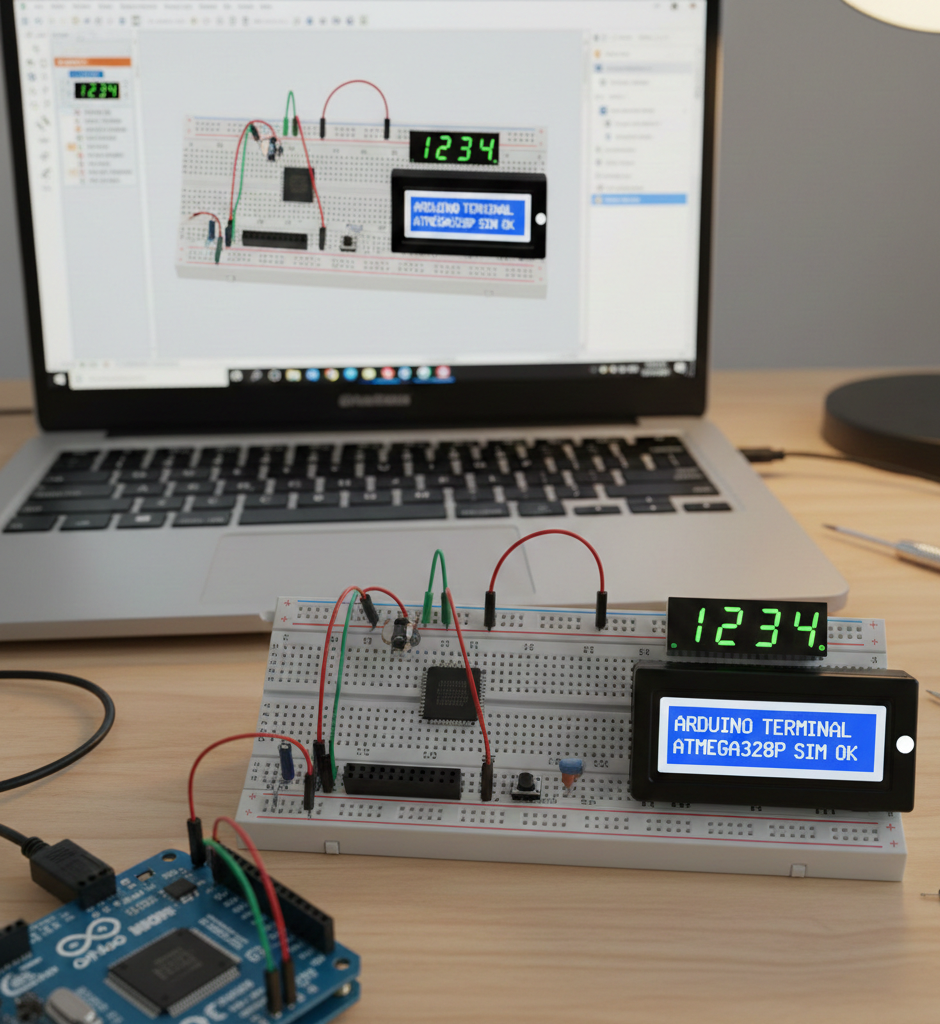
Arduino 7 segment display controlled via Proteus simulation

Arduino 7-Segment & Terminal using ATmega328P with Proteus Simulation

Introduction This microcontroller project demonstrates how to control a 7-segment display using an Arduino (ATmega328P) and a 74HC595 shift register, with input coming directly from a serial terminal.By typing numbers (0–9) into the serial monitor, the corresponding digit instantly appears on the 7-segment display.The project is simple, practical, and ideal for learning how serial communication,

Arduino 7-Segment & Terminal using ATmega328P with Proteus Simulation Continue Reading
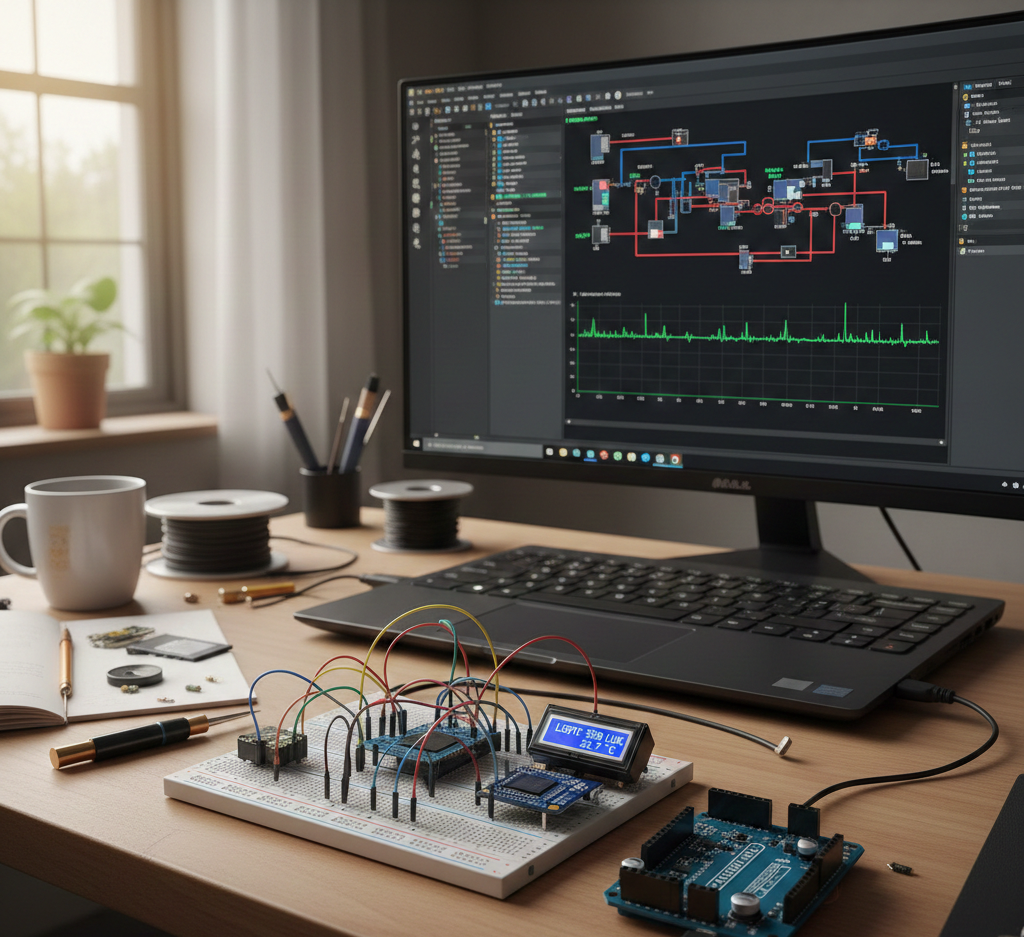
ATmega328P based Arduino Light and Temperature Data Logger Proteus Simulation

Arduino Light & Temperature Logger using ATmega328P with Proteus Simulation

Introduction This Arduino Light & Temperature Logger is a practical microcontroller project designed to monitor environmental conditions and store them for later analysis. Using an ATmega328P, a data logger shield, and Proteus simulation, the system records light intensity and temperature along with accurate timestamps.It’s a great example of embedded systems working together with sensors, real-time

Arduino Light & Temperature Logger using ATmega328P with Proteus Simulation Continue Reading
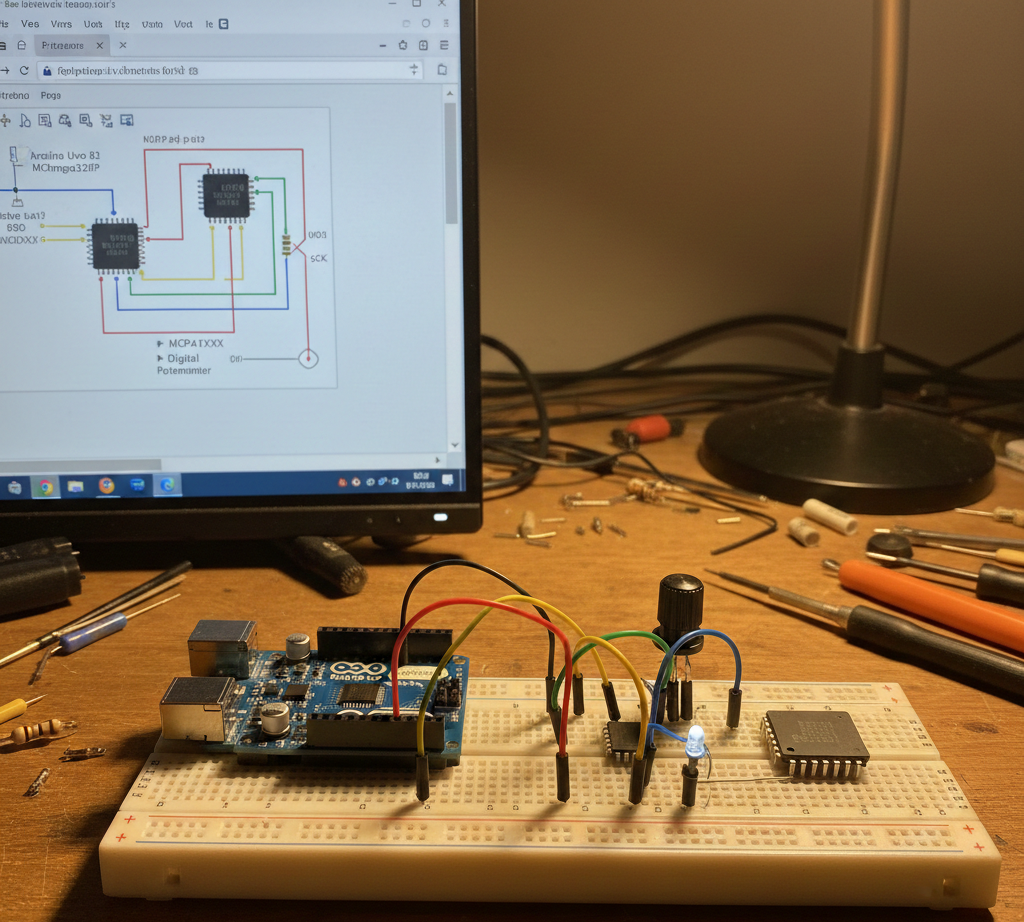
Arduino 328 and SPI Pot using ATmega328P with Proteus Simulation

Introduction This microcontroller project demonstrates how an Arduino (ATmega328P) controls an SPI-based digital potentiometer using a Proteus simulation. Instead of turning a physical knob, resistance values are changed digitally through SPI commands. This is a practical embedded systems example that shows how digital control can replace analog components. It’s especially useful for learners exploring Proteus

Arduino 328 and SPI Pot using ATmega328P with Proteus Simulation Continue Reading
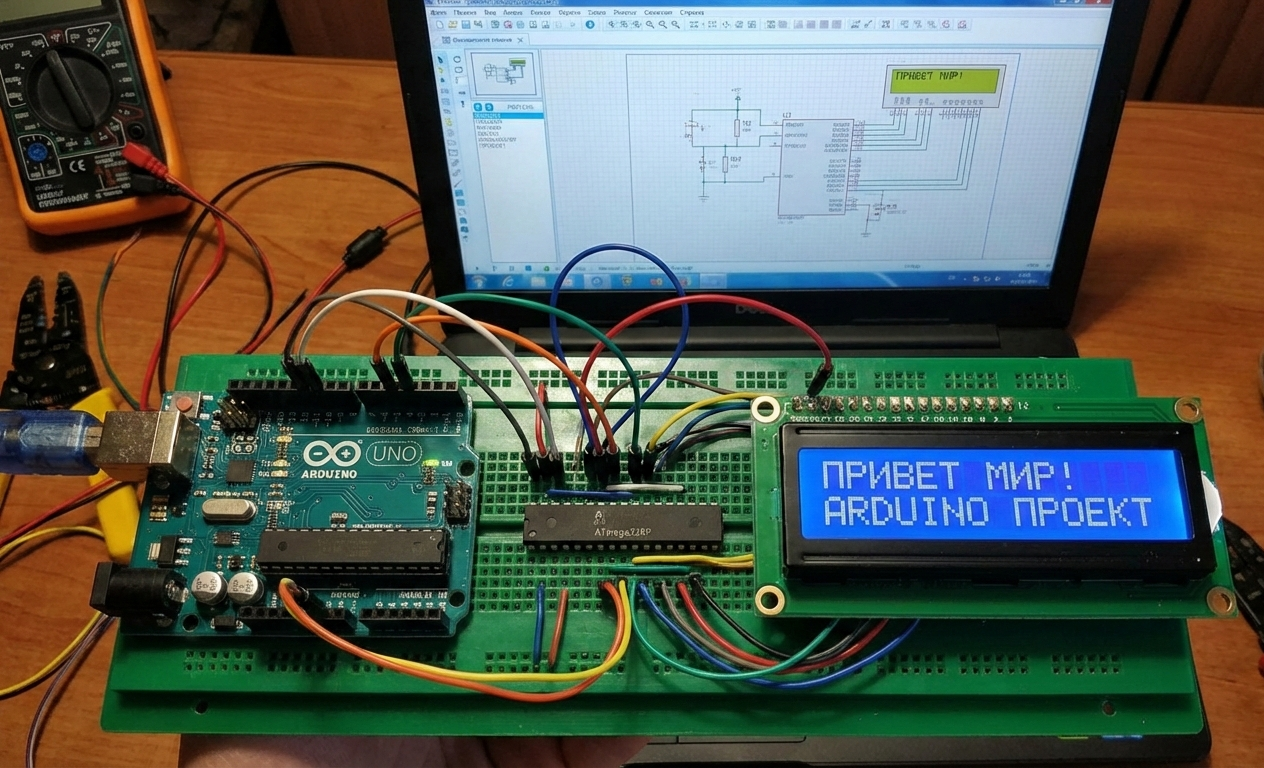
Cyrillic LCD Arduino Proteus simulation with LCD shield

Arduino with Cyrillic LCD using ATmega328P with Proteus Simulation

Introduction Displaying non-English characters on standard LCDs is a common challenge in embedded systems. This microcontroller project demonstrates how to use an Arduino (ATmega328P) with an LCD that supports a Cyrillic character set, fully tested in Proteus simulation.The project shows how national characters can be rendered correctly using character recoding, making it useful for multilingual

Arduino with Cyrillic LCD using ATmega328P with Proteus Simulation Continue Reading
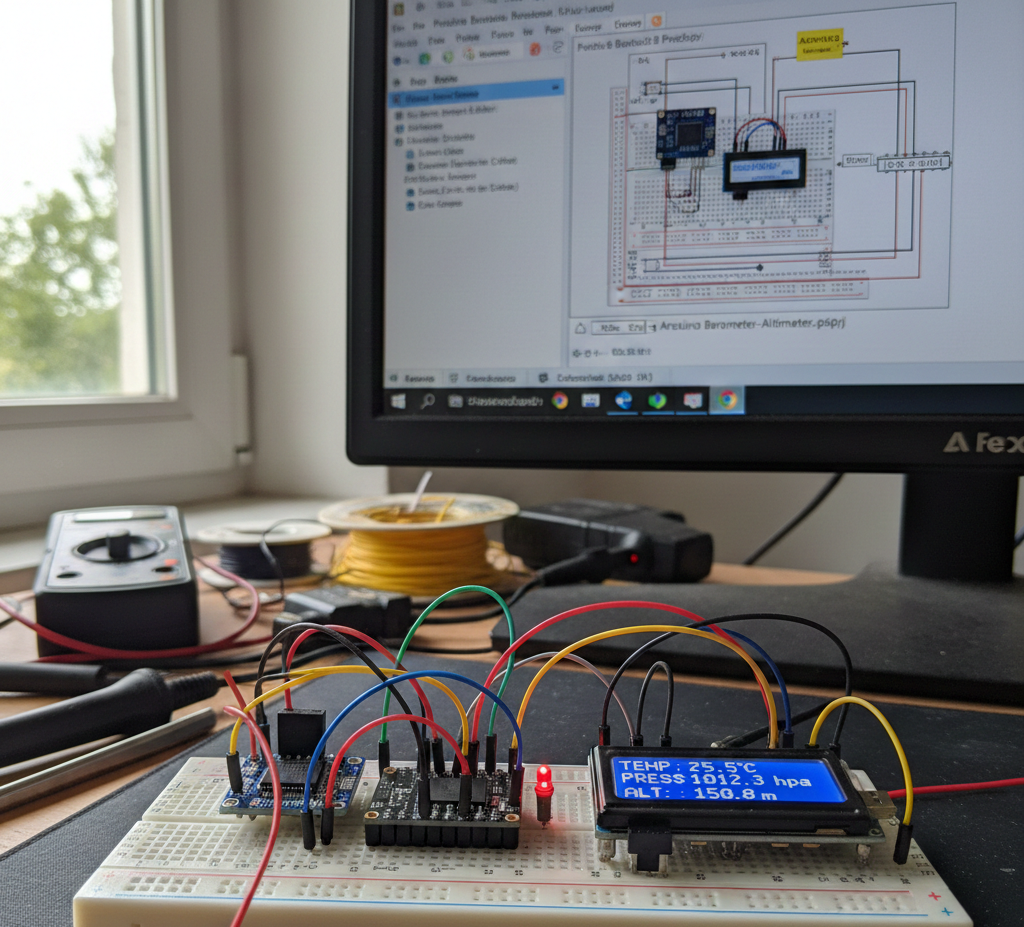
Arduino Barometer, Thermometer & Altimeter using ATmega328P with Proteus Simulation

Introduction This microcontroller project demonstrates a simple barometer, thermometer, and altimeter using an Arduino (ATmega328P) and the Bosch BMP180 pressure sensor.The system measures atmospheric pressure, temperature, and altitude and displays results via the serial monitor during Proteus simulation.It’s a practical embedded systems example showing I2C sensor interfacing, real-time data acquisition, and environmental sensing.This Arduino BMP180

Arduino Barometer, Thermometer & Altimeter using ATmega328P with Proteus Simulation Continue Reading
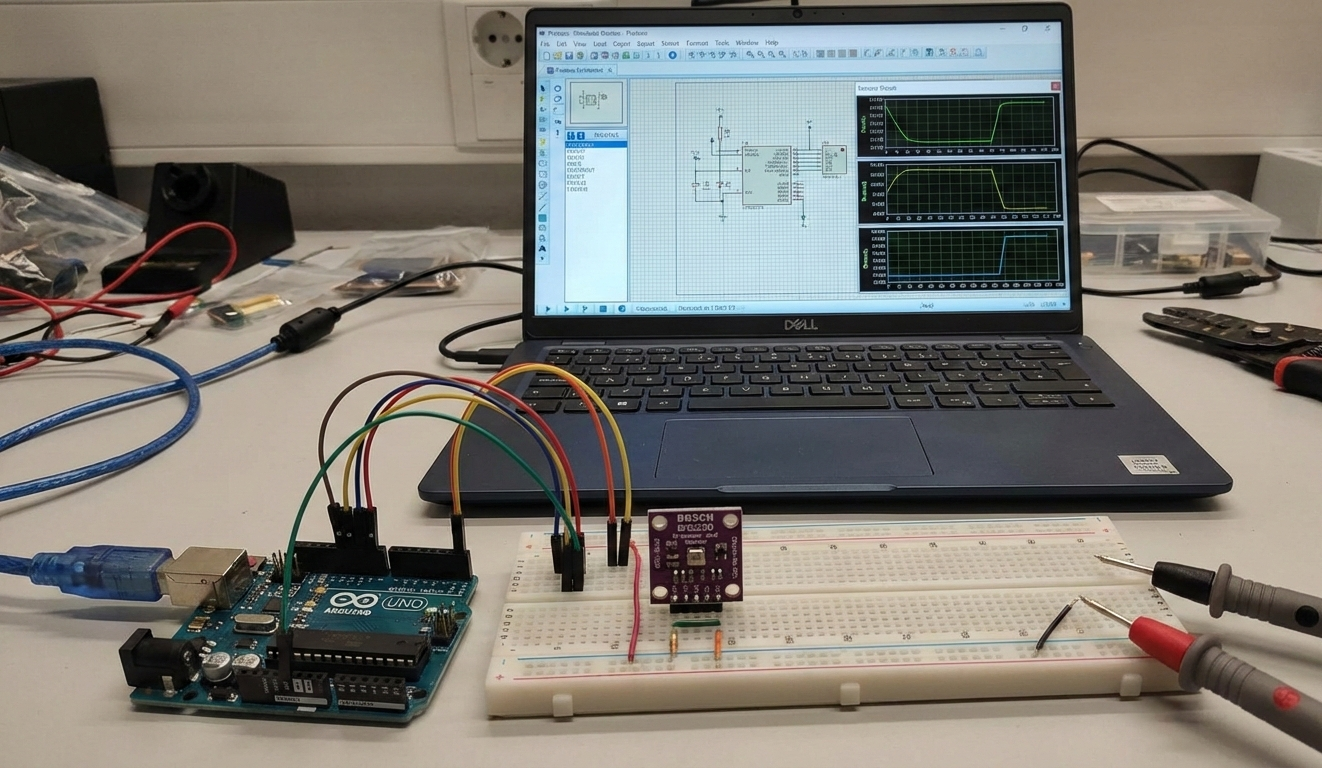
SPI-Based BME280 Sensor Interface using Arduino Uno with Proteus Simulation

Introduction This microcontroller project demonstrates how to interface a Bosch BME280 pressure, temperature, and humidity sensor with an Arduino Uno using SPI communication inside a Proteus simulation environment.The project focuses on practical electronics and embedded systems learning by combining real-world sensor data with virtual circuit testing.Using Proteus simulation, the system allows safe validation of firmware

SPI-Based BME280 Sensor Interface using Arduino Uno with Proteus Simulation Continue Reading
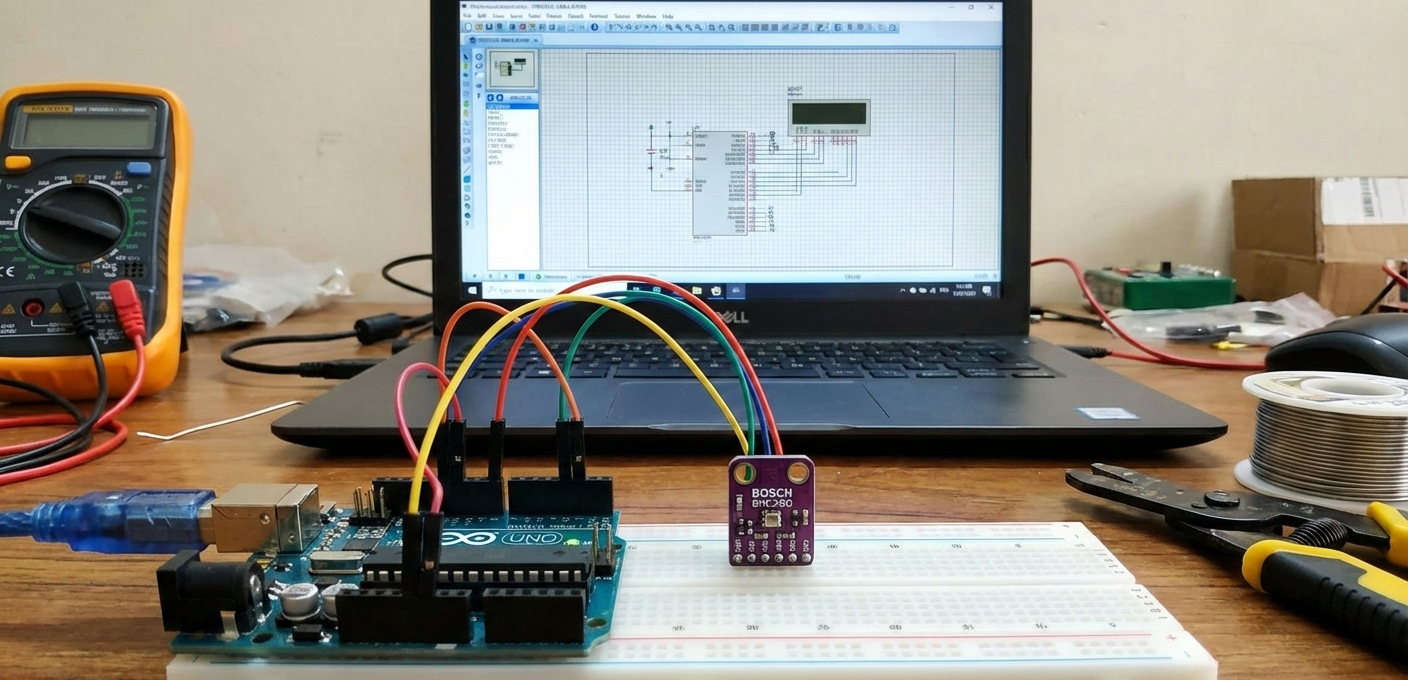
Arduino with Bosch BME280 Pressure Transducer using Arduino Uno with Proteus Simulation

Introduction This microcontroller project demonstrates how to interface a Bosch BME280 environmental sensor with an Arduino Uno using Proteus simulation. The system measures temperature, humidity, pressure, and calculated altitude and displays the results via serial output.It is a practical embedded systems example ideal for learning sensor communication, I²C protocols, and real-world data acquisition.This project is

Arduino with Bosch BME280 Pressure Transducer using Arduino Uno with Proteus Simulation Continue Reading

Scroll to Top