Electronics News Updates

Axiomtek COM Express Type 7 module is powered by Intel Xeon

Axiomtek COM Express Type 7 module is powered by Intel Xeon

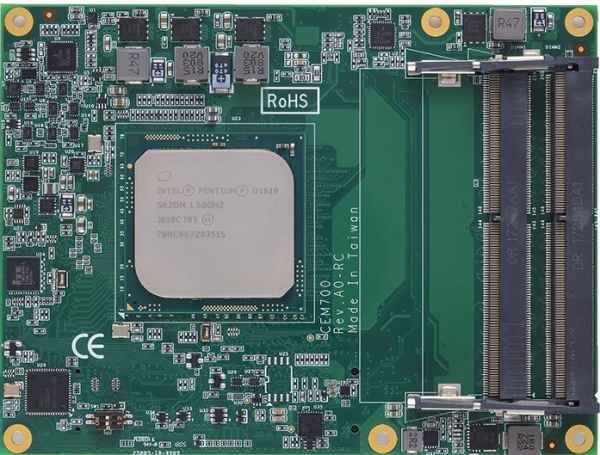
Axiomtek has unveiled the CEM700, its first COM Express Type 7 module with 5th Gen Intel Xeon or Pentium CPUs, 2x 10GBASE-KR, 2x SATA III, a lot of PCIe, extended temperature support, and a new Type 7 carrier board. The CEM700 offers processor options from the 16-core Intel Xeon D-1577 and quad-core Pentium D1519 processors

Axiomtek COM Express Type 7 module is powered by Intel Xeon Continue Reading
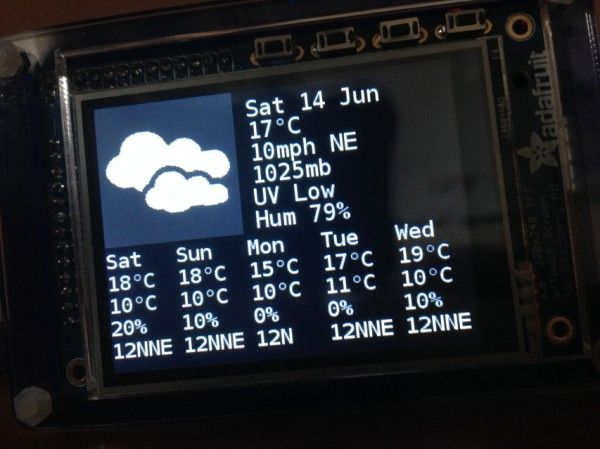
PiTFT Weather Station

PiTFT Weather Station

More tinkering with the wonderful Adafruit 2.8″ Touchscreen TFT module (PiTFT) for the Raspberry Pi.  This time a weather station drawing data from weather.com. Luckily there’s a wonderful python module to extract data from three popular weather services; python-weather-api supports NOAA, Yahoo! Weather and weather.com.  This makes life so much easier. Download the module and install

PiTFT Weather Station Continue Reading

PID Theory Explained

PID Theory Explained

Overview Proportional-Integral-Derivative (PID) control is the most common control algorithm used in industry and has been universally accepted in industrial control. The popularity of PID controllers can be attributed partly to their robust performance in a wide range of operating conditions and partly to their functional simplicity, which allows engineers to operate them in a

PID Theory Explained Continue Reading

AUDIO AMPLIFIER BOARD SUPPORTS BEKEN BK3266 BLUETOOTH 5.0 CHIP

AUDIO AMPLIFIER BOARD SUPPORTS BEKEN BK3266 BLUETOOTH 5.0 CHIP

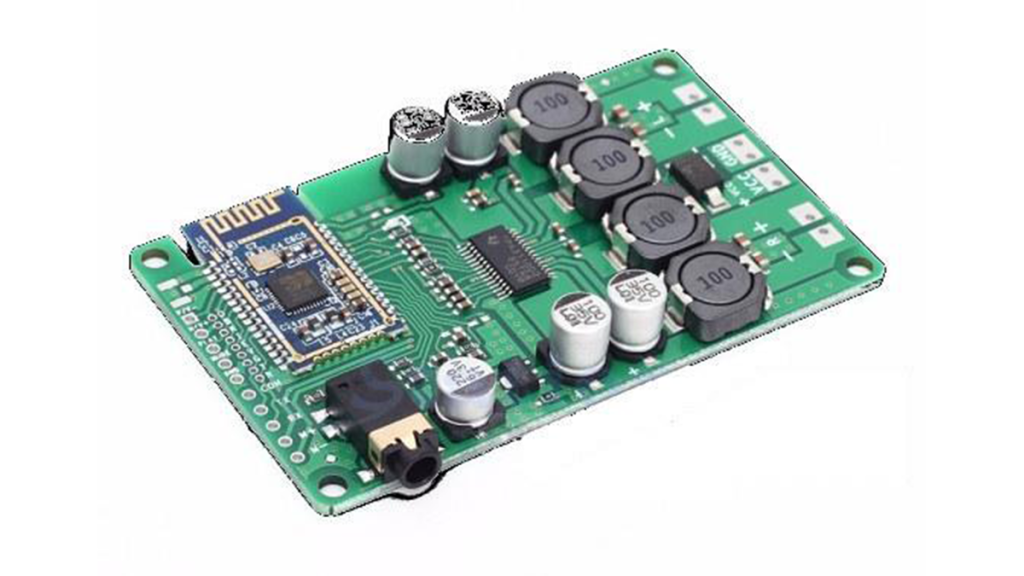
IC station has posted a $10.59 audio amplifier board that supports Bluetooth 5.0 via Beken BK3266 Bluetooth audio chip. For the board to work, you will have to connect buttons, a microphone and 10W or 15W speakers. The hardware setup has to be completed with a power source and an optional input audio signal. After setting it up, the board

AUDIO AMPLIFIER BOARD SUPPORTS BEKEN BK3266 BLUETOOTH 5.0 CHIP Continue Reading

Audible Frequency Chirp Sonar with the Stellaris Launchpad

Audible Frequency Chirp Sonar with the Stellaris Launchpad

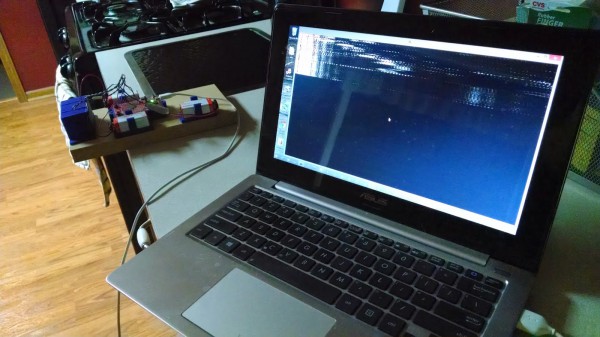
Over the last year I’ve been working towards an underwater sonar system for ROVs and surface boats. In order to learn the basic signal processing required to detect the echoes, I initially got a simple sonar working in air with a desktop conferencing USB speaker/mic running on Windows. A writeup, including source, is here. That article

Audible Frequency Chirp Sonar with the Stellaris Launchpad Continue Reading

The Art of Representing Floating Point Numbers as Integers

The Art of Representing Floating-Point Numbers as Integers

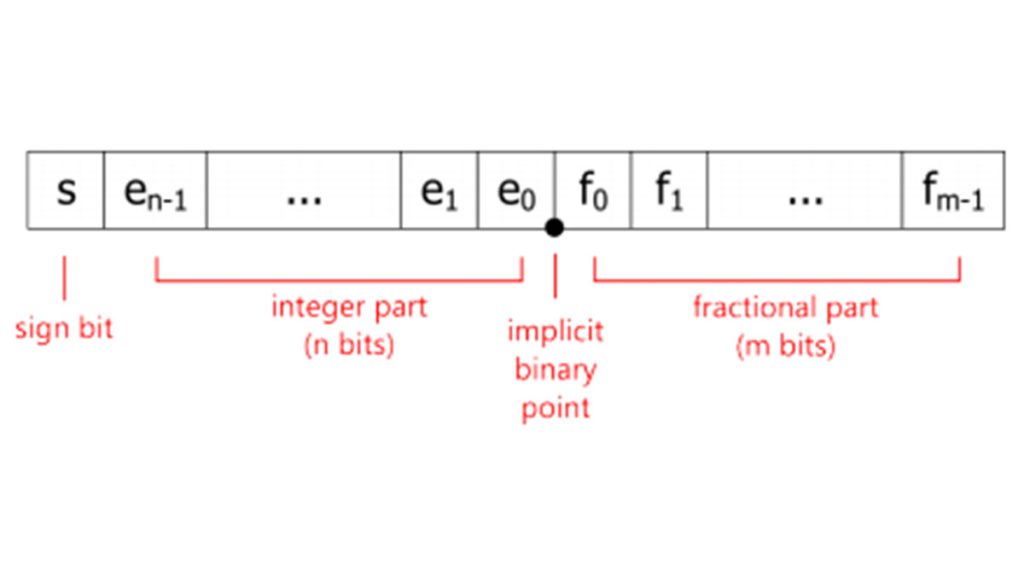
Have you been using float or double variables to perform mathematical operations on embedded systems without a Floating-Point Unit (FPU)? You are doing it wrong! That’s incredibly inefficient. Use fixed-point representation instead. An FPU is an hardware block specially designed to carry on arithmetic operations on floating point numbers. Even though the C/C++ code may work without an

The Art of Representing Floating-Point Numbers as Integers Continue Reading

The Nanite 85

The Nanite 85

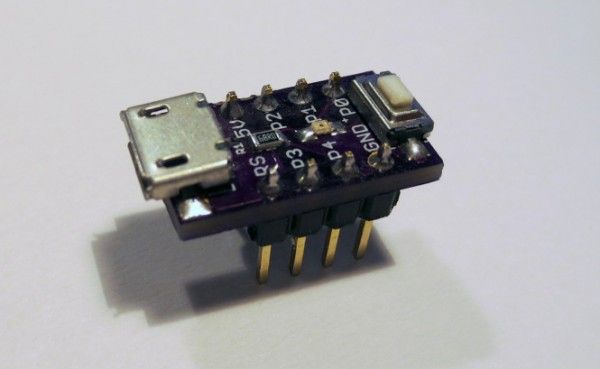
Recently, Olimex anncounced the Olimexino 85s, claimed to be the “World’s smallest Arduino ever“. Now, that looks like a challenge. I guess it is about time to show off what has been on my desk since some time last year: The Nanite, pictured below. I designed this board for fun after the Digispark and, subsequentally,

The Nanite 85 Continue Reading

Arduino VFD Display Clock Tutorial A Guide To VFD Displays

Arduino VFD Display Clock Tutorial – A Guide To VFD Displays

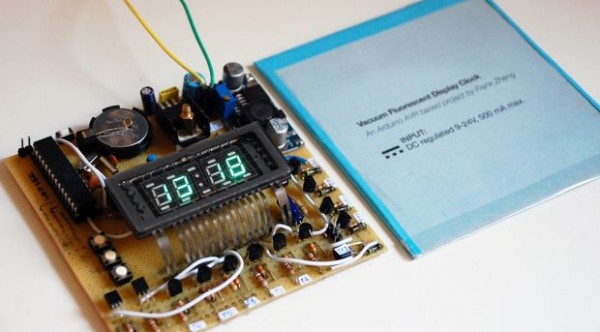
Do you (still) remember the display of your old CD player, HiFi system or car radio? Have you ever noticed the displays used at your local supermarket that shows you the scanned item and the price of it? These displays have a characteristic beautiful bright blue-green colored glow in common: These are so called vacuum

Arduino VFD Display Clock Tutorial – A Guide To VFD Displays Continue Reading

“SWORDTAIL” I.MX6 SBC OFFERS NIMBLELINK CELLULAR EXPANSION

“SWORDTAIL” I.MX6 SBC OFFERS NIMBLELINK CELLULAR EXPANSION

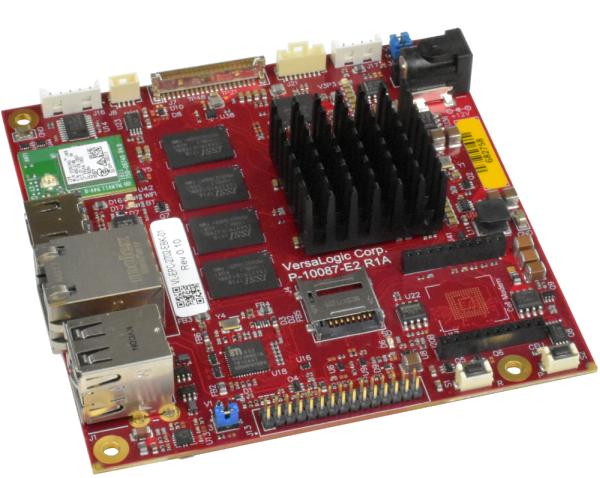
Low power Arm-based i.MX6 Cortex®-A9 processor with soldered-on RAM, Gigabit Ethernet, Wi-Fi, Bluetooth® and fanless operation. The Swordtail single board computer is a complete Wi-Fi and Bluetooth®enabled, Arm®-based embedded computer. Models are available with power-efficient, dual-core or quad-core i.MX6 CPUs. These boards are designed for applications that demand rugged, power-efficient solutions such as industrial machine automation, transportation, medical, kiosk, and industrial IoT applications. Swordtail boards

“SWORDTAIL” I.MX6 SBC OFFERS NIMBLELINK CELLULAR EXPANSION Continue Reading

Scroll to Top