
Summary of QBEE.IO ALLOWS YOU TO MANAGE ALL YOUR EMBEDDED LINUX -BASED IOT DEVICES FROM ONE DASHBOARD
qbee.io, by Norway-based qbee AS, is a unified platform for managing embedded Linux IoT devices, backed by Innovation Norway and Simula Innovations. It provides remote access (SSH, port mapping, VPN over HTTPS), security (CVE checks, library updates, user/password audits, SSH key rotation, closing incoming ports), automation, and device monitoring—aiming to simplify secure, up-to-date, remotely accessible device fleets even behind firewalls and NATs.
Parts used in the qbee.io Project:
- qbee.io platform (software)
- Embedded Linux-based IoT devices
- SSH protocol
- VPN over HTTPS (port 443)
- Port mapping (e.g., ports 80, 443, 1880)
- Node-RED (example service on port 1880)
- VNC (example remote desktop service)
- Firmware libraries and CVE vulnerability database
- User account and password management tools
- SSH key rotation tools
As the number of IoT devices increases, managing them all to keep online, secure, updated with the latest firmware, and remotely available, at all times, even when deployed behind firewalls and NATs, becomes quite the task. While quite a number of solution exists to some of these problems, they all usually have challenges like; the solution addressing just one or two problems or requiring technical know-how/skills (software or hardware) that could be expensive/scarce. To provide a holistic solution to this remote device management related problems, Norway-based qbee AS, launched its platform qbee.io.
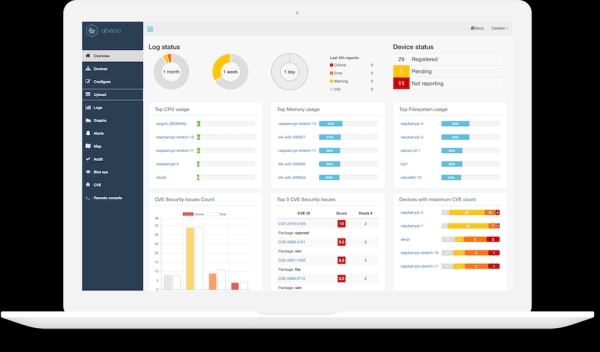
The platform, which as a venture is backed by Innovation Norway and Simula Innovations, is designed to help users achieve four major things including; remote access, security, automation, and device monitoring.
For remote access, qbee.io allows connections over SSH but it can also map any other port such as web servers on 80/443 and Node-Red on 1880 or VNC. Out of the box, qbee routes all ports through a VPN connection using https on port 443. Its remote access features always draw a comparison with the TeamViewer IoT agent which doesn’t have some of the other features.
For Security, qbee performs actions like; check firmware libraries for CVE vulnerabilities, checks if newly updated libraries are available and make suggestions on upgrades, check which users are active and how old the passwords are (people tend to forget to remove pre-configured support accounts), rotate ssh keys, and close all incoming ports (ssh is routed through VPN). All of these actions and more are combined to ensure IoT deployments stay secure.
Read more: QBEE.IO ALLOWS YOU TO MANAGE ALL YOUR EMBEDDED LINUX -BASED IOT DEVICES FROM ONE DASHBOARD
- What problems does qbee.io aim to solve?
qbee.io targets remote access, security, automation, and device monitoring for embedded Linux IoT devices. - How does qbee.io provide remote access to devices behind firewalls and NATs?
qbee.io routes ports through a VPN connection using HTTPS on port 443, allowing SSH and other port mappings. - Can qbee.io map web servers and other services?
Yes, qbee.io can map ports for services such as web servers on 80/443, Node-RED on 1880, and VNC. - How does qbee.io enhance device security?
qbee.io checks firmware libraries for CVE vulnerabilities, suggests library upgrades, audits active users and old passwords, rotates SSH keys, and closes incoming ports. - Does qbee.io support SSH access?
Yes, qbee.io allows SSH connections and routes SSH through its VPN. - How does qbee.io handle library updates and vulnerabilities?
qbee.io checks for CVE vulnerabilities in firmware libraries and checks if updated libraries are available, making upgrade suggestions. - Who backs qbee AS and the qbee.io platform?
qbee AS is backed by Innovation Norway and Simula Innovations. - Is qbee.io comparable to TeamViewer IoT agent?
qbee.io's remote access features draw comparisons to the TeamViewer IoT agent, but qbee.io includes additional features like security checks and automation.
