
Summary of PYROELECTRIC PASSIVE INFRARED (PIR) SENSORS ALLOW FOR EASY INTEGRATION, CONFIGURATION AND MORE DESIGN-IN POSSIBILITIES
KEMET, a Yageo subsidiary, offers thin-film PZT pyroelectric PIR sensors using hybrid MEMS technology for fast, sensitive detection of gas, flame, motion, food, and organic compounds. Packaged as small SMDs with low power consumption, long life (up to 15 years), and resistance to shock, they suit portable, battery-powered, IoT, industrial, consumer, automotive, and medical devices. Industry-standard I2C enables easy plug-and-play connectivity, configuration, tuning, and calibration. Manufactured via standard semiconductor processes, these sensors target growth in the environmental sensor market.
Parts used in the KEMET environmental PIR sensors project:
- Thin-film PZT pyroelectric sensor element
- Hybrid MEMS structure
- Surface-mount device (SMD) packaging
- I2C-compatible communication interface
- Microcontroller (for connectivity and calibration)
- Battery or portable power source (for battery-powered detectors)
- Standard semiconductor manufacturing process components
KEMET (“KEMET” or the “Company”), a subsidiary of Yageo Corporation (“Yageo”), a leading global supplier of electronic components, continues to strengthen its solutions for industrial applications with its range of environmental PIR sensors.
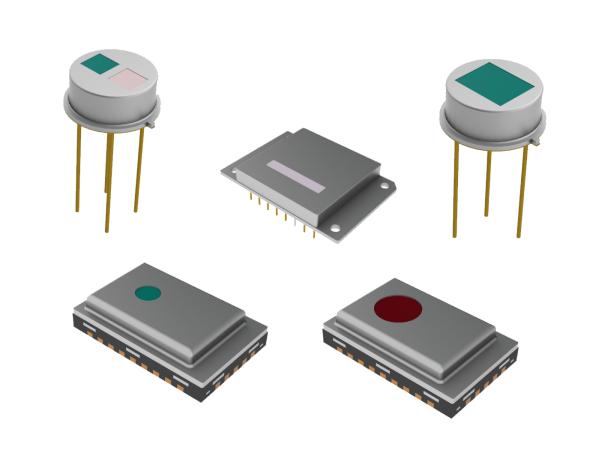
By utilizing the pyroelectric effect, these thin-film PZT sensors have both high sensitivity and fast response times to ensure rapid and accurate detection of gas, flame, motion, food, and organic compounds for industrial automation, lighting, power generation and distribution, among many other applications.
Built with hybrid micro-electromechanical systems (MEMS) technology, these high-quality environmental sensors are packaged in a small surface-mount device (SMD) for use in portable and battery-powered detectors. Their capacity for low power consumption, low maintenance, and low sensitivity to mechanical and thermal shock allows for stable performance and a lifespan of up to 15 years, making them ideal for small, smart, or IoT (Internet of Things) devices in industrial, consumer, automotive and medical applications. Compatibility with industry-standard I2C communication enables plug-and-play connectivity to microcontrollers making these sensors easy to configure, tune, and calibrate.
KEMET’s environmental PIR sensors, which use the standard semiconductor manufacturing process, are well-suited for industrial applications. These components are positioned for growth in the environmental sensor market. According to a 2020 report from 360 Market Updates*, the global environmental sensor market is expected to grow at a CAGR of 5.4 percent from 2020 to 2025 and reach USD 1550.1 million by 2025.
- What detection capabilities do KEMET environmental PIR sensors have?
They detect gas, flame, motion, food, and organic compounds using the pyroelectric effect. - How are KEMET PIR sensors packaged for use?
They are packaged in a small surface-mount device (SMD) for portable and battery-powered detectors. - Can KEMET PIR sensors be used in IoT devices?
Yes, their low power consumption and long lifespan make them ideal for small, smart, or IoT devices. - Do these sensors support standard communication protocols?
Yes, they are compatible with industry-standard I2C communication for plug-and-play connectivity. - What manufacturing process is used for KEMET environmental PIR sensors?
They use the standard semiconductor manufacturing process. - How long is the lifespan of these PIR sensors?
The sensors can have a lifespan of up to 15 years. - Are the sensors resistant to mechanical and thermal shock?
Yes, they have low sensitivity to mechanical and thermal shock, allowing for stable performance. - What applications are these environmental PIR sensors suited for?
They are suited for industrial automation, lighting, power generation and distribution, consumer, automotive, and medical applications. - Why are these sensors positioned for market growth?
They target the expanding environmental sensor market, which was projected to grow to USD 1550.1 million by 2025.
