
Summary of MKR1000 Connecting to the WiFi (3 steps)
This article explains how to connect an Arduino MKR1000 to WiFi by installing the WiFi101 library. It assumes the board is already set up and a sketch uploaded. The process involves downloading the library from GitHub, adding it to the Arduino IDE, and running a provided code example that scans for available networks every ten seconds without connecting.
Parts used in the MKR 1000 WiFi Connection:
- Arduino MKR1000
- Arduino IDE
- WiFi101 Library
How to connect the Arduino MKR 1000 with the WiFi.
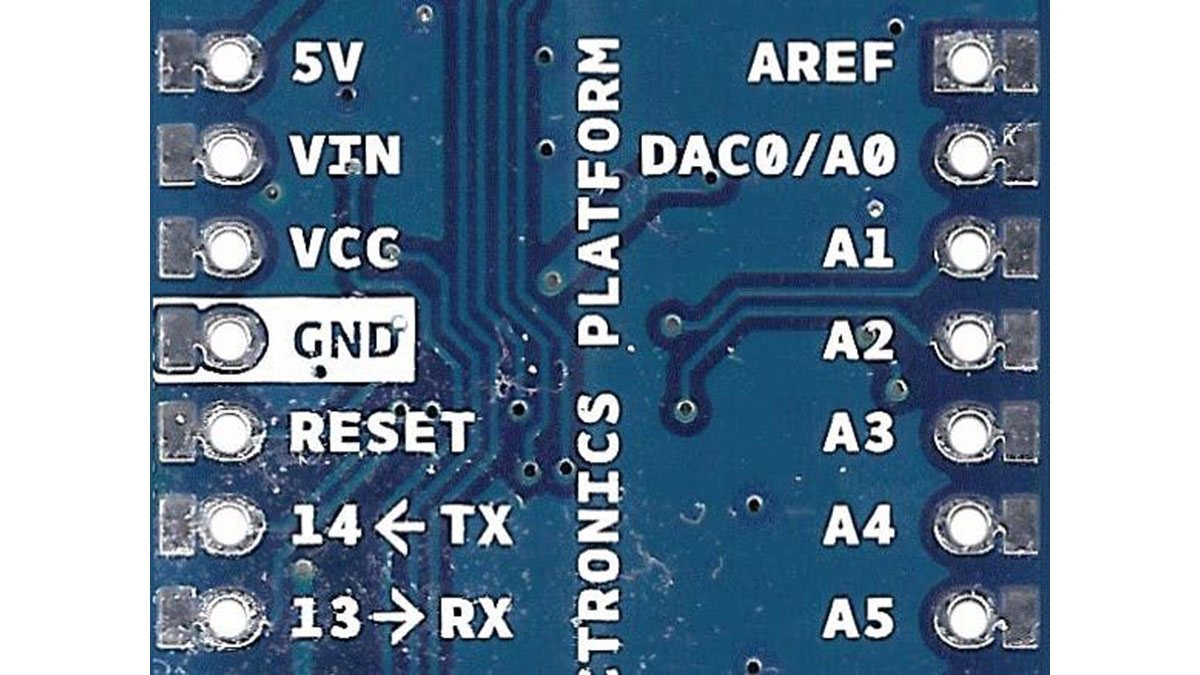
Things used in this project
Hardware components |
||||||
 |
|
× | 1 | |||
Software apps and online services |
||||||
 |
|
|||||
Story
How to connect the MKR 1000 with the WiFi? – It’s easier than you think.
The article will be helpfull only if you are already set up your MKR1000 board and if you are succesfully uploaded any custom sketch. If not, just read THIS article first.
So, let’s start!
1. Go to https://github.com/arduino-libraries/WiFi101
2. Download this repository as a .ZIP library
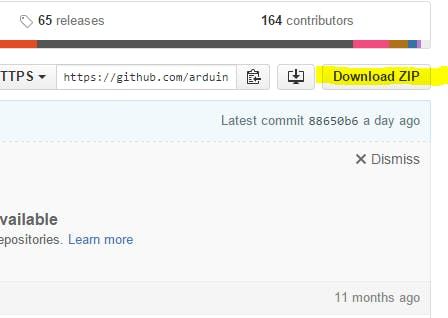
3. Add the library into your IDE
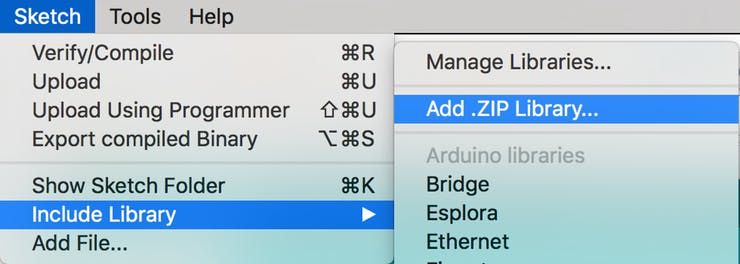
That’s it!
So, let’s test it with the following sketch.
Enjoy! 🙂
Code
- What is the first step to connect the MKR 1000 with WiFi?
Navigate to https://github.com/arduino-libraries/WiFi101. - How do I download the required library?
Download the repository as a .ZIP file. - Where should I add the downloaded library?
Add the library into your Arduino IDE. - Does the example sketch actually connect to a network?
No, it does not connect to any network so no encryption scheme is specified. - How often does the code scan for networks?
The code scans for existing networks every ten seconds. - What information does the printMacAddress function display?
It prints the MAC address of the Wifi shield. - What happens if the WiFi shield is not present?
The code prints "WiFi shield not present" and stops execution. - Can this code identify different encryption types?
Yes, it can identify WEP, WPA, WPA2, None, or Auto encryption.

scans for available Wifi networks using the Wifi shield.
Every ten seconds, it scans again. It doesn’t actually
connect to any network, so no encryption scheme is specified.