
Summary of DIY Arduino Nano multimeter with LiPo battery, charger and more
This article introduces a DIY multimeter project by Electronoobs, utilizing an Arduino Nano and a 16-bit ADC for precise measurements displayed on a small OLED screen. The device features simple buttons for operation and is housed in a custom 3D-printed casing. Power is supplied by a rechargeable LiPo battery equipped with its own charging module. The project combines these components to create a compact, breadboard-friendly tool suitable for makers.
Parts used in the DIY Arduino Nano Multimeter:
- Arduino Nano
- OLED screen
- Buttons
- 16-bit ADC
- 3D printed casing
- Rechargeable LiPo battery
- Battery charging module
Arduino enthusiasts and makers searching for a new project to keep them busy this weekend may be interested in a new DIY Arduino Nano multimeter created by YouTuber Electronoobs. Using a small OLED screen in combination with the Arduino Nano together with a couple of buttons and 16-bit ADC for precise measurements the multimeter has been finished within simple 3D printed casing.
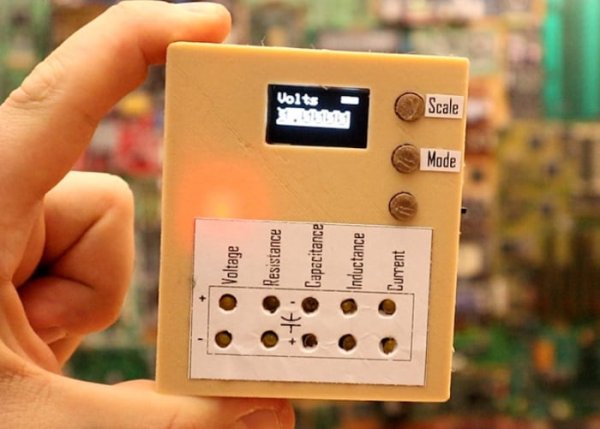
Power to the multimeter is provided by a rechargeable LiPo battery which also includes its very own charging module. Check out the demonstration video below to learn more about the project, its uses and how to build one of your very own.
“The Arduino Nano is a small, complete, and breadboard-friendly board based on the ATmega328 (Arduino Nano 3.x). It has more or less the same functionality of the Arduino Duemilanove, but in a different package. It lacks only a DC power jack, and works with a Mini-B USB cable instead of a standard one. “
Specifications of the Arduino Nano development board which is available to purchase for just €20 are available over on the official Arduino website. For full instructions, schematic’s and code to create your very own jump over to the Electronoobs via the link below.
Source: DIY Arduino Nano multimeter
- What components are used to build the multimeter?
The project uses an Arduino Nano, a small OLED screen, buttons, a 16-bit ADC, a 3D printed casing, a rechargeable LiPo battery, and a charging module. - How is power provided to the multimeter?
Power is provided by a rechargeable LiPo battery which includes its very own charging module. - Can I purchase the Arduino Nano board online?
Yes, the Arduino Nano development board is available to purchase for just €20. - Where can I find full instructions and code?
Full instructions, schematics, and code are available via the Electronoobs website link mentioned in the article. - Does the Arduino Nano have a DC power jack?
No, the Arduino Nano lacks a DC power jack and works with a Mini-B USB cable instead. - Is the Arduino Nano breadboard-friendly?
Yes, the Arduino Nano is described as a small, complete, and breadboard-friendly board. - What microcontroller does the Arduino Nano use?
The Arduino Nano is based on the ATmega328. - How precise are the measurements of this multimeter?
The multimeter achieves precise measurements using a 16-bit ADC.
