
Summary of Cowboy Toy – Arduino Laser Target
This article guides beginners through building an Arduino-based toy featuring a laser and pushing mechanism. The project involves cutting plywood components, assembling a servo-driven pusher using aluminum tubes, and integrating sensors like photoresistors and a laser to create an interactive target system powered by a 5V supply.
Parts used in the Arduino Laser Toy:
- Plywood
- PVC tube
- Arduino
- Servo
- Photoresistors
- Power supply +5V
- Button
- Laser
- Aluminum tube (10mm)
- Wires
- Resistors 10 kOm
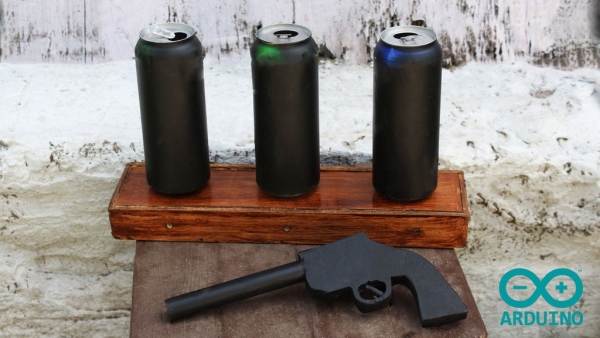
In the lesson I will show you how I made a toy on arduino that will suit beginners. If you start working with sensors, then this toy will suit you as a homemade product.
Step 1: Watch the Video
Step 2: Material:
– plywood
– PVC tube
– arduino
– servo
– photoresistors
– power supply +5V
– button
– laser
– aluminum tube (10mm)
-wires
– resistors 10 kOm
Step 3: Box
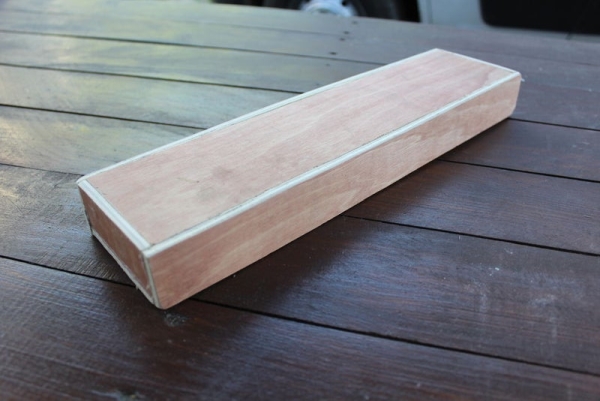
First you need to cut two rectangles “A” (36×4 cm) out of plywood, two rectangles “B” (8×3.5 cm), one rectangle “C” (36×8 cm), one rectangle “D” (35×8 cm). In the “D” rectangle, drill a 10mm hole in the center and two holes at a distance of 12 cm from the center. Similarly, you need to drill in the details “A”. For the beauty and protection of wood, I varnished the box.
Step 4: Assembly of the Pushing Mechanism
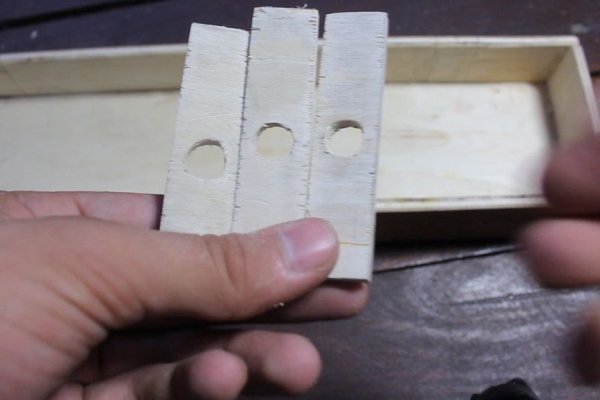
From plywood, you need to cut three rectangles (8 x 1 cm) and drill them into the center of the hole (10 mm). They need to be glued so that the holes coincide with the holes of the part “D” at a depth of 1 cm. Under it you need to glue the servo as shown in the photo. Just need to make three parts (3 cm) of the aluminum tube.
Read more: Cowboy Toy – Arduino Laser Target
- What is the best way to start working with sensors?
This toy serves as a suitable homemade product for beginners starting with sensors. - How do you protect the wood box from damage?
The author varnished the box to ensure beauty and protection of the wood. - Can you use aluminum tubes for the assembly?
Yes, three parts measuring 3 cm each are made from aluminum tubes for the pushing mechanism. - What dimensions are required for rectangle D?
Rectangle D requires dimensions of 35x8 cm with a 10mm hole drilled in the center. - How far apart should the holes be on part D?
Two additional holes must be drilled at a distance of 12 cm from the center. - Does the project require a specific power supply?
The project uses a power supply rated at +5V. - How deep should the servo be glued?
The servo is glued under the plywood pieces at a depth of 1 cm. - What type of resistors are needed for the circuit?
The material list specifies resistors of 10 kOhm.
