
Summary of ALPHA AND OMEGA SEMICONDUCTOR INTRODUCES 18V 2A, AND 3A EZBUCK
This article introduces Alpha and Omega Semiconductor's AOZ6682CI and AOZ6683CI synchronous DC/DC buck regulators. These devices feature ultra-thin TSOT23-6 packages, delivering 2A and 3A output currents respectively. They achieve up to 95% efficiency with proprietary Pulse Energy Mode (PEM) for light loads and low quiescent current of 200 µA, resulting in 10°C cooler operation than competitors. Ideal for consumer electronics like LCD TVs and set-top boxes, they offer enhanced standby efficiency.
Parts used in the AOZ6682CI and AOZ6683CI Project:
- AOZ6682CI synchronous buck regulator
- AOZ6683CI synchronous buck regulator
- TSOT23-6 package
- Synchronous buck power stage
- Pulse energy mode control scheme
Synchronous DC/DC Buck Regulators Feature Lower Quiescent Current and Proprietary Light Load Mode to Achieve up to 6% Higher Efficiency in Standby Mode
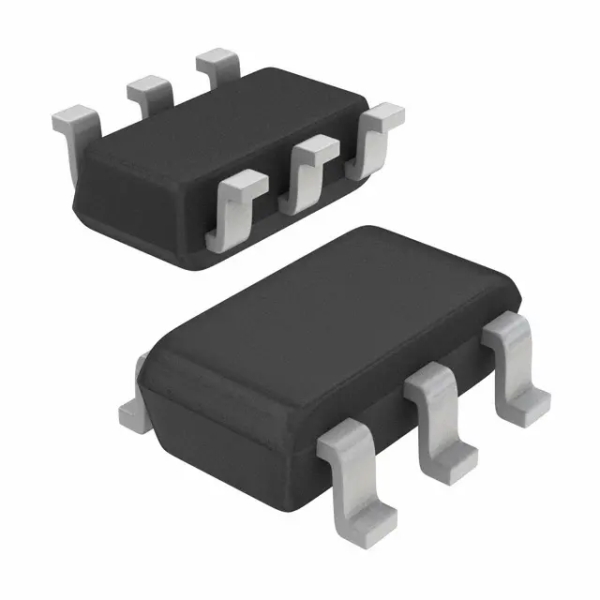
Alpha and Omega Semiconductor (AOS) introduced AOZ6682CI and AOZ6683CI. These devices are high efficiency, simple-to-use synchronous buck regulators. The AOZ6682CI and AOZ6683CI are both available in an ultra-thin, thermally enhanced TSOT23-6 package and deliver 2 A and 3 A output current, respectively. The new devices offer high efficiency over the full load range, allowing greener power conversion for a variety of consumer electronics applications such as LCD TVs, set-top boxes, high definition Blu-Ray™ Disc Players and Networking terminals.
The new devices incorporate a low resistance synchronous buck power stage that enables up to 95% efficiency. Combined with a thermally enhanced package, the AOZ6682CI and AOZ6683CI achieve 10 °C cooler operation at full load compared to similar competing devices. Under heavy load conditions, the devices operate in a fixed frequency continuous-conduction mode (CCM). At light loads or in standby mode, the devices employ a proprietary pulse energy mode (PEM) control scheme. This control scheme and low quiescent current of 200 µA, allows the buck converter design to achieve industry-leading efficiencies of 89% at light loads.
Read more: ALPHA AND OMEGA SEMICONDUCTOR INTRODUCES 18V 2A, AND 3A EZBUCK
- What are the AOZ6682CI and AOZ6683CI?
They are high-efficiency, simple-to-use synchronous buck regulators from Alpha and Omega Semiconductor. - How much output current do these devices deliver?
The AOZ6682CI delivers 2 A and the AOZ6683CI delivers 3 A output current. - Does the device use a specific mode for light load conditions?
Yes, it employs a proprietary pulse energy mode control scheme at light loads or in standby. - What is the quiescent current of these regulators?
The quiescent current is 200 µA. - Can these devices achieve 95% efficiency?
Yes, the low resistance synchronous buck power stage enables up to 95% efficiency. - How does the operating temperature compare to competing devices?
The devices achieve 10 °C cooler operation at full load compared to similar competing devices. - In what mode do the devices operate under heavy load conditions?
Under heavy load, the devices operate in a fixed frequency continuous-conduction mode. - Are these regulators suitable for LCD TVs?
Yes, they allow greener power conversion for applications such as LCD TVs and set-top boxes.
