
Summary of 12V SLA LEAD ACID BATTERY CHARGER USING BQ24450
This project is a 12V SLA (lead-acid) battery charger using the BQ24450 IC, capable of charging batteries up to 12 Ah. The BQ24450 provides temperature-compensated precision voltage reference, current and voltage regulation, state-machine charge sequencing, and status outputs. It supports NPN or PNP external pass transistors and configurable charge modes (constant-voltage float or dual-voltage float-cum-boost). Charging current is set by an external current-sense resistor, and the IC’s low self-heating enables accurate temperature monitoring.
Parts used in the 12V SLA Lead Acid Battery Charger:
- BQ24450 battery-charge-controller IC
- External pass transistor (NPN or PNP)
- Current-sense resistor
- Voltage reference/compensation components as per IC datasheet (external capacitors/resistors if required)
- Status/control connection wiring to processor or indicators
- 12V lead-acid battery (up to 12 Ah)
- Power supply for charger input (appropriate voltage/current)
This project has been developed to charge SLA (Lead Acid Batteries) . It helps to charge 12V Lead-acid battery up to 12Ah in capacity. Specific current output is possible by altering the current sense resistor. The BQ24450 chip contains all the necessary circuitry to optimally control the charging of valve-regulated lead-acid batteries. The IC controls the charging current as well as the charging voltage to safely and efficiently charge the battery, maximizing battery capacity and life. Depending on the application, the IC can be configured as a simple constant-voltage float charge controller or a dual-voltage float-cum-boost charge controller.
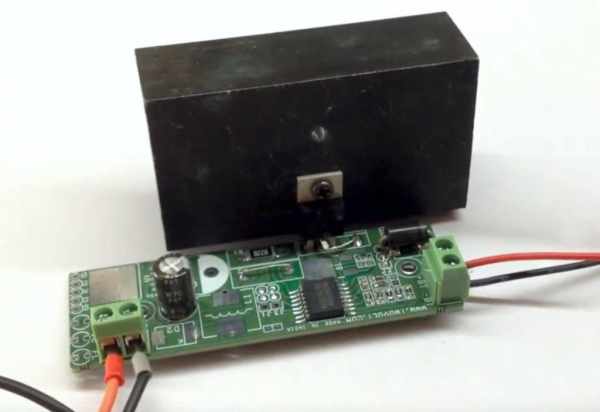
The built-in precision voltage reference is especially temperature-compensated to track the characteristics of lead-acid cells and maintains optimum charging voltage over an extended temperature range without using any external components. The ICs low current consumption allows for accurate temperature monitoring by minimizing self-heating effects.
The IC can support a wide range of battery capacities and charging currents, limited only by the selection of the external pass transistor. The versatile driver for the external pass transistor supports both NPN and PNP types and provides at least 25mA of base drive current.
In addition to the voltage- and current-regulating amplifiers, the IC features comparators that monitor the charging voltage and current. These comparators feed into an internal state machine that sequences the charge cycle. Some of these comparator outputs are made available as status signals at external pins of the IC. These status and control pins can be connected to a processor, or they can be connected up in flexible ways for standalone applications.
Read more: 12V SLA LEAD ACID BATTERY CHARGER USING BQ24450
- What battery capacity does this charger support?
It supports 12V lead-acid batteries up to 12 Ah in capacity as described. - How is the charging current adjusted?
Charging current is altered by changing the external current-sense resistor. - Can the IC drive both NPN and PNP transistors?
Yes, the BQ24450 supports both NPN and PNP external pass transistors. - Does the IC provide temperature compensation?
Yes, it includes a precision voltage reference that is temperature-compensated for lead-acid cells. - What charge modes can the IC be configured for?
It can be configured as a constant-voltage float charge controller or a dual-voltage float-cum-boost controller. - Are there status signals available from the IC?
Yes, comparator outputs and other status pins are available as external status signals. - Can the charger be used standalone without a processor?
Yes, status and control pins can be connected in flexible ways for standalone applications. - What limits the supported charging current and battery capacity?
The limits are determined by the selection of the external pass transistor and related external components.
