
Summary of IOT RAPID PROTOTYPING: 10MN FROM SENSOR TO DASHBOARD
Seluxit released SLX Porcupine rapid-prototyping kits enabling IoT prototypes in about 10 minutes using a smartphone and internet. The industrial-grade Raspberry Pi–form-factor single-board computer runs Linux, supports Raspberry Pi hats and open-source code, and auto-connects to Seluxit’s Viasens cloud for secure connectivity, OTA updates, dashboards, logging, and reference mobile/web code. The SBC includes 4 GB flash, 512 MB RAM, extra headers for Modbus, CAN bus and up to eight 12-bit ADC channels, operates from −40 to +85°C, and supports secure boot to prevent tampering.
Parts used in the SLX Porcupine Project:
- SLX Porcupine single-board computer (industrial-grade, Raspberry Pi form factor)
- Smartphone (for setup and wizard interaction)
- Internet connection (for cloud connectivity and deployment)
- Raspberry Pi hats (compatible accessories)
- Plug-and-play sensors (claimed by Seluxit for rapid prototyping)
- Viasens cloud platform by Seluxit (secure IoT infrastructure)
Seluxit has released IoT rapid prototyping kits based on it’s single-board computer, SLXPorcupine. If you have a smartphone, an internet connection and Seluxit’s IoT rapid-prototyping solution, then 10 minutes is all you need to create IoT prototypes that feel at home even in industrial settings. By julien happich @ eenewseurope.com
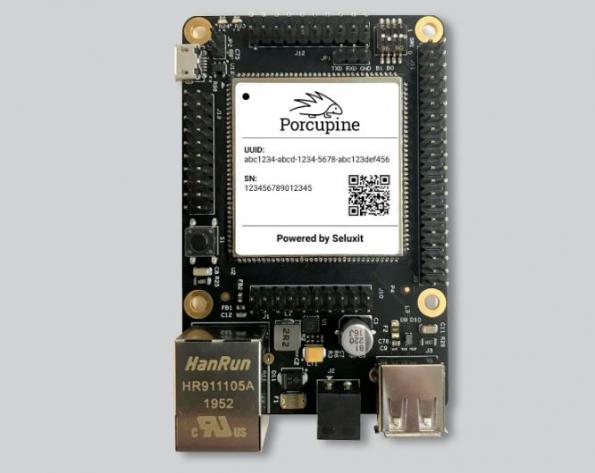
Claiming your device is as seamless as scanning a QR code, and adding plug-and-play sensors can now be done by using a wizard and hitting a “deploy” button. SLX Porcupine is an industrial-grade, single-board computer with a Raspberry Pi compatible form factor,running Linux. That makes it possible to use hats and open-source code from the Raspberry Picommunity. SLX Porcupine automatically connects to Viasens by Seluxit; a cloud-based, secure IoT Infrastructure.
Viasens has secure connectivity, over-the-air firmware update, and a configurable dashboard where you can see and analyse your data. Viasens also features data logging and extraction, reference code for your own iOS and Android native applications, as well as web interfaces. The SBC features a 4GB on-board flash and 512 MB RAM.
It also has 3 additional 20-pin headers, featuring functionalities such as Modbus, CAN bus and up to 8 channels of 12 bit ADCs. It can handle the temperature range often required in an industrial setting, from -40 to +85°C. Secure boot effectively prevents tampering on the device.
Read more: IOT RAPID PROTOTYPING: 10MN FROM SENSOR TO DASHBOARD
- How long does it take to create an IoT prototype with the SLX Porcupine solution?
About 10 minutes using a smartphone, an internet connection and Seluxit’s rapid-prototyping solution. - Can SLX Porcupine use Raspberry Pi hats and community code?
Yes, it has a Raspberry Pi compatible form factor and runs Linux, making it possible to use hats and open-source Raspberry Pi code. - Does SLX Porcupine connect to a cloud service?
Yes, it automatically connects to Viasens by Seluxit, a cloud-based secure IoT infrastructure. - What cloud features does Viasens provide?
Viasens provides secure connectivity, over-the-air firmware updates, a configurable dashboard, data logging and extraction, and reference code for iOS, Android and web interfaces. - What are the onboard memory specifications of the SBC?
The SBC features 4 GB on-board flash and 512 MB RAM. - What additional headers and interfaces does the board offer?
It has three additional 20-pin headers with functionalities such as Modbus, CAN bus and up to eight channels of 12-bit ADCs. - Can SLX Porcupine operate in industrial temperature ranges?
Yes, it can handle temperatures from −40 to +85°C. - Does the device include security features to prevent tampering?
Yes, secure boot is included to effectively prevent tampering on the device.
