
Summary of Advantech Builds Gaming SBC powered by AMD’s Ryzen V1000
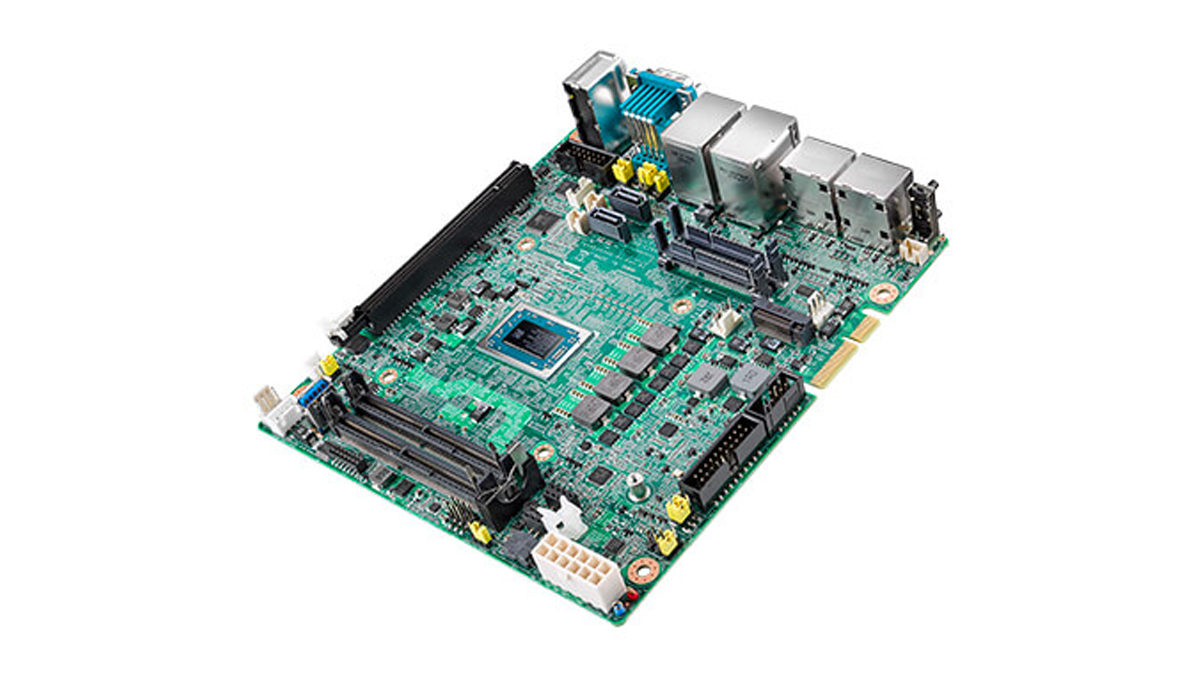
Advantech introduced the DPX-E265, a Mini ITX gaming and lottery board based on AMD's Ryzen V1000 processor. Smaller than its predecessor, the DPC-E140, this lower-end model prioritizes gaming applications over extensive security features. It supports Windows 10 or Linux, up to 32GB of ECC DDR4 RAM, and offers robust connectivity including four DP++ ports, multiple USB versions, PCIe slots, and various serial interfaces.
Parts used in the DPX-E265:
- AMD Ryzen V1000 Processor
- Mini ITX Surface Area (185 x 170mm)
- Up to 32GB DDR4-2666 Memory (ECC support)
- 4x DP++ 1.4 Ports with 4K support
- PCIe x16 Gen 3 Slot
- PCIe x4 Gen 1 Slot
- Golden Finger Edge Connector (supports PCIe x1 and USB 2.0)
- LPC Interface
- 2x RS232 Ports and Headers
- RS232/RS485 Interface
- 3x USB 3.0 Ports
- 2x USB 2.0 Ports
- Three Standard Audio Jacks
- Windows 10 or Linux Operating System Support
Advantech announced a new gaming and lottery board, the DPX-E265. The gaming board is based on AMD’s Ryzen V1000, which features a 4x DP++ ports, 2x SATA, plus M.2, PCle x16, and PCIe x4 expansion. Prior to the DPX E265, in February of this year Advantech announced the DPC-E140 casino gaming board with AMD’s Ryzen Embedded V1000.
They also launched an Intel 7th Gen “Kaby Lake” based DPX-S445 casino gaming SBC in August, which was a follow up of the DPC-E140. The E265 is a lower-end gaming board, which focuses on gaming and lottery applications that fall short of extensive security and I/O features of the DPC-E140. The DPX-E265 has a smaller size than the DPC-E140.
The DPX-E265 has a remodeled Mini ITX surface area of 185 x 170mm, and the I/O ports are stacked. It runs on Windows 10, or Linux operating system and it supports up to 32GB DDR4-2666, with support for ECC RAM. The DPC-E140 is featuring 12C port with RTC, intrusion monitoring, event logging and a couple of other security features, like a standard TPM chip, secure boot, watchdog, and write-protectable BIOS in a removable module.
The DPX-E265 is fitted with 2x RS232 ports, 2x RS232 headers, and an RS232/RS485. There are 3x USB 3.0 ports, 2x USB 2.0 ports. Three standard audio jacks stand-in for the earlier model’s HD 5.1 audio with stereo amplified with 20W outputs. The DPX-E265 provides a PCIe x16 Gen 3 slot and a PCIe x4 Gen 1 slot. The PCle x16 Gen 1 slot is available as a golden finger edge connector that supports “2x full PCIe x1 Gen 1.0 ports (non-standard x4 pin definition) and 2 x USB 2.0.” The DPX-E265 also adds an LPC interface. The DPX-E265 board provides 4x DP++ 1.4 ports with 4K support, one of the ports supports HBR video.
Read more: Advantech Builds Gaming SBC powered by AMD’s Ryzen V1000
-
What processor powers the Advantech DPX-E265?
The board is based on AMD’s Ryzen V1000 processor. -
Does the DPX-E265 support ECC RAM?
Yes, it supports up to 32GB DDR4-2666 memory with ECC RAM support. -
How many DisplayPort outputs does the DPX-E265 have?
The board provides 4x DP++ 1.4 ports that support 4K resolution. -
Is the DPX-E265 smaller than the DPC-E140 model?
Yes, the DPX-E265 has a smaller size compared to the DPC-E140. -
What operating systems are compatible with the DPX-E265?
The board runs on Windows 10 or Linux operating systems. -
Does the DPX-E265 include security features like a TPM chip?
No, the E265 focuses on gaming and lottery applications falling short of the extensive security features found in the DPC-E140. -
What expansion slots are available on the DPX-E265?
It includes a PCIe x16 Gen 3 slot and a PCIe x4 Gen 1 slot.
