
Summary of Ultralow Power Transistors Function for Years Without Batteries
Cambridge University researchers developed ultralow power transistors capable of operating for years without batteries by harvesting ambient energy. These thin-film transistors (TFTs) use indium-gallium-zinc-oxide films, operate near the OFF state at under 1 volt and 1 nanowatt, and utilize the Schottky barrier to enable miniaturization. They can be printed on glass, paper, or plastic at low temperatures.
Parts used in the Ultralow Power Transistor Project:
- In-Ga-Zn-O (indium-gallium-zinc-oxide) thin films
- Glass materials
- Paper materials
- Plastic materials
- Schottky barrier components
Researchers at Cambridge University have just achieved a spectacular breakthrough in electronics design. They have developed new ultralow power transistors that could function for months or even years without a battery. These transistors look for energy from the environment around, thus reducing the amount of power used.
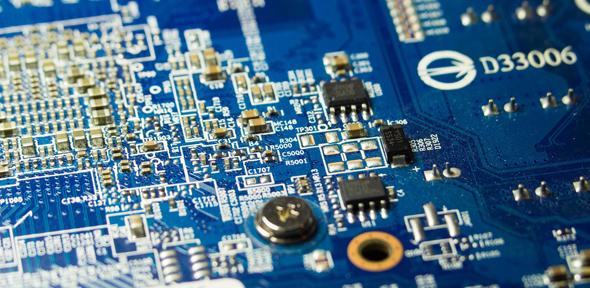
Dr Sungsik Lee, one of the researchers at the Department of Engineering says, “if we were to draw energy from a typical AA battery based on this design, it would last for a billion years.” The new design could be produced in low temperatures and they are versatile enough to be printed on materials like glass, paper, and plastic.
Basically, transistors are semiconductor devices that function like a faucet. Turn a transistor on and the electricity flows, turn it off and the flow stops. When a transistor is off however, some electric current could still flow through, just like a leaky faucet. This current, which is called a near-off-state, was exploited by the engineers to power the new transistors.
The researchers developed a thin-film transistor (TFT) from In-Ga-Zn-O (indium-gallium-zinc-oxide) thin films. To make the material less conductive, the films were fabricated to avoid oxygen vacancies. Eventually, they achieved a new design that operates in near the OFF state at low supply voltages (<1 volt) and ultralow power (<1 nanowatt).
The transistor’s design also utilizes a ‘non-desirable’ characteristic, namely the ‘Schottky barrier’ to create smaller transistors. Transistors today cannot be manufactured into smaller sizes since the smaller a transistor gets, the more its electrodes influence each other, causing a non-functioning transistor.The use of the Schottky barrier in the new design creates seal between the electrodes that make them work independently from each other.
Read more: Ultralow Power Transistors Function for Years Without Batteries
- How long could a typical AA battery last using this new design?
It would last for a billion years. - What material is used to create the thin-film transistor?
The transistor is made from In-Ga-Zn-O (indium-gallium-zinc-oxide) thin films. - Can these transistors be manufactured at high temperatures?
No, the new design could be produced in low temperatures. - What specific characteristic do the engineers exploit to power the new transistors?
They exploit the near-off-state current, which flows even when the transistor is off. - Does the new design utilize the Schottky barrier?
Yes, it utilizes the Schottky barrier to create a seal between electrodes. - What voltage level does the new design operate at?
The design operates at supply voltages less than 1 volt. - Why are smaller transistors difficult to manufacture today?
Smaller sizes cause electrodes to influence each other, resulting in non-functioning transistors. - On what types of materials can this versatile design be printed?
It can be printed on materials like glass, paper, and plastic.
