
Summary of TRACK YOUR CAT’S WEIGHT THROUGH THIS INTERNET-CONNECTED LITTER BOX
### Summary To monitor a cat's weight without stress, the author built an internet-connected litter box scale. The device uses two load cells and an ESP8266 microcontroller to measure weight changes when the cat enters. Data is sent via WiFi to Adafruit IO for real-time tracking. By subtracting the empty box weight from the total, the system calculates the cat's weight and even tracks litter usage volume. Future smart-home integrations could trigger air purifiers or robot vacuums based on usage data.
Parts used in the Internet-Connected Litter Box:
- MDF pieces
- Two load cells
- ESP8266 microcontroller
- WiFi connection module
- Adafruit IO platform
With feline obesity on the rise, keeping track of your cat’s weight is an important part of keeping them healthy. However, a weighing session can be anything from a routine job to a painful procedure, depending on your cat’s temperament. [Andy]’s cat Ellie is one of those who dislike being weighed, so in order to track her weight without drama [Andy] got creative and built an internet-connected weighing platform for her litter box.
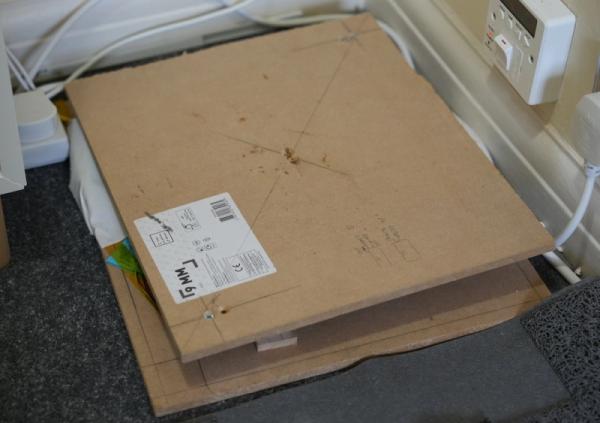
The platform consists of two pieces of MDF held apart by two load cells, which are hooked up to an ESP8266. The ESP reads out the load cells and reports its findings to the Adafruit IO platform through its WiFi connection, sending updates to [Andy] whenever litter box use has been detected. The cat’s weight can be simply calculated by subtracting the weight of the unused litter box from the weight measured when it’s in use.
Getting reliable readings from the load cells was a bit of a challenge, since the measured weight fluctuated wildly as Ellie moved around the litter box. A combination of waiting for the readings to settle and using timeouts to discard the effect of brief movements resulted in reasonably stable measurements. The resolution was even good enough to measure the difference in litter weight before and after use. We’re not sure what’s the practical value of knowing how much your cat poops each time, but if the data is there you might as well log it.
[Andy] also imagines smart-home features of the IoT litter box: for example, he could run an air purifier or send in the Roomba after heavy usage. This is not even the first internet-connected litter box we’ve featured; we’ve seen one connected to the Thingspeak platform, as well as one that sends poop alerts through Twitter. If you’re not around to clean up the mess, an automatic fume extractor might come in handy.
Source: TRACK YOUR CAT’S WEIGHT THROUGH THIS INTERNET-CONNECTED LITTER BOX
- How does the system calculate the cat's weight?
The cat's weight is calculated by subtracting the weight of the unused litter box from the weight measured when it is in use. - What components make up the weighing platform?
The platform consists of two pieces of MDF held apart by two load cells hooked up to an ESP8266. - Does the device send data to a specific cloud service?
Yes, the ESP8266 reports its findings to the Adafruit IO platform through its WiFi connection. - Can the device measure how much litter is used?
Yes, the resolution is good enough to measure the difference in litter weight before and after use. - What challenges were faced with getting reliable readings?
Measured weight fluctuated wildly as the cat moved, requiring timeouts to discard brief movements and waiting for readings to settle. - What future smart-home features are imagined?
Features include running an air purifier or sending in a Roomba after heavy usage. - Is this the first connected litter box featured?
No, previous projects have been connected to the Thingspeak platform or send alerts through Twitter. - Why was this project created for the cat Ellie?
Ellie dislikes being weighed, so the owner built this to track her weight without drama.
