
Summary of TIME SYNC THROUGH YOUR VGA CONNECTOR
This article describes a project by [flok] that repurposes the I2C interface found on VGA graphics cards to provide precise timing information for an NTPd instance. Instead of using the analog video lines, the creator connects an Arduino, powered by a temperature-compensated crystal oscillator, to the VGA socket's I2C pins. This setup allows the system to receive a 1-pulse-per-second signal, offering a unique method for time synchronization and demonstrating the versatility of legacy hardware before it becomes obsolete.
Parts used in Time Sync Through Your VGA Connector:
- VGA graphics card with I2C interface
- Arduino microcontroller
- Temperature compensated crystal oscillator (TCXO)
- NTPd software instance
- I2C peripheral connection components
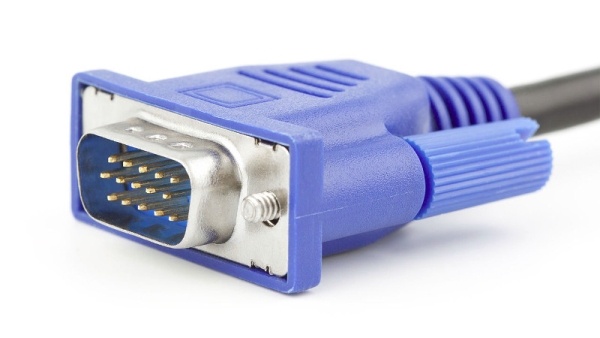
While it might be in its twilight years, the venerable VGA video connector conceals a versatile interface that can still provide the experimenter with the opportunity for a variety of hacks. We’ve not seen anything quite like [flok]’s one, in which he uses the VGA interface to insert timing information from which an NTPd instance gets its reference.
If this seems counter-intuitive because a VGA interface is an analogue output rather than a digital input, then you are correct to smell a rat. And he comes clean in his first sentence, as he’s not using the VGA lines themselves but the I2C interface that is a feature of all but the most basic of VGA cards. This is the means by which a plug-and-play operating system can identify a monitor’s capabilities, but there’s little to stop it being used for other purposes. In this case an Arduino fed by a 1-pulse-per-second timing signal from a temperature compensated crystal oscillator provides the I2C peripheral which is polled by NTPd.
This project should be of interest to any tinkerer because of its invaluable information on identifying and using the I2C interface on a VGA socket. So if you’ve used your VGA card as an SDR you might find it interesting, but hurry or you could have missed the boat entirely.
Source: TIME SYNC THROUGH YOUR VGA CONNECTOR
-
How does this project achieve time synchronization?
An Arduino fed by a 1-pulse-per-second timing signal from a temperature compensated crystal oscillator acts as an I2C peripheral polled by NTPd. -
Does the project use the analog VGA video lines?
No, the project uses the I2C interface which is a feature of all but the most basic VGA cards, not the analogue output lines. -
What is the primary purpose of the I2C interface in this context?
While normally used for plug-and-play operating systems to identify monitor capabilities, here it is used to transmit timing data. -
Can this method be used if you have previously used your VGA card as an SDR?
Yes, the article suggests this project should interest tinkerers who have used their VGA card as an SDR. -
What kind of signal provides the timing reference for the Arduino?
The Arduino is fed by a 1-pulse-per-second timing signal derived from a temperature compensated crystal oscillator. -
Why might someone hurry to try this project?
The VGA connector is described as being in its twilight years, suggesting the opportunity might disappear soon. -
What specific component acts as the I2C peripheral in this setup?
The Arduino serves as the I2C peripheral that is polled by the NTPd instance.
