wireless

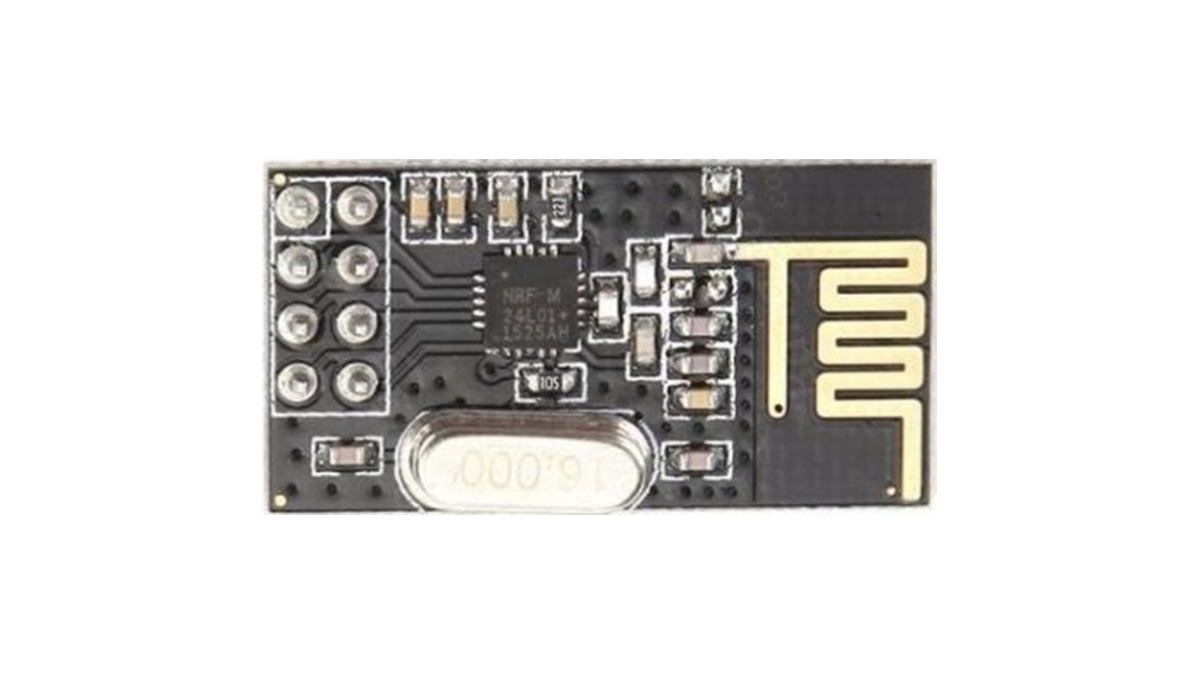
Communication Between Two Arduinos Using NRF24L01

Communication Between Two Arduinos Using NRF24L01

While building Arduino or any other microcontroller platform project over time the need will arise to establish communication between two of the Arduino boards or microcontrollers for data exchange and/or control. This communication could be achieved using either wired or wireless process. For wireless communication between devices, quite a number of options exist including WiFi, GSM/GPRS, […]

Communication Between Two Arduinos Using NRF24L01 Continue Reading

Epiq Solutions Develops Wideband RF Transceiver SDR Module Running Linux On Zynq SoC

Epiq Solutions Develops Wideband RF Transceiver SDR Module Running Linux On Zynq SoC

Epiq Solutions, a company from the USA, has included a new member of its Sidekiq line of Software-defined radio (SDR) add-on cards called the Sidekiq Z2. Dimensions of this card are only 51 x 30 x 5mm, the size of a full-size mini-PCIe card, the Sidekiq Z2 computer-on-module is advertised as “the world’s smallest wideband RF transceiver + Linux computer

Epiq Solutions Develops Wideband RF Transceiver SDR Module Running Linux On Zynq SoC Continue Reading

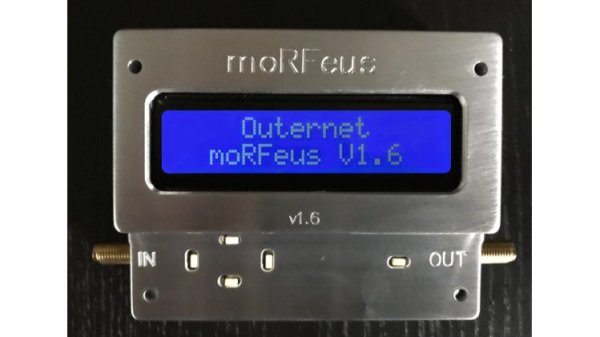
moRFeus – A field configurable wideband frequency converter and signal generator

moRFeus – A field-configurable wideband frequency converter and signal generator

MoRFeus is a 30 MHz–6 GHz field-configurable Fractional-N wideband frequency converter and signal generator. Its LCD display and button interface enable dynamic field-level configuration – from switching between signal generator and other modes, to setting the local oscillator frequency and more. It was designed for wideband frequency up- and down-conversion – with an LO frequency

moRFeus – A field-configurable wideband frequency converter and signal generator Continue Reading

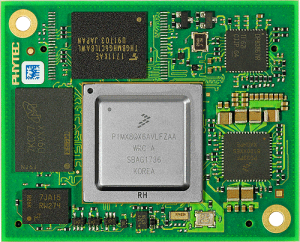
Phytec Develops Three PhyCore Modules – i.MX8 i.MX8M and iMX8X Driven By Linux

Phytec Develops Three PhyCore Modules – i.MX8, i.MX8M, and iMX8X, Driven By Linux

Phytec has updated their product pages for three new PhyCore modules, all of which support Linux. The three modules, which employ three different flavors of i.MX8 SOC is phyCORE-i.MX 8X, i.MX 8M, and i.MX 8 SBCs. The PhyCore COMs are based on NXP’s Cortex-A53 based i.MX8M, its -A53 and -A72 equipped i.MX8 Quad, and its -A35 based i.MX8X. phyCore-i.MX 8X The i.MX8X SoC found

Phytec Develops Three PhyCore Modules – i.MX8, i.MX8M, and iMX8X, Driven By Linux Continue Reading

How to make precision measurements on a nanopower budget

How to make precision measurements on a nanopower budget

Heightened accuracy and speed in an operational amplifier (op amp) has a direct relationship with the magnitude of its power consumption. Decreasing the current consumption decreases the gain bandwidth; conversely, decreasing the offset voltage increases the current consumption. Many such interactions between op amp electrical characteristics influence one another. With the increasing need for low

How to make precision measurements on a nanopower budget Continue Reading

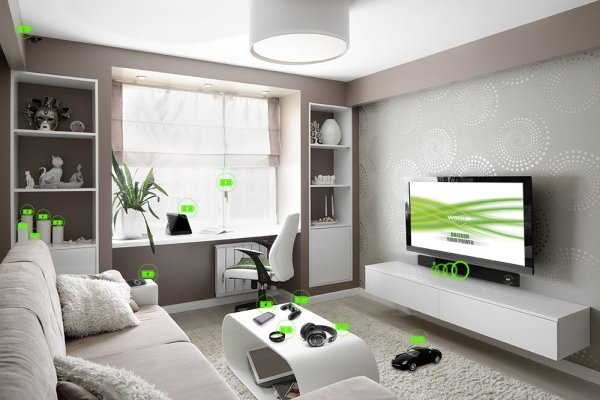
PowerSpot Far Field Wireless Charger Will Charge Devices Up to 80 Feet Away

PowerSpot Far Field Wireless Charger Will Charge Devices Up to 80 Feet Away

Over the last few years, there has been an unprecedented growth in the consumer electronics industry. The smartphones, fitness trackers, Smart homes devices, wearables, earbuds, VR/AR, and much more have fostered this growth. The Smartphone proliferation has been a key factor in the global consumer electronics market size, smartphones have become way better, faster and

PowerSpot Far Field Wireless Charger Will Charge Devices Up to 80 Feet Away Continue Reading

A Levitating Sphere Rotates Glows and Blinks With Arduino

A Levitating Sphere Rotates Glows and Blinks With Arduino

A levitating little Death Star in Instructables invited me to the new project with Arduino. Three policies were decided and kept to differentiate it from the forerunner. Do it myself with no (or less) ready-made. Keep rotating. Make glow and blink without battery. VIDEO(1): A Levitating Sphere Rotates Glows and Blinks The detail of the project

A Levitating Sphere Rotates Glows and Blinks With Arduino Continue Reading

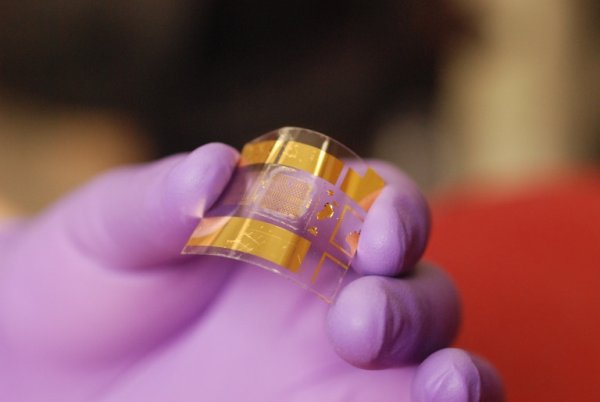
Brand New BiCMOS Flexible Transistor

Brand New BiCMOS Flexible Transistor

The transistor revolutionized the field of electronics, and paved the way for smaller and cheaper radios, calculators, and computers, among other things since its very first practically implemented device as a point-contact-transistor invented in 1947 and getting the Nobel Prize in Physics in 1956. Now, engineers from the University of Wisconsin-Madison (UW-Madison) have built the most flexible, fully-functional transistor in the world!  The BiCMOS  (Bipolar Complementary Metal Oxide

Brand New BiCMOS Flexible Transistor Continue Reading

Scroll to Top