
Projects

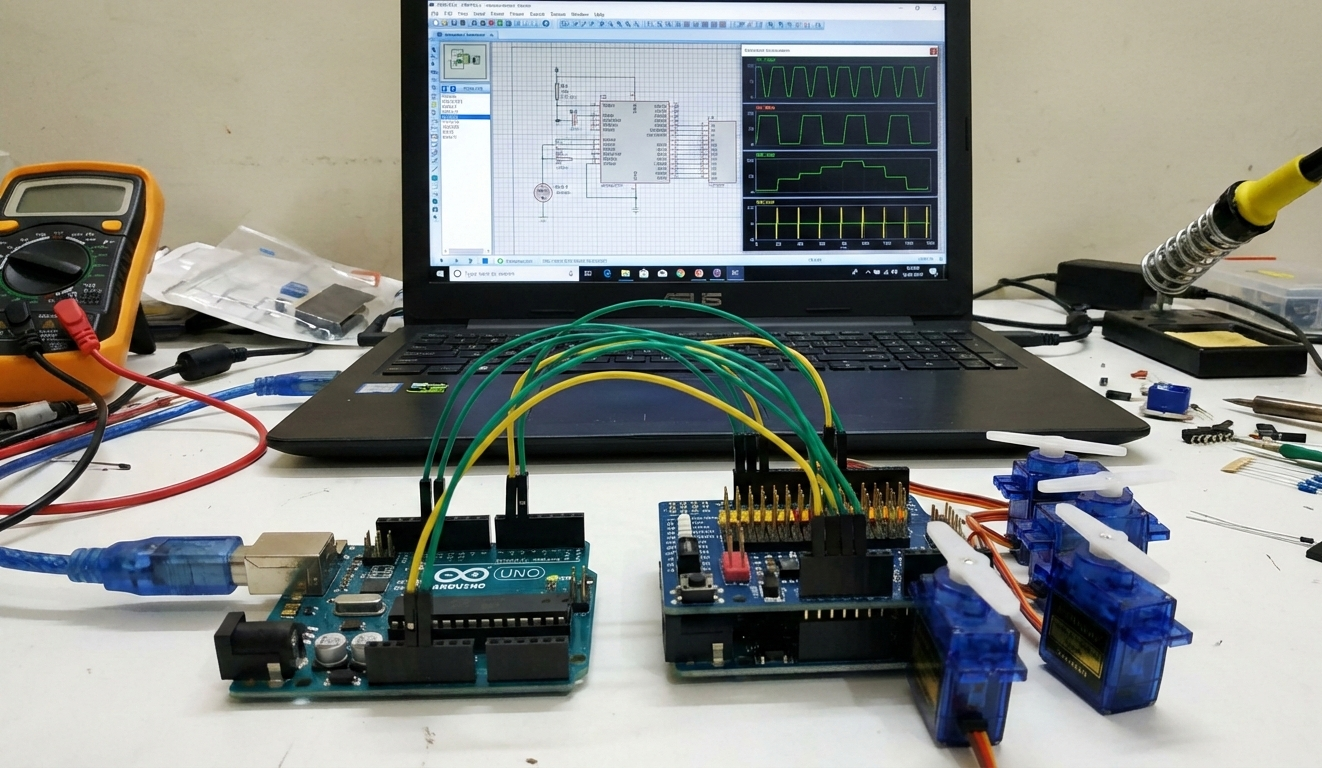
Arduino PWM simulation showing 16-channel PCA9685 PWM outputs

Arduino 16 Channel PWM Shield – PWM Test using ATmega328P with Proteus Simulation

Introduction This microcontroller project demonstrates how to test and generate PWM signals using the Adafruit 16-Channel PWM/Servo Shield with an Arduino-compatible ATmega328P in a Proteus simulation environment.The project focuses on driving all 16 PWM outputs in a smooth wave pattern, making it ideal for learning multi-channel PWM control in embedded systems.Using the PCA9685 12-bit PWM

Arduino 16 Channel PWM Shield – PWM Test using ATmega328P with Proteus Simulation Continue Reading
Arduino RGB ShiftPWM PWM lighting effects in Proteus

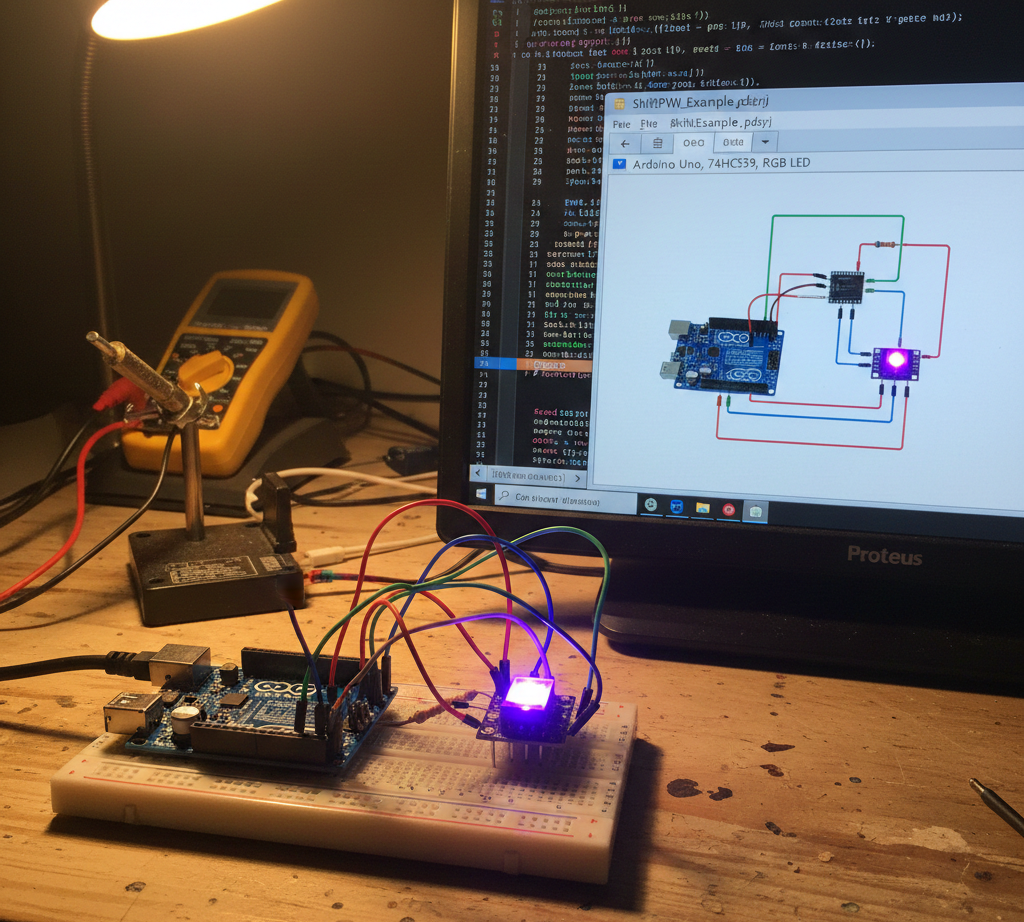
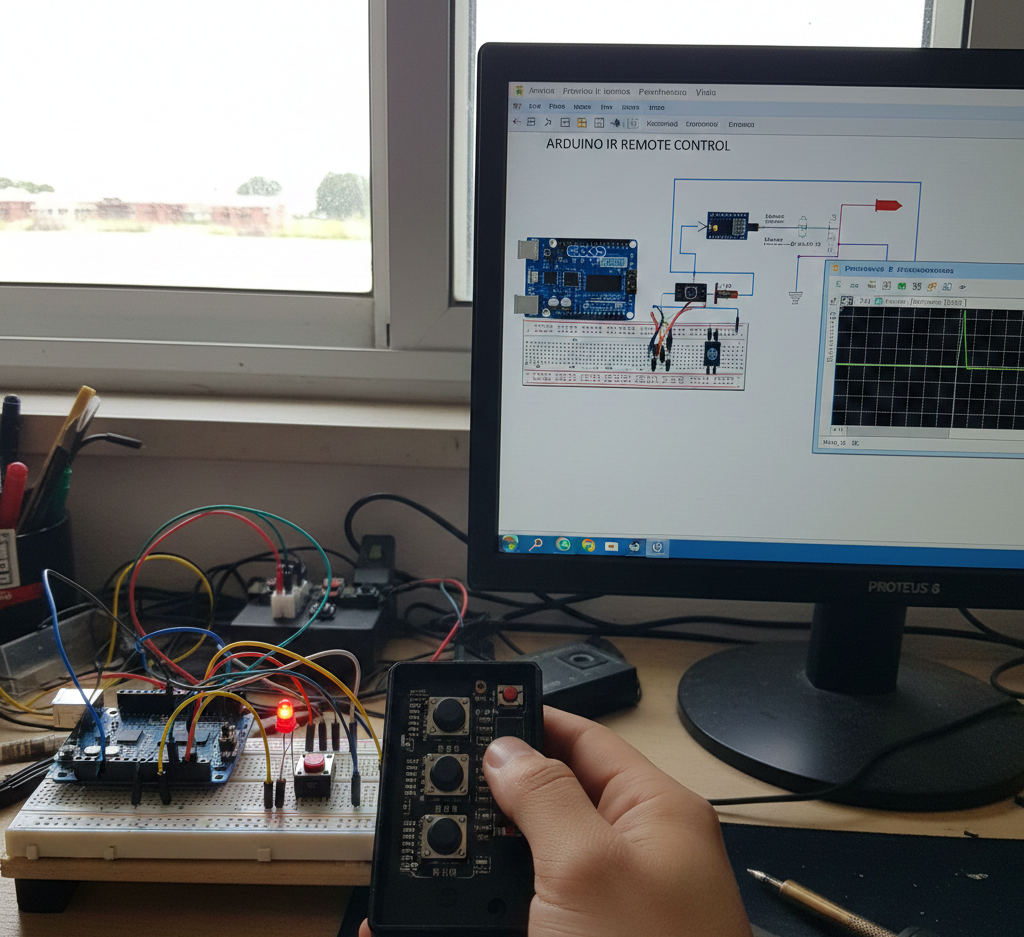
Arduino & RGB Common Anode LED ShiftPWM using Arduino Uno with Proteus Simulation

Introduction This microcontroller project demonstrates how to control multiple RGB common anode LEDs using an Arduino Uno and ShiftPWM through shift registers in a Proteus simulation environment.Instead of using many Arduino pins, the design efficiently expands outputs using shift registers while still achieving smooth PWM-based color control.The project showcases advanced LED fading, color transitions, hue

Arduino & RGB Common Anode LED ShiftPWM using Arduino Uno with Proteus Simulation Continue Reading
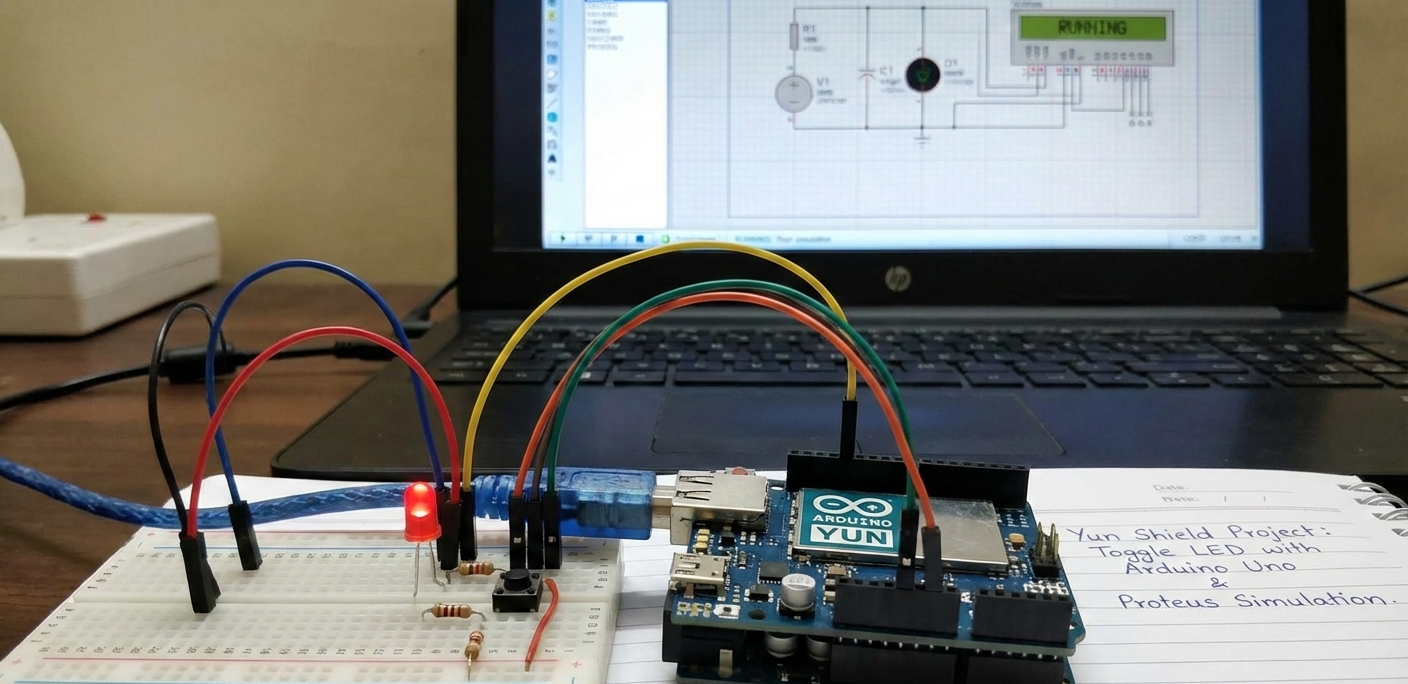
Arduino IR Proteus Simulation IR receiver TSOP4838 connection

Arduino Infra-Red Remote using Arduino Uno with Proteus Simulation

Introduction This microcontroller project demonstrates how to capture and analyze raw infrared (IR) data from a Keyes IR remote using the NEC protocol. Built around an Arduino Uno, the project focuses on decoding IR signals and displaying detailed timing and protocol information via serial output.It is especially useful for learners exploring Proteus simulation, embedded systems,

Arduino Infra-Red Remote using Arduino Uno with Proteus Simulation Continue Reading
Arduino IoT LED control circuit diagram using Arduino Uno and Yun Shield

Yun Shield – Toggle an LED using Arduino Uno with Proteus Simulation

Introduction This microcontroller project demonstrates how to toggle an LED using an Arduino Uno and a Yun Shield, controlled from a mobile device. It is a simple but powerful introduction to Internet of Things (IoT) concepts using Proteus simulation and visual programming.The project shows how physical hardware like an LED can be controlled remotely, making

Yun Shield – Toggle an LED using Arduino Uno with Proteus Simulation Continue Reading
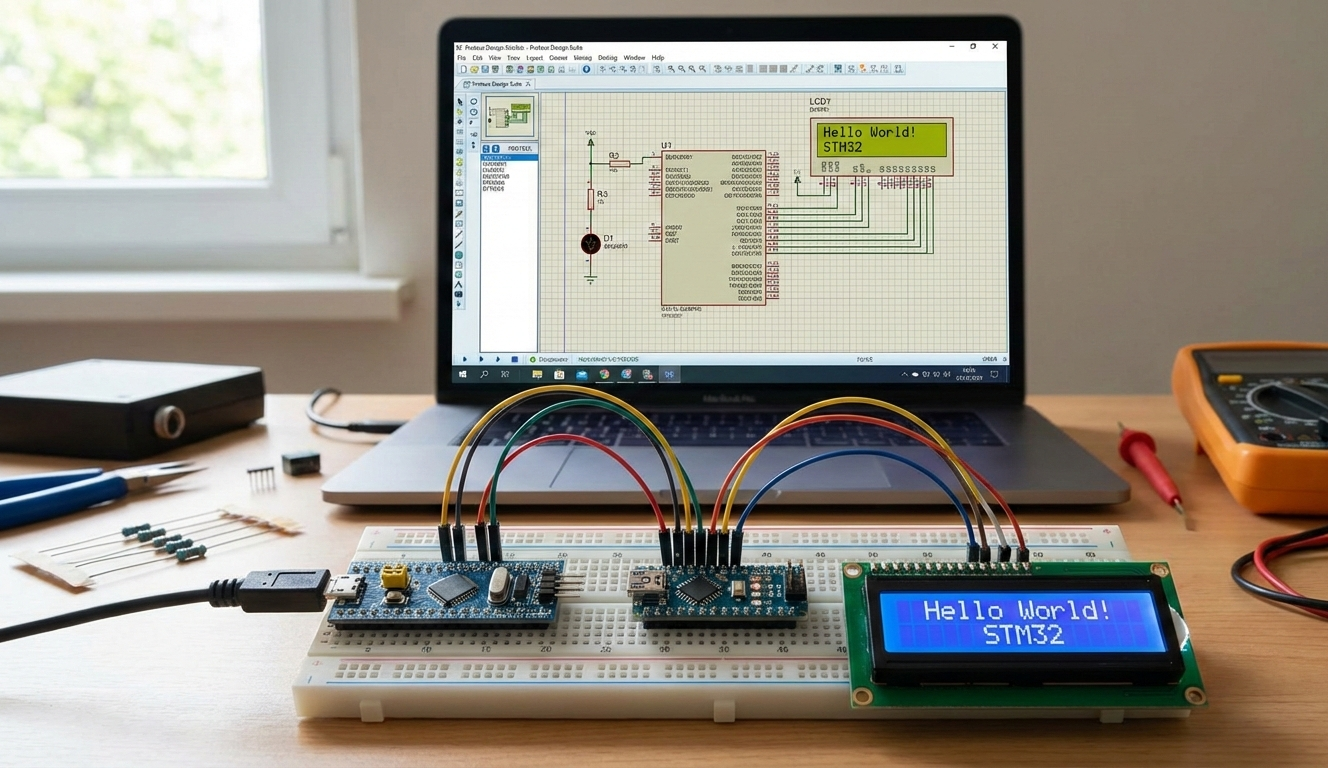
STM32 BluePill LCD project flowchart for Proteus simulation

Arduino-STM32 BluePill LCD Display using STM32 BluePill with Proteus Simulation

Introduction This microcontroller project demonstrates how to interface a standard alphanumeric LCD with the STM32 BluePill using Arduino-STM32 (Visual Designer) in a Proteus simulation environment.The project is a simple yet powerful starting point for anyone working with embedded systems, DIY electronics, or STM32-based designs.It focuses on displaying text messages on an LCD, proving correct GPIO

Arduino-STM32 BluePill LCD Display using STM32 BluePill with Proteus Simulation Continue Reading
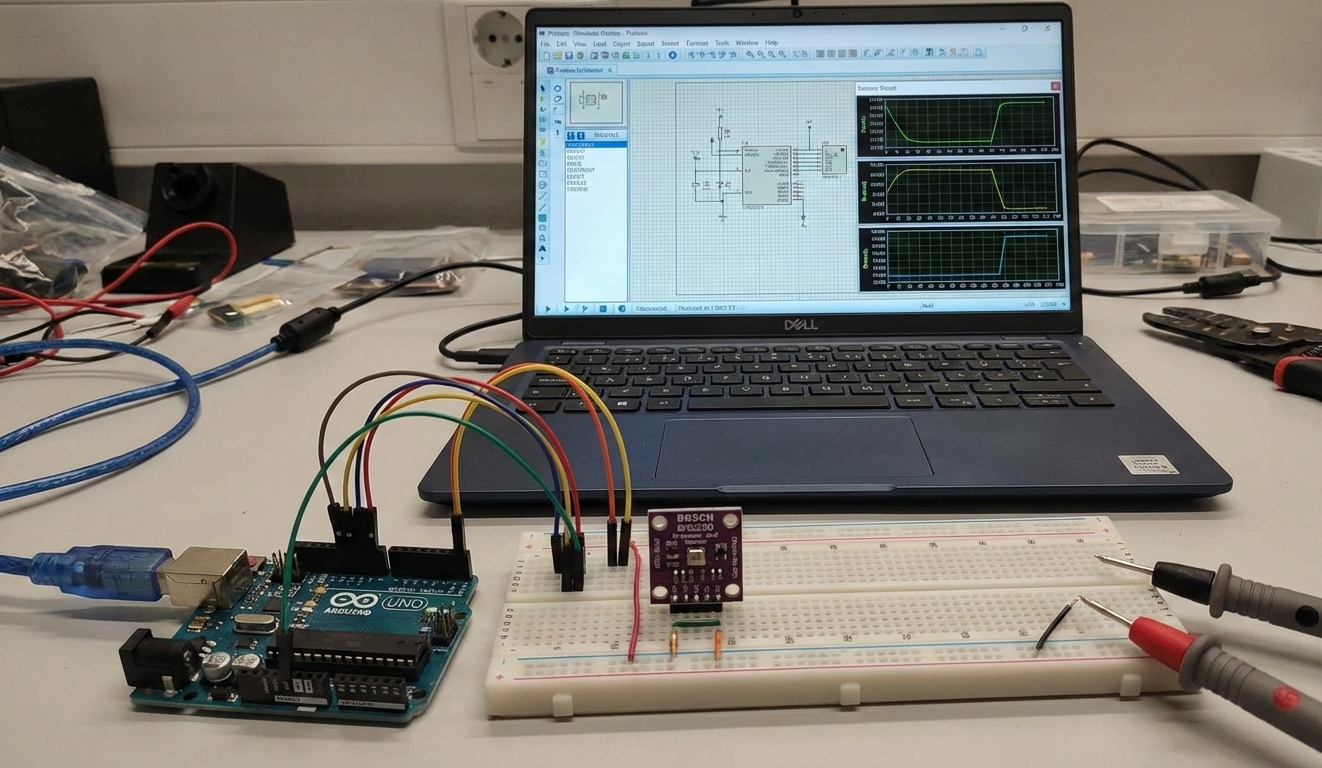
SPI-Based BME280 Sensor Interface using Arduino Uno with Proteus Simulation

Introduction This microcontroller project demonstrates how to interface a Bosch BME280 pressure, temperature, and humidity sensor with an Arduino Uno using SPI communication inside a Proteus simulation environment.The project focuses on practical electronics and embedded systems learning by combining real-world sensor data with virtual circuit testing.Using Proteus simulation, the system allows safe validation of firmware

SPI-Based BME280 Sensor Interface using Arduino Uno with Proteus Simulation Continue Reading
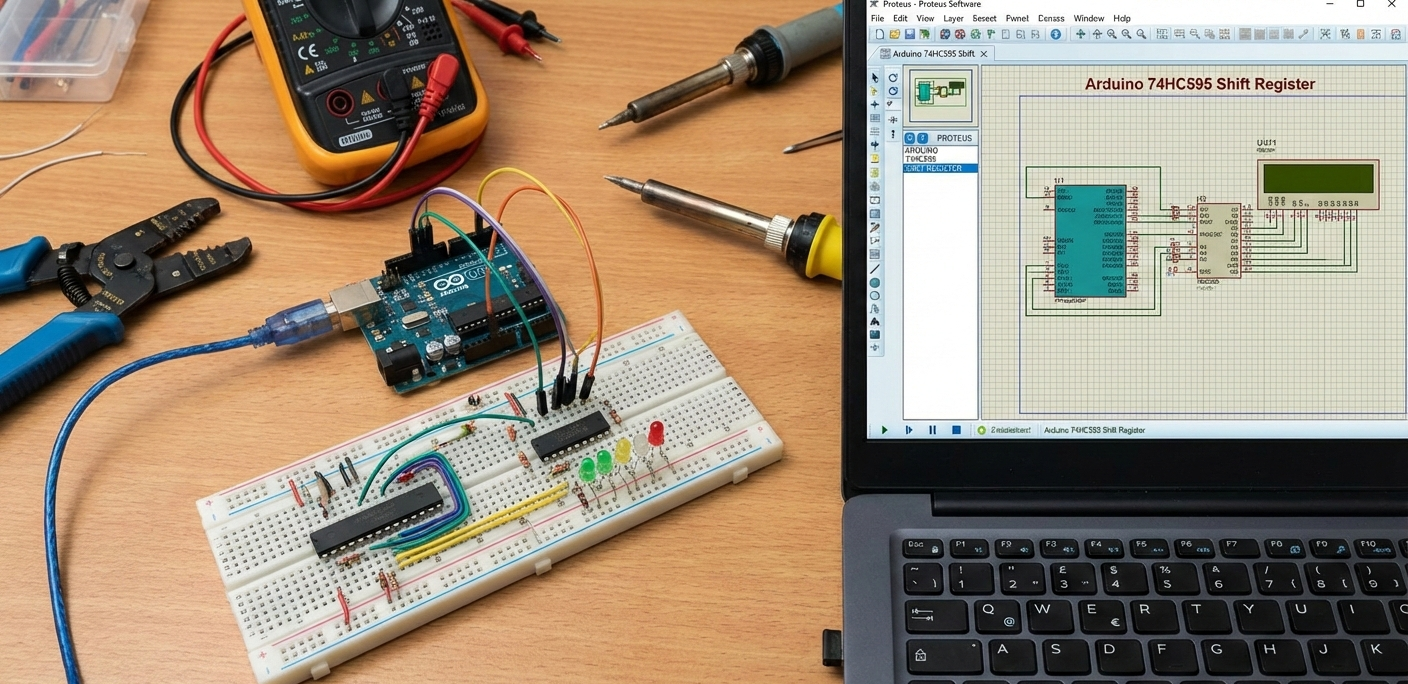
Arduino 74HC595 project daisy chained shift registers

Arduino 74HC595 Shift Register using ATmega328P with Proteus Simulation

Introduction Expanding output pins is a common challenge in microcontroller projects, especially when working with LEDs or displays. This project demonstrates how to use 74HC595 shift registers with an Arduino (ATmega328P) to control multiple outputs using only three pins.Using Proteus simulation, this setup visually shows how daisy-chained shift registers can drive LED bars efficiently.This Arduino

Arduino 74HC595 Shift Register using ATmega328P with Proteus Simulation Continue Reading

Then click on the play button

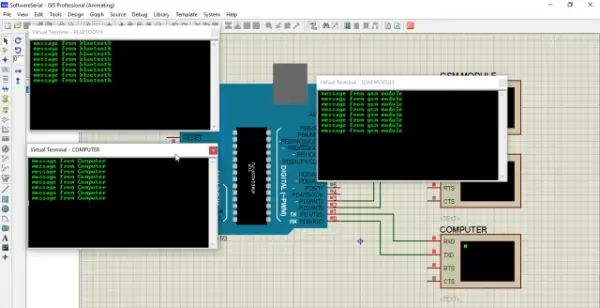
Arduino SoftwareSerial Mastery: Harnessing Multiple Serial Ports

Description: This article delves into the Software Serial library, a commonly utilized resource in Arduino programming. It explores its significance in programming for Arduino Uno or Arduino Nano and provides insights into when and why to employ this library. Through the aid of a Proteus simulation, I will elucidate its practical applications, alongside showcasing advanced-level

Arduino SoftwareSerial Mastery: Harnessing Multiple Serial Ports Continue Reading

HW(4.0) – Arduino and Microcontrollers: Microcontroller Morse Code System

Ideation and Design: Microcontroller Morse Code System development initially aimed to create a functional Microcontroller Fidget Keyboard System by linking mechanical switches to a microcontroller. This section explains how the system captures and interprets button presses to convert user input into Morse code. This led to an early pivot in design, driven by practical challenges

HW(4.0) – Arduino and Microcontrollers: Microcontroller Morse Code System Continue Reading

Final Hardware Design for Waste Management Using Arduino

The Arduino Mega serves as the system’s central controller in a project focused on Waste Management Using Arduino, managing communication with the load cell, RFID, SD card, and GSM/GPS modules via synchronous and asynchronous serial communication. It enables data acquisition, storage, and remote tracking, while LEDs provide user feedback and USB aids in debugging. Powered

Final Hardware Design for Waste Management Using Arduino Continue Reading

Scroll to Top