
Summary of NEW CHIP BRINGS ULTRA-LOW POWER WIFI CONNECTIVITY TO IOT DEVICES.
The University of California, San Diego engineers developed an ultra-low power portable chip for IoT and wearables. Consuming only 28 microwatts, it is smaller than a grain of rice and connects to existing Wi-Fi networks at 2 Mbps within 21 meters. Using backscattering technology, the chip reflects data onto incoming signals, enabling years of operation on a single coin cell battery without needing external power sources or large batteries.
Parts used in the Ultra-Low Power Portable Chip:
- Portable chip
- Wi-Fi radio
- Coin cell battery
- Wi-Fi access point
Electrical engineers from the University of California, San Diego recently designed a new portable chip that consumes 5000 less power than the Wi-Fi radios that we have today.
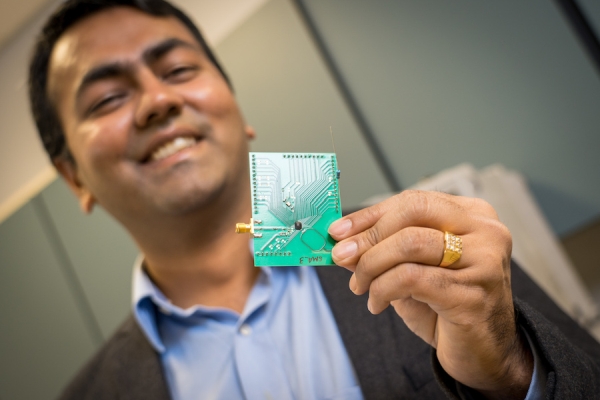
The new chip, which is smaller in size compared with a grain of rice, is said to be ideal for IoT devices, smart home setups, and wearables. With just 28 microwatts of power, the tiny chip can allow devices to connect with existing Wi-Fi networks and transmit data at a rate of two megabits per second within a range of 21 meters.
Smart devices, mobile phones and even small cameras or various sensors to this chip, it can directly send data from these devices to a Wi-Fi access point near you. You don’t need to buy anything else and it could last for years on a single coin cell battery,” explains Dinesh Bharadia who is one of Professors of UC San Diego electrical and computer engineering department working on the chip.
The Wi-Fi radio on the chip is said to use far less power compared with the popular commercial WiFi radios, hence Wi-Fi compatible devices can last for years instead of just hours, even when unplugged. This definitely beats the popular commercial WiFi devices as they will need either large batteries or other external power sources to run for as long as the current chips as it takes 100s of milliwatts just to pair devices.
Data transmission by the device is done by taking incoming Wi-Fi signals from a nearby device, modify and encode its own data onto them, and then reflect the new signals onto a different Wi-Fi channel to another device. This process in technical terms is known as backscattering and it simply implies transmitting data by piggybacking data using signals of already connected devices. This feature allows the chip to, not only save on power, but also increases it’s range as it spreads as the WiFi signal continues to spread.
Read more: NEW CHIP BRINGS ULTRA-LOW POWER WIFI CONNECTIVITY TO IOT DEVICES.
- How much power does the new chip consume?
The chip consumes just 28 microwatts of power. - What is the size of the new chip?
The chip is smaller in size compared with a grain of rice. - Can this chip connect to existing Wi-Fi networks?
Yes, the tiny chip can allow devices to connect with existing Wi-Fi networks. - How long can the device last on a single coin cell battery?
It could last for years on a single coin cell battery. - What technology allows the chip to save power?
Data transmission is done using a process known as backscattering. - What is the data transmission rate of the chip?
The chip can transmit data at a rate of two megabits per second. - What is the range of the chip?
The chip operates within a range of 21 meters. - Why do commercial WiFi devices need larger batteries?
Popular commercial WiFi devices take 100s of milliwatts just to pair devices.
