
Summary of MYSTERY HP GEAR TEARDOWN
Summary
This article discusses a 1950s HP mystery instrument restored by The Signal Path. The round device features a vacuum tube-like center, is rated for 25 kV AC, and includes a distinctive metal rod and ball protrusion. While the internal components are described as vintage but underwhelming, the video focuses on identifying the unusual high-voltage tool rather than its complex inner workings.
Parts used in the Mystery HP Gear Teardown:
- Vacuum tube-like component
- Round case
- Vintage parts
- Metal rod
- Metal ball
What’s round, has what looks like a vacuum tube in the center, and was made in the 1950s by HP? We don’t know either, but [The Signal Path] restored one and shows us this mystery instrument in a recent video that you can see below. We aren’t going to spoil the surprise over what the device is, but we will share that he does reveal what it is very early in the video, so there’s not much of a tease.
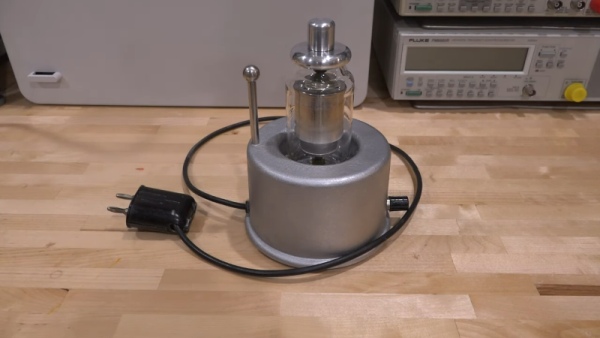
We will, however, give you a few hints. Looking at it, you can guess that it is meant for high voltage use and, in fact, it is rated for up to 25 kV. We’ll also drop the hint that it is made for use with AC, not DC. The shape of the plug at the end of the wire is also a clue, we think.
There isn’t much inside the unusual round case (another clue, by the way), but there are some vintage parts we haven’t seen in quite awhile. One last clue: Why is there a metal rod and ball sticking out of one side of the device?
Honestly, the insides are a bit underwhelming so unlike some teardown videos we’ve seen, the real star of this video is the unusual device more so than its inner workings. If you have a hankering for a more sophisticated HP exploration, check out the HP3458A repair we covered earlier. Or go old school and peek inside an HP 150A.
Source: MYSTERY HP GEAR TEARDOWN
- Who restored the mystery HP instrument?
The Signal Path restored the device. - When was this HP instrument made?
It was made in the 1950s. - What is the voltage rating of the device?
It is rated for up to 25 kV. - Does the device operate on AC or DC?
It is designed for use with AC, not DC. - What feature sticks out from one side of the device?
A metal rod and ball stick out from one side. - Is the interior of the device complex?
No, the insides are described as a bit underwhelming. - What shapes the plug at the end of the wire?
The shape of the plug serves as a clue regarding the device's function.
