
Summary of MaKey MaKey Shield for Arduino
MaKey Makey is an Arduino-based project that transforms everyday conductive objects like fruits and Play-Doh into keyboard inputs. It functions using high-value resistors to create voltage dividers, detecting touch via the human body's conductivity. Compatible with USB HID devices like the ATmega32U4 processor, it allows users to control computers with unconventional keys.
Parts used in the MaKey Makey:
- Arduino Leonardo (or Itead Leonardo)
- ATmega32U4 Processor
- 10 to 50 MOhm Resistors
- Copper Foil
- Alligator Clips
- Conductive Objects (e.g., apples, bananas, Play-Doh)
MaKey Makey is a project created by Eric Rosenbaum und Jay Silver. It’s an Arduino based keyboard. A very special keyboard, because you can use apples, bananas or Play Doh as keyboard keys. Sounds strange, but it works very well.
How it works:
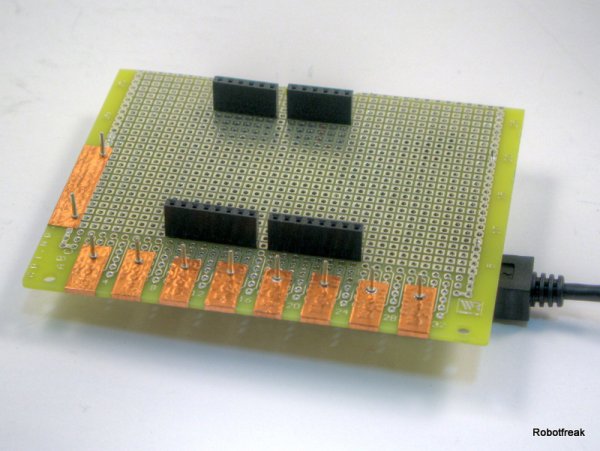
The trick is using a very high resistor on the Arduino input (10..50MOhm). That is Mega Ohms not Milli Ohms! This big resistor is connected from the Input to VCC. The second resistor is build from the apple and the finger which touches the apple and the resistor of the human body that is holding the ground cable. More or less its a simple voltage divider. When you touch the apple, the contact will be recognised as closed and the programmed keyboard or mouse event will be send to the PC.
How to build it:
The original MaKey Makey is using the ATmega32U4, the same processor as the Arduino Leonardo is using. The newer Arduino boards like Arduino Uno, Due or Mega use a smaller version of this chip family like the ATmega16U2 or 8U2 as USB serial interface. This Processor family can also be programmed as USB HID Devices and act like a keyboard or mouse. So it will work with every program/game that can be contolled with a keyboard/mouse. The older Arduinos using the FTDI chip will not work. I have been used an Itead Leonardo for this project.
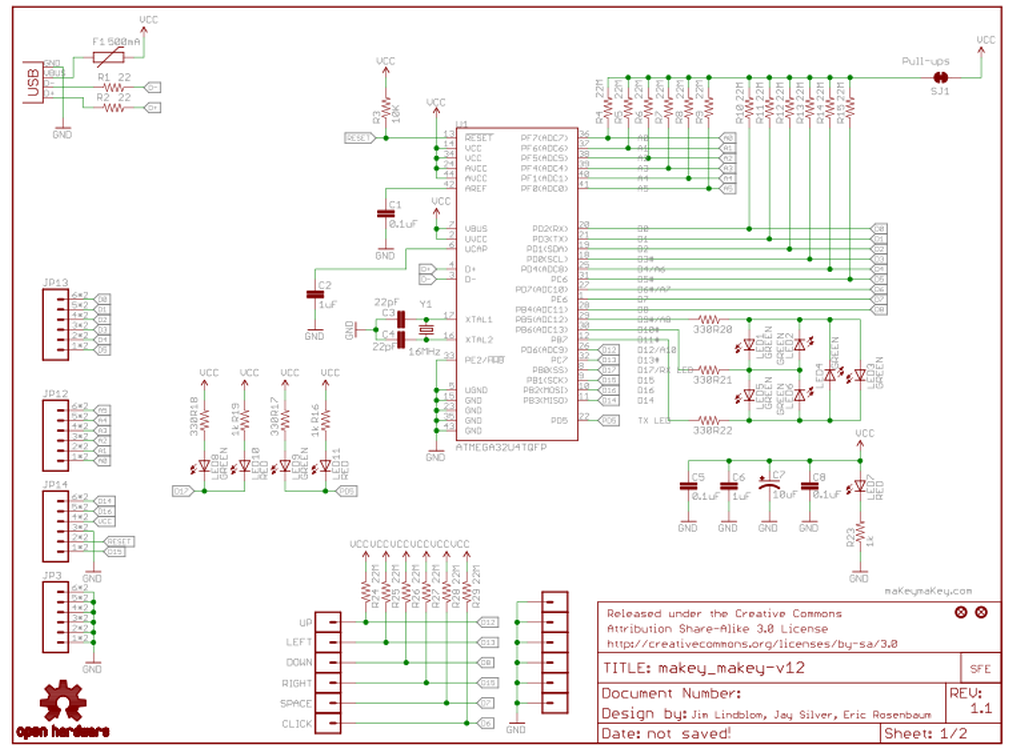
The schematic is really simple, based on the original schematic. You will just need a 10..50MOhm resistor on each input pin. I use 2 x 10MOhm which is easier to get at the local electronics shop.
For testing the schematic without bananas each contact is made of copper foil. This give a good contact for the alligator clips, too.
For more detail: MaKey MaKey Shield for Arduino
- How does the MaKey Makey detect a touch?
It uses a high resistor connected to VCC and the human body as part of a voltage divider to recognize contact. - Can you use fruit as keyboard keys?
Yes, you can use apples, bananas, or other conductive items like Play-Doh as keys. - Which Arduino board is recommended for this project?
The article recommends using an Arduino Leonardo or Itead Leonardo because they use the ATmega32U4 processor. - Will older Arduinos with FTDI chips work?
No, older Arduinos using the FTDI chip will not work because they cannot act as USB HID devices. - What value of resistor is needed for each input pin?
You need a 10 to 50 MOhm resistor on each input pin. - How are contacts tested without using food?
Copper foil is used for testing the schematic, providing good contact for alligator clips. - Does the device work with any computer program?
Yes, it works with every program or game controlled by a keyboard or mouse since it acts as a USB HID device.
