
Summary of ISABELLENHÜTTE INTRODUCES NEW RANGE OF 1 – 6MΩ RESISTORS IN SMALLEST CHIP SIZES AVAILABLE ON THE MARKET
Isabellenhütte introduced the FMx shunt family: precision, low-ohmic resistors in standard S (2512), P (2010) and K (1206) sizes with resistances from 1 to 6 mOhm. Using a Full Metal (FM) design and the new NOVENTIN® alloy, FMx achieves large cross-sections, simplified production, robust construction, low thermoelectric voltages, low temperature coefficients, and good long-term stability, while enabling automated solder joint inspection for automotive and industrial applications.
Parts used in the FMx shunt family:
- FMx shunt components in S (2512), P (2010) and K (1206) standard sizes
- ZERANIN® resistance alloy (used for 1 mOhm)
- MANGANIN® resistance alloy (used for 2 mOhm)
- NOVENTIN® resistance alloy (used for 3 to 6 mOhm)
- Full metal plate resistance material (FM construction)
- Solder on underside for electrical connection and automated inspection
Isabellenhütte has developed a new range of precision resistors in standard sizes with resistances ranging from 1 to 6 mOhm for applications that require small and low-ohmic shunts. In terms of their construction, the components are also less complex than the current ISA-PLAN®resistance families. And yet, they offer the same performance quality: very good long-term stability, a low temperature coefficient, and low thermoelectric voltages.
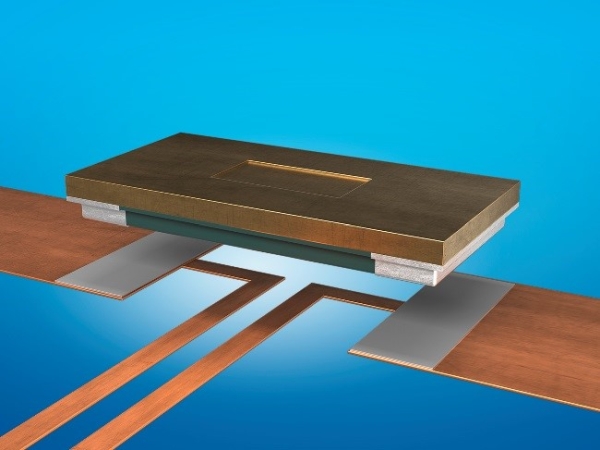
With the FMx shunt family, Isabellenhütte has now plugged a gap in the standard size range for precision resistances. It has not been possible with the previous product ranges to realize the usual S (2512), P (2010) and K (1206) standard sizes in the resistance range from 5 to 1 mOhm. The impetus for this new development was provided by increasing demand for these resistances as well from a wide range of industries, including the automotive sector (for in-car chargers and assistance systems) and industry (for BLDC drive units), but also from the consumer market (e.g. for white goods).
The Development Approach
The large cross-sectional areas required for low-ohmic components have been achieved by a change in construction, and the production process has also been significantly simplified. A further milestone for the FMx shunts has been the development of the NOVENTIN® resistance alloy to make it possible to realize these low-ohmic values in defined sizes. Until now, the ISA-PLAN® resistances (SMx, VMx and CMx) have followed a sandwich construction, consisting of a substrate – usually copper – an adhesive and a resistance film made out of the ZERANIN® and MANGANIN® resistance alloys developed in-house by Isabellenhütte. The FM in the title of the new range stands for “Full Metal”, i.e. the components are fashioned in the corresponding thickness out of a full metal plate made of the resistance material in question and directly soldered onto the underside. These variant is very low-ohmic due to the large cross-sectional areas. 1 mOhm is realized with the ZERANIN® alloy, 2 mOhm with MANGANIN®, and, for the first time, NOVENTIN® is being used in ISA-PLAN® products for the resistance range from 3 to 6 mOhm. The new design has given rise to a particularly robust construction which also makes it possible to leave out some work stages and reduce costs. An important point for the automotive industry is this: The components form a soldering point meniscus to guarantee the possibility of automated inspection of the soldering points.
- What resistance range do FMx shunts cover?
FMx shunts cover resistances from 1 to 6 mOhm. - Which standard chip sizes are available for the FMx shunts?
The FMx shunts are available in S (2512), P (2010) and K (1206) standard sizes. - What does FM stand for in FMx?
FM stands for Full Metal, indicating components fashioned from a full metal plate of resistance material. - Which alloy is used for 1 mOhm FMx resistors?
ZERANIN® is used for the 1 mOhm values. - Which alloy is used for 2 mOhm FMx resistors?
MANGANIN® is used for the 2 mOhm values. - Which alloy is used for 3 to 6 mOhm FMx resistors?
NOVENTIN® is used for the 3 to 6 mOhm values. - How does the FMx construction differ from ISA-PLAN sandwich resistances?
FMx uses a full metal plate of resistance material directly soldered on the underside, unlike the ISA-PLAN sandwich of substrate, adhesive and resistance film. - What performance characteristics do FMx shunts offer?
They offer very good long-term stability, a low temperature coefficient, and low thermoelectric voltages. - Why are FMx shunts suitable for automotive applications?
The robust FM construction and soldering point meniscus allow automated solder joint inspection, meeting automotive requirements.
