
Summary of HACKADAY PRIZE 2022: HOUSE VENTILATION REVERSE-ENGINEERED AND AUTOMATED
Marcel reverse-engineered his Orcon R15 ventilation remote to automate his home system via Home Assistant. He analyzed the SPI communications between the Atmel MCU and CC1101 chip, then built a custom USB dongle using an ATMega32U4. This solution allows for automated scheduling, noise reduction, and state tracking while maintaining compatibility with the original remote.
Parts used in the House Ventilation Automation:
- Orcon R15 Remote
- Atmel MCU
- CC1101 Chip
- Spare Arduino
- CC1101 Module
- ATMega32U4 Microcontroller
- Hammond Enclosure
- USB Dongle
[Marcel] thought – what if he had more control over his house ventilation system? You could add some nifty features, such as automatically ventilating your house in the mornings when everyone’s away, only creating noise when nobody’s around to hear it. Sadly, most ventilation systems are not automation-friendly at all – he was lucky, however, as his system came with a wireless remote. [Marcel] reverse-engineered this remote, created a USB dongle speaking the same protocol, and tied it into his Home Assistant setup!
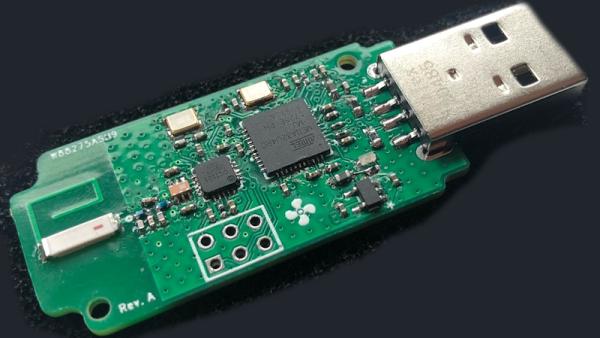
The remote in question is Orcon R15, with an Atmel MCU talking to a CC1101 chip through SPI. He sniffed the SPI communications when pressing different buttons, figured out the protocol by comparing the recordings, and built a test setup with a spare Arduino and CC1101 module. It worked, and he set out to design a separate dongle, using an ATMega32U4. The dongle looks pretty neat, and fits a Hammond enclosure – what’s not to like?
Then he set out to develop the firmware, and didn’t disappoint on that front either. His code doesn’t just imitate the original remote perfectly in terms of control, it also has user-friendly pairing flow, keeps track of the system’s current state, and still lets the original remote be used in parallel. Eagle files for the PCB are available on the project page, with the code and a PDF schematic available in the GitHub repo. This entire journey is described in the Hackaday.io page, and we would recommend you check it out for all the insights it provides!
Ventilation systems don’t tend to be designed for automation, and it’s endearing to see hackers working on conquering this frontier. Last time we’ve seen a ventilation system hack, it had the additional challenge of being landlord-friendly, and we think the hacker nailed it!
Source: HACKADAY PRIZE 2022: HOUSE VENTILATION REVERSE-ENGINEERED AND AUTOMATED
- How did Marcel gain control over his ventilation system?
He reverse-engineered the wireless remote and created a custom USB dongle integrated with Home Assistant. - What communication protocol does the Orcon R15 use?
The remote uses SPI to communicate between an Atmel MCU and a CC1101 chip. - Can the original remote still be used after the hack?
Yes, the firmware allows the original remote to function in parallel with the new automation. - What microcontroller was used for the custom dongle design?
An ATMega32U4 was selected for the separate dongle that fits inside a Hammond enclosure. - Does the new system track the current state of the ventilation?
Yes, the developed firmware keeps track of the system's current state. - Where can users find the Eagle files for the PCB?
The Eagle files are available on the project page linked in the article. - Is the code and schematic available for public review?
Yes, the code and a PDF schematic are located in the GitHub repo. - What feature helps reduce noise during operation?
The system can automatically ventilate when everyone is away to avoid creating noise.
