
Summary of D.I.Y SMART RGB MATRIX 8×16
This project details the construction of a customizable 8×16 RGB LED Matrix using an Arduino Uno or Nano. The matrix supports features like scrolling messages, animations, and music visualization. By integrating a NodeMCU, it can also function as a smart display for weather data or PLC system values. The article provides a comprehensive parts list and tool requirements necessary to build this DIY electronic display.
Parts used in the DIY Smart RGB Matrix:
- Arduino Uno/Nano
- NodeMCU
- 128 Common Anode RGB LEDs
- 16 A1013 Power NPN Transistors
- 2 74HC138 De-multiplexer
- 3 74HC595 Shift Register
- 3 0.1uF Electrolytic Capacitor
- 24 100Ω Resistor
- 16 560Ω Resistor
- Single-Side Copper Prototype PCB 9x15
- Double-Side Copper Prototype PCB 9x15
- 40Pin 2.54mm/19mm Long single row Headers
- Male & Female 40pin 2.54mm Header
- Power Supply Adapter 5V/2A
- DC Power Jack supply socket
- Rainbow Color Flat Ribbon Cable
- Wire Cable Striper
- Small Wire Cable Cutter
- ABS Styrene Plastic Rectangular Tube Or ABS Round Plastic Pipe
- Electric Adjustable Temperature Welding Solder
- Multimeter
- 9V Battery & battery jack
- Screwdriver
In this project, I’ll show you how to make your own 8×16 RGB LED Matrix using Arduino Uno/ Nano. An LED Matrix can show scrolling messages, display animations, music spectrum analyzer … With integrating NodeMCU, it can be used as small screen to show weather information from internet or any process values when it connect to Ethernet PLC system.
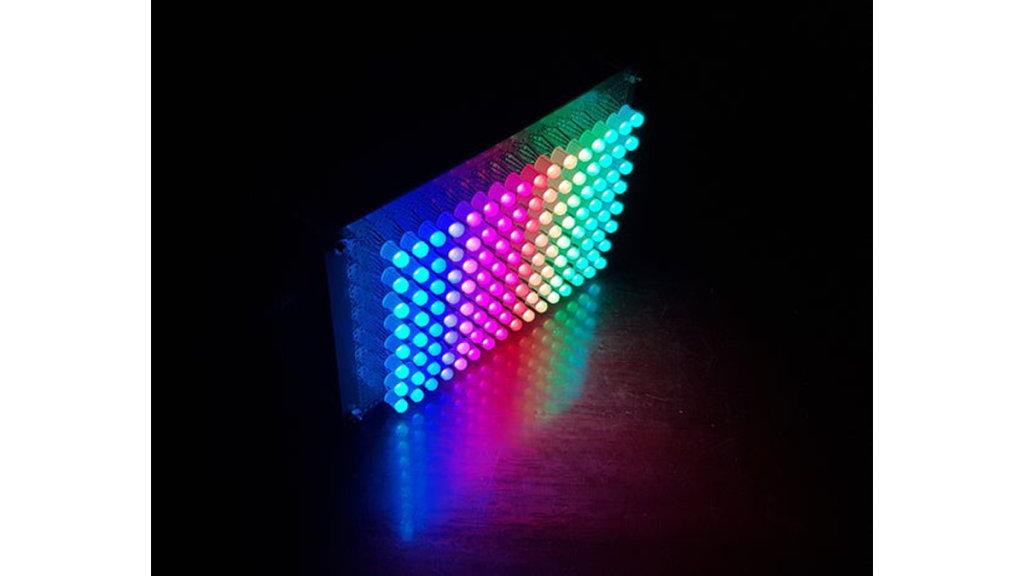
So, let’s watch my videos below and follow my instructables to start with building your own RGB LED Matrix.
- Auto-rotate scrolling message test (update on November 6th, 2018): Using MPU-6050 with Kalman filter to calculate the angle when we rotate Led Matrix.
- Animation Test
VU meter test: It shows music
volume unit by using fix FFT transformation. Led Matrix will be connected to music player by audio jack 3.5mm.
Smart Display Test: Connecting to PLC system
Smart Display Test: Showing weather information from Internet
Step 1: PARTS LIST & TOOL
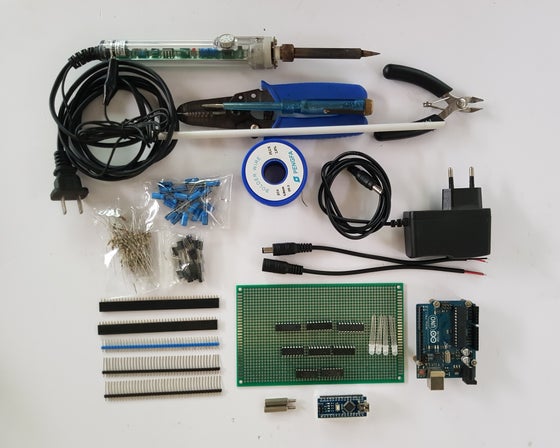
Electronic components & tools can be purchased from ebay as links below:
1. Electronic components:
- 1 x Arduino Uno/Nano
- 1 x NodeMCU
- 128 x Common Anode RGB LEDs
- 16 x A1013 Power NPN Transistors
- 2 x 74HC138 De-multiplexer
- 3 x 74HC595 Shift Register
- 3 x 0.1uF Electrolytic Capacitor
- 24 x 100Ω Resistor
- 16 x 560Ω Resistor
- 1 x Single-Side Copper Prototype PCB 9×15
- 1 x Double-Side Copper Prototype PCB 9×15
- 5 x 40Pin 2.54mm/19mm Long single row Headers
- 5 x Male & Female 40pin 2.54mm Header
- 1 x Power Supply Adapter 5V/2A
- 1 x DC Power Jack supply socket
- 1 meter x Rainbow Color Flat Ribbon Cable
2. Tools
- Wire Cable Striper
- Small Wire Cable Cutter
- 5mm ABS Styrene Plastic Rectangular Tube Or ABS Round Plastic Pipe
- 9V Battery & battery jack for LED testing
- Screwdriver
Source: D.I.Y SMART RGB MATRIX 8×16
- What functions can the LED Matrix perform?
It can show scrolling messages, display animations, act as a music spectrum analyzer, show weather information from the internet, or display process values when connected to an Ethernet PLC system. - How does the auto-rotate scrolling message test work?
It uses an MPU-6050 with a Kalman filter to calculate the angle when the LED Matrix is rotated. - How is the VU meter test implemented?
It shows music volume units by using a fix FFT transformation and connects the Led Matrix to a music player via a 3.5mm audio jack. - Can this matrix connect to industrial systems?
Yes, it can be used as a small screen to show any process values when it connects to an Ethernet PLC system. - What microcontroller options are recommended for the base project?
The project suggests using an Arduino Uno or Nano to build the 8x16 RGB LED Matrix. - How many common anode RGB LEDs are required for the build?
You need 128 Common Anode RGB LEDs to construct the matrix. - Which shift registers are included in the parts list?
The project requires three 74HC595 Shift Registers. - What power supply specifications are needed?
A Power Supply Adapter rated at 5V/2A is required along with a DC Power Jack supply socket. - What type of plastic tube is suggested for the casing?
The guide suggests using a 5mm ABS Styrene Plastic Rectangular Tube or ABS Round Plastic Pipe. - Are tools like wire strippers mentioned for the build?
Yes, a Wire Cable Striper and Small Wire Cable Cutter are listed as necessary tools.
