
Summary of Control Loop Challenges of Wireless Systems
Automation employs control systems to minimize human intervention, utilizing feedback loops like Progressive Automation Linear Actuators. The article highlights challenges in wireless closed-loop systems, noting that standard networks often ignore delay deadlines, causing data delays that lead to negative reinforcement and system instability. Solutions include using IEEE 802.15.4 ZigBee devices, Microchip's MRF24WB Wi-Fi module, and assigning specific delay requirements to packets. Additionally, IP technology and Machine-to-Machine (M2M) applications are explored for deterministic control.
Parts used in Wireless Control Loop Systems:
- Progressive Automation Linear Actuators
- Embedded modules with Wi-Fi support
- IEEE 802.15.4 ZigBee standard devices
- Microchip MRF24WB Wi-Fi module
- Sensors
- Controllers
- Monitoring middleware
- Business operation software
Automation is defined as using various control systems to operate equipment such that there is minimal human intervention. Closed control loops (feedback systems) regulate how other systems or devices behave by taking into consideration their output and making corrections based on feedback. An example of this feedback system is Progressive Automation Linear Actuators. In this article challenges of control loops in wireless systems are discussed.
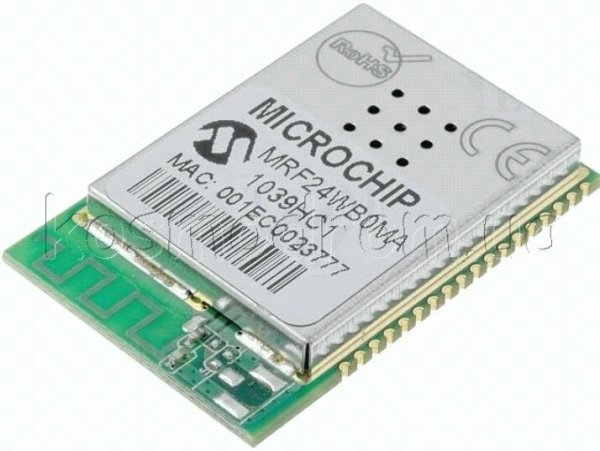
Though embedded modules can be used be used with Wi-Fi, the aim of recent protocols is providing wireless networks with more focused support for control loops. For tight control loops, devices supporting the IEEE802.15.4 ZigBee standard can be used in supporting the recent protocols. Below is a Microchip’s MRF24WB Wi-Fi module.
For sharing a common medium of communication, sensors and controllers are required by a control system that is adopting wireless communication. The network’s quality is a trivial part of the functioning of the overall system when implementing a closed-loop control system using a common communication system.
Earlier short range wireless networks pose a problem since delay deadlines are not used in packet consideration and regardless of these requirements, the packets are treated the same. For a closed loop control system, this presents a major challenge since actuators influencing the system are controlled by the sensor’s data. Data delays lead to negative reinforcement, hence instead of a process being kept within close limits, it runs away.An open loop system, on the other hand, returns analyzed data with changes to a central controller, ordered in minutes or even seconds. In situations or processes that change slowly, the above is used where the process can be brought back easily, is not within its limit or terminated.
The above can be by-passed by having an application use the wireless medium associating every packet with a delay requirement. In a system where a high number of users exist, Wireless Sensor Network simulations done using the IEEE 802.15.4 standard showed a considerable outperformance of the original standards by these mechanisms.
Researchers are looking into using IP technology to be used in wireless networks to provide deterministic control loops. The use of machine-to-machine applications (M2M) has been increasing. In a typical M2M scenario, an anomaly is detected by the sensor then sends to a monitoring middleware an alert that gives information to a business operation software, produces a command for an actuator, and to an operator off the loop, it sends an alarm.
Read more: Control Loop Challenges of Wireless Systems
- What is the main challenge of using standard short-range wireless networks for closed-loop control?
Standard networks treat all packets equally regardless of delay requirements, leading to data delays that cause negative reinforcement and system instability. - How can delay deadlines be addressed in wireless communication for control systems?
By having an application associate every packet with a specific delay requirement rather than treating them all the same. - Which device supports tight control loops according to recent protocols?
Devices supporting the IEEE 802.15.4 ZigBee standard can be used to support tight control loops. - What happens if data delays occur in a closed loop control system?
Data delays lead to negative reinforcement, causing the process to run away instead of staying within close limits. - What technology are researchers looking into for deterministic control loops?
Researchers are investigating the use of IP technology in wireless networks to provide deterministic control loops. - What components are required for a control system adopting wireless communication?
Sensors and controllers are required by a control system that is adopting wireless communication. - How does an open loop system handle analyzed data compared to a closed loop?
An open loop system returns analyzed data with changes to a central controller ordered in minutes or even seconds. - What role does monitoring middleware play in a typical M2M scenario?
The monitoring middleware receives alerts from sensors and provides information to business operation software.
