
Summary of Comma AI’s Panda is a Car Hacking Dongle for Self-Driving Possibilities
Comma.ai, founded by George Hotz, launched the Panda, an open-source OBD II dongle designed to extract vehicle sensor data for self-driving applications. Originally a canceled project due to safety concerns, the Panda connects to cars from 1996 onwards (preferably 2010+) via CAN, LIN, and GMLAN networks. It measures metrics like speed and braking force, pairs with Openpilot software for vehicle control, and interfaces with computers or smartphones via USB and WiFi. The device also supports analysis tools like Cabana and various programming libraries.
Parts used in Comma AI Panda Project:
- Panda OBD II Dongle
- Openpilot Software
- Cabana CAN Analysis Tool
- Android chffr App
- iOS chffr App
- Python Library (pandacan)
- SocketCAN Linux Tools
- Wireshark
- Windows J2534 Tools
Comma.ai is a self-driving car startup founded by George Hotz, the American hacker known for unlocking the iPhone and the PlayStation 3. Comma AI who originally wanted to build self-driving car kit, canceled their initial project due to safety concerns from NHTSA but later open-source their project and has now launched a Panda, an On-Board Diagnostics (OBD) II adapter that is expected to expose a car sensor data with the hopes of turning that information for self or assisted driving application.
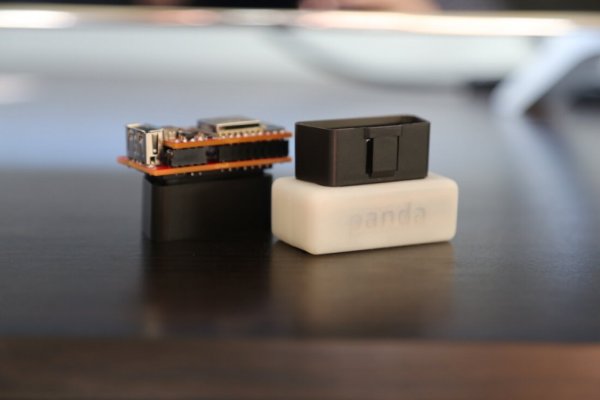
Panda is a small size OBD II dongle and will plug into the port of most new cars made since 1996 with preference giving to vehicles of 2010 and above. Panda supports 3 CAN (Controller Area Network), 2 LIN (Local Interconnect Network) and 1 GMLAN (General Motor Local Area Network) for access to almost all of the sensors in most of the cars on the road. It also includes WiFi and USB port to help interface with a computer and smartphone.
With a dimension of 34 mm x 50 mm x 27 mm, Panda can read a host of data. Panda will be able to measure the car speed, location (if available), fault codes, braking force, engine speed, gas level, and many more. To help parse all that information Comma AI also launched Cabana a CAN analysis tool.
Panda can be paired with Openpilot, the company’s open-source autonomous driving software and this pairing could be used to take control of a compatible vehicle’s gas, brakes, lights, and steering.
Some Specifications of Panda dongle
- Dimensions – 34mm x 50mm x 27mm
- Weight: 32g
- Car Interfaces –
- 3x CAN
- 2x LIN
- 1x GMLAN
- Connectivity – USB (with fast charging support) & WiFi
- Software Support
- Android and iOS chffr (getchffr.com)
- Cabana (comma CAN analysis tool)
- Openpilot (open source self-driving)
- Python library (pip install pandacan)
- SocketCAN (Linux can-utils, Wireshark)
- Wi-Fi ELM327 (Android and iOS apps)
- Windows J2534 (Car manufacturer tools)
Read more: Comma AI’s Panda is a Car Hacking Dongle for Self-Driving Possibilities
-
What is the purpose of the Comma AI Panda?
The Panda is an OBD II adapter expected to expose car sensor data for use in self or assisted driving applications. -
Which vehicles are compatible with the Panda dongle?
The Panda plugs into most new cars made since 1996, with preference given to vehicles of 2010 and above. -
How does the Panda interface with a computer or smartphone?
The device includes WiFi and a USB port to help interface with a computer and smartphone. -
What specific data can the Panda measure?
Panda can measure car speed, location if available, fault codes, braking force, engine speed, gas level, and many more. -
Can the Panda take control of a vehicle?
Yes, when paired with Openpilot software, it could be used to take control of a compatible vehicle's gas, brakes, lights, and steering. -
What operating systems support the Panda?
Software support includes Android and iOS via the chffr app, as well as Linux and Windows environments. -
What network protocols does the Panda support?
It supports 3 CAN, 2 LIN, and 1 GMLAN networks for access to almost all sensors in most cars on the road.
