
Summary of BLINKENLIGHTS TO BOOTLOADER: A GUIDE TO STM32 DEVELOPMENT
The article highlights an 18-video series by Francis Stokes of Low Byte Productions that teaches STM32 Cortex-M4 development. It covers setting up the development environment, blinking LEDs, using peripherals, building an application and an evolving bootloader with firmware validation, updates, and cryptographic signing (not recommended for production). The series aims to make embedded topics engaging and more videos are planned; alternatives to STM32 are also referenced.
Parts used in the STM32 Development Guide:
- STM32 Cortex-M4 microcontroller (development board)
- Development environment/tools for STM32 (toolchain/IDE)
- LEDs for blinking examples
- Peripherals used in examples (various MCU peripherals)
- Bootloader code and firmware images
- Cryptographic signing tools (for bootloader feature)
While things like the Arduino platform certainly opened up the gates of microcontroller programming to a much wider audience, it can also be limiting in some ways. The Arduino IDE, for example, abstracts away plenty of the underlying machinations of the hardware, and the vast amount of libraries can contribute to this effect as well. It’s not a problem if you just need a project to get up and running, in fact, that’s one of its greatest strengths. But for understanding the underlying hardware we’d recommend taking a look at something like this video series on the STM32 platform.
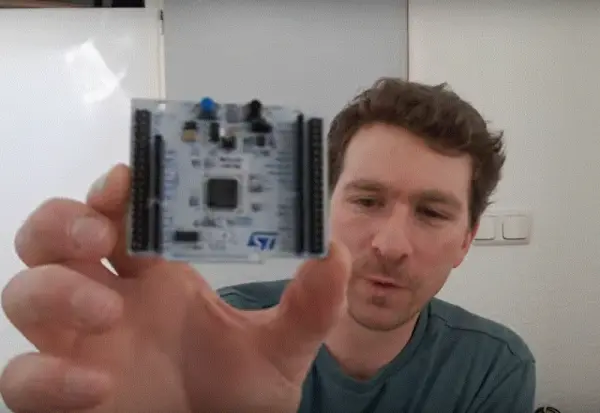
The series comes to us from [Francis Stokes] of Low Byte Productions who has produced eighteen videos for working with the STM32 Cortex-M4 microcontroller. The videos start by getting a developer environment up and blinking LEDs, and then move on to using peripherals for more complex tasks. The project then moves on to more advanced topics and divides into two parts, the development of an application and also a bootloader. The bootloader begins relatively simply, and then goes on to get more and more features built into it. It eventually can validate and update firmware, and includes cryptographic signing (although [Francis] notes that you probably shouldn’t use this feature for production).
One of the primary goals for [Francis], apart from the actual coding and development, was to liven up a subject matter that is often seen as dry, which we think was accomplished quite well. A number of future videos are planned as well. But, if you’re not convinced that the STM32 platform is the correct choice for you, we did publish a feature a while back outlining a few other choices that might provide some other options to consider.
Source: BLINKENLIGHTS TO BOOTLOADER: A GUIDE TO STM32 DEVELOPMENT
- What does the video series by Francis Stokes cover?
It covers setting up the STM32 development environment, blinking LEDs, using peripherals, developing an application, and building a bootloader with features like firmware validation and cryptographic signing. - How many videos are in the series?
The series consists of eighteen videos. - Does the series include bootloader development?
Yes, it includes bootloader development that grows in features up to firmware validation, updates, and cryptographic signing. - Should the cryptographic signing feature be used in production?
No, Francis notes you probably should not use the cryptographic signing feature for production. - Does the series start with basic topics?
Yes, it starts with getting the development environment up and blinking LEDs before moving to peripherals and advanced topics. - Are more videos planned?
Yes, a number of future videos are planned. - Is STM32 the only platform discussed as an option?
No, the article references another feature that outlines a few other choices to consider besides STM32.
