
Summary of ARDUINO BASED MPPT SOLAR CHARGE CONTROLLER
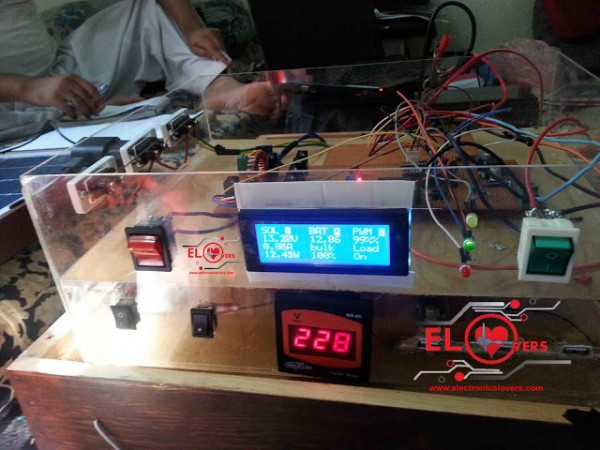
MPPT (Maximum Power Point Tracking) is an algorithm that optimizes power extraction from photovoltaic modules by matching solar output current with battery voltage, significantly reducing energy loss compared to standard controllers. This project uses an Arduino to manage charging while providing real-time monitoring and protection features.
Parts used in the Arduino Based MPPT Solar Charge Controller:
- Arduino microcontroller
- MPPT algorithm
- LED indicators for charge levels
- LCD (20x4 character) display
- Lightning protection circuit
- Over voltage protection
- Reverse power flow protection
- Over load protection
- Short Circuit protection
- WiFi module for data logging
- USB port for gadgets
- Solar panel (50 Watts)
what is Mppt( Maximum power point tracking) ?
“we use MPPT algorithm to get the maximum available power from the Photovoltaic module under certain conditions”
How MPPT works ? Why 150W solar panel does not equal to 150 w?
For example you bought a new solar panel from the market which puts out 7 amps. under charge the setting of a battery is configured to 12 volts : 7 amps times 12 volts = 84w (P=V*I) You lost over 66 watts – but you paid for 150 watts. That 66 watts is not going anywhere, but it,s due to the poor match of the solar output current and battery voltage .
After using MPPT algorithm we can get the Maximum available power
Battery gets is now 12 amps at 12 volts
Output power is equal to p= V*I p=12*12=144w
Now you still have almost 144 watts, and everyone is happy.
Now you still have almost 144 watts, and everyone is happy.
Specification of the project
1.This project is Based on MPPT(Maximum power point tracker) algorithm
2. LED indication to show the low mid and high level of charge stat
3. LCD (20×4 character ) display for displaying power,current,voltages etc
4. Lightning /Over voltage Protection
5. Protection For Reverse power flow
6. Over load & Short Circuit protection
7. Logging data through WiFi
8.Charge your Cellphone, tablets any gadgets throug USB port
Electrical specifications :
1.Rated Voltage= 12V
2.Maximum input current = 5A
3.Load current support upto =10A
4. In put Voltage = Solar panel 12 to 24V
5.power of Solar panel = 50 Watts
For More Details: ARDUINO BASED MPPT SOLAR CHARGE CONTROLLER
-
What is MPPT?
It is a Maximum power point tracker algorithm used to get the maximum available power from the Photovoltaic module under certain conditions. -
How does MPPT work to improve efficiency?
It matches the solar output current and battery voltage to prevent power loss, allowing a system to utilize nearly 144 watts instead of losing over 66 watts. -
Why does a 150W solar panel not equal 150 watts without MPPT?
Without proper matching between solar output current and battery voltage, significant power is lost, such as dropping from 150W potential to 84W delivered. -
Can this project log data through WiFi?
Yes, the project includes a feature to log data through WiFi. -
Does the controller support reverse power flow protection?
Yes, the specification list includes protection for reverse power flow. -
Can I charge cellphones or tablets using this device?
Yes, you can charge cellphones, tablets, and any other gadgets through the USB port provided. -
What voltage range does the input solar panel support?
The input voltage supports a solar panel ranging from 12 to 24 volts. -
What information is displayed on the LCD screen?
The 20x4 character LCD displays power, current, voltages, and other relevant metrics.
