
Summary of Anti-Collision (Wall Hugging) Robot
This project describes an anti-collision robot capable of detecting nearby objects and walls using onboard sensors. Upon sensing proximity, the vehicle executes specific parameters to avoid collisions. Additionally, it features a "wall hugging" capability, allowing it to maintain close proximity to a wall while resuming its safety protocols. The system relies on sensor input to trigger these automated avoidance maneuvers.
Parts used in the Anti-Collision Robot:
- Vehicle
- Onboard sensor (for object detection)
- Onboard sensor (for wall proximity)
Our project consists of a vehicle designed to avoid collisions with objects and walls. The vehicle achieves this through the use of an onboard sensor to determine when such an object was close by.
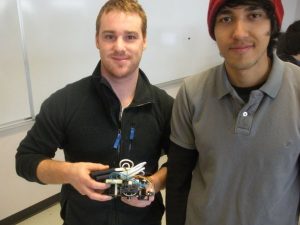
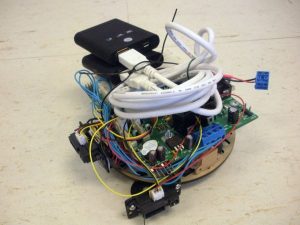
After recognizing an object within a certain distance the vehicle would then follow a series of parameters to determine the appropriate action to take in order to avoiding colliding with the object. We further designed our robot to use another onboard sensor to keep a close proximity with a wall or object as it resumed it’s anti-collision parameters.
Read More Detail :Anti-Collision (Wall Hugging) Robot
-
How does the vehicle detect objects?
The vehicle uses an onboard sensor to determine when an object is close by. -
What happens after an object is recognized?
The vehicle follows a series of parameters to determine the appropriate action to avoid colliding with the object. -
Does the robot have a wall-hugging feature?
Yes, the robot uses another onboard sensor to keep close proximity with a wall or object. -
Can the robot resume anti-collision parameters while near a wall?
Yes, the design allows the robot to resume its anti-collision parameters while maintaining proximity to a wall. -
What is the primary function of the first sensor?
The first sensor is used to recognize an object within a certain distance. -
How many onboard sensors are used in this project?
Two onboard sensors are used: one for object detection and one for wall proximity.
