
Summary of A MOSTLY 3D PRINTED SPEAKER
This article describes a simple, 3D-printed speaker project by [Mattosx]. It utilizes the principle of a coil moving within a magnetic field to vibrate a membrane and produce sound. The design features a rectangular body housing three neodymium magnets, with a separately printed membrane that includes an integrated spindle for the coil. The assembly is secured using socket-head cap screws and can be driven by an Arduino.
Parts used in the 3D Printed Speaker:
- Permanent magnet (specifically three neodymium magnets)
- Membrane
- Coil
- Integrated spindle
- Socket-head cap screws
- Arduino
The common magnetic loudspeaker is, fundamentally, a fairly simple machine. A static magnetic field is generated by a permanent magnet, and a membrane is mechanically connected to a coil. When a varying electrical current is passed through the coil, this causes the coil to move due to the magnetic field, vibrating the membrane and producing sound. [Mattosx] put this theory into practice with a simple 3D-printed speaker.
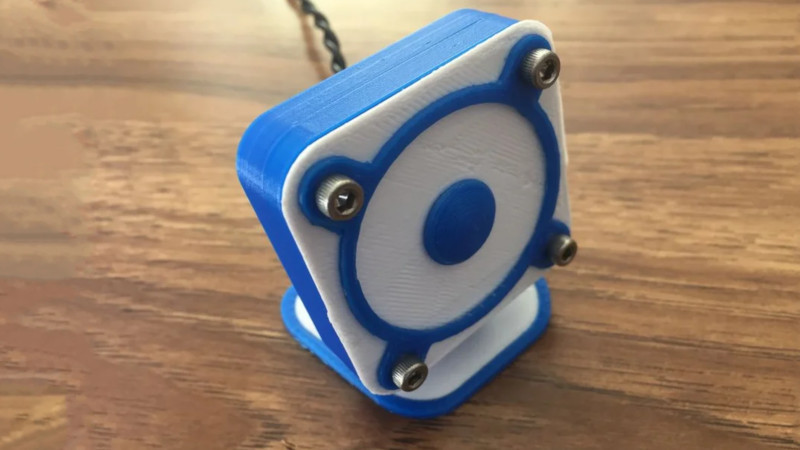
It’s not the first 3D-printed speaker we’ve ever seen, but it’s one of the cutest. The main body of the speaker is rectangular, and has a cavity in which three neodymium magnets are placed. The vibrating membrane is then printed separately, including an integrated spindle upon which the coil is wound. The assembly is held together with some socket-head cap screws which complement the pleasantly modern look.
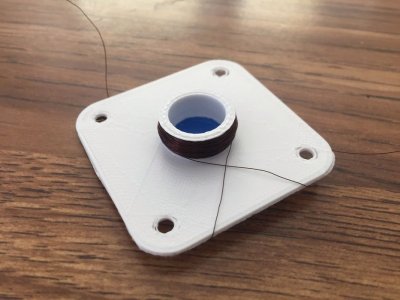
The device does a good job delivering the bleeps when hooked up to an Arduino, and we could see this basic design serving well in all manner of charming 3D-printed builds. Video after the break.
Source: A MOSTLY 3D PRINTED SPEAKER
- How does this speaker produce sound?
Varying electrical current passes through a coil, causing it to move due to a static magnetic field, which vibrates the membrane. - What material is the main body made of?
The main body is 3D printed and features a rectangular shape with a cavity. - How many magnets are used in the device?
The device uses three neodymium magnets placed inside the cavity of the main body. - Can this speaker be powered by an Arduino?
Yes, the device delivers bleeps when hooked up to an Arduino. - How is the coil attached to the membrane?
The vibrating membrane is printed separately with an integrated spindle upon which the coil is wound. - What fasteners hold the assembly together?
Socket-head cap screws are used to hold the assembly together. - Is this the first 3D-printed speaker ever created?
No, it is not the first 3D-printed speaker seen, but it is described as one of the cutest.
