
Summary of A CARBON NANOTUBE MICROPROCESSOR MATURE ENOUGH TO SAY HELLO
This article details the creation of the first fully programmable 16-bit Carbon Nanotube microprocessor by MIT and Analog Devices engineers. Led by Professor Max Shulaker, this chip features nearly 15,000 transistors and successfully executed a "Hello World" program. It aims to replace silicon by offering three times the speed and one-third the energy consumption. The team addressed purity issues caused by metallic nanotubes by designing specific logic gate combinations to avoid circuit shorts and signal noise.
Parts used in the 16-bit Carbon Nanotube Microprocessor:
- Carbon Nanotubes
- Silicon Transistor (as comparison)
- Circuit based on switches
- CMOS Logic gates
- Metallic Nanotubes
- Logic Gates (specific combination for glitch avoidance)
Did you know that researchers are looking for an alternative to silicon? Did you know in principle that Carbon Nanotubes processor could run three times faster while consuming about one-third of the energy of their silicon predecessor? The Engineers at MIT and Analog Devices have created the first fully programmable 16-bit Carbon Nanotube microprocessor.
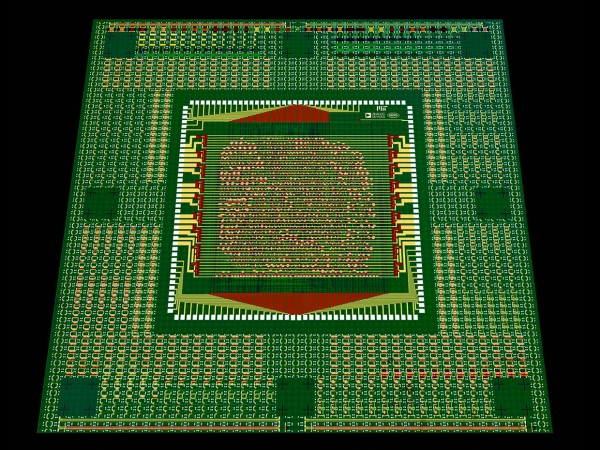
Since Silicon Transistor is no longer shrinking as it used to and some of its inefficiencies are also becoming exposed with switches leaking current while circuit based on them gets hot. The problem is only becoming worse with transistors becoming smaller and circuits getting denser. However, as a solution, a team of researchers is hunting for an alternative to silicon with Carbon nanotubes which have long shown promise of being a viable alternative.
Carbon nanotubes are tubes made of carbon with diameters typically measured in nanometers. They are almost atomically thin and as a result of this, they conduct electricity very well and can be said to be better semiconductors than silicon. Leveraging on these features, carbon nanotubes can not only make traditional chips more powerful, but they can also be used to create entirely new computing systems— which are ultrafast and efficient three-dimensional chips that can be employed in data centers as well as the wide world of computing elements used in cars, smartphones, and the sensor-filled Internet of Things.
However, until now, they have proved too difficult to use in constructing a complex computing system but the team of researchers led by Professor Max Shulaker has successfully built a chip using them and the chip was tested by running a simple program “Hello World!”. The developed chip is the most complex integration of Carbon nanotube-based CMOS logic so far with nearly 15,000 transistors.
While the milestone is a great one, there are a few issues encountered by the researchers. One of the issues is the Carbon nanotube purity, with each batch of semiconducting carbon nanotube, containing 0.01 percent of metallic nanotube which is undesirable as they act as wires and they can short out the circuit, waste power and/or produce noisy signals. To solve this, Shulaker and colleagues came up with a solution to design a separate circuit with a good combination of logic gates and avoid using the bad combination that was most confused by the metallic nanotube glitches.
Read more: A CARBON NANOTUBE MICROPROCESSOR MATURE ENOUGH TO SAY HELLO
- Can Carbon Nanotube processors run faster than silicon?
Yes, they can run three times faster while consuming about one-third of the energy. - Why are researchers looking for an alternative to silicon?
Silicon transistors are no longer shrinking effectively and suffer from inefficiencies like current leakage and heat. - What is the most complex integration of Carbon nanotube-based CMOS logic so far?
The chip developed by the team with nearly 15,000 transistors. - How did the researchers solve the issue of metallic nanotubes?
They designed a separate circuit with a good combination of logic gates to avoid glitches caused by metallic nanotubes. - What percentage of metallic nanotubes were found in each batch?
Each batch contained 0.01 percent of metallic nanotubes. - Does the new chip consume more or less power than silicon predecessors?
It consumes about one-third of the energy of its silicon predecessor. - What program was used to test the developed chip?
A simple Hello World program was run to test the chip.
