
Summary of A MAGNETIC FIELD STRENGTH METER USING AN ARDUINO
This article describes a DIY magnetic field strength meter built using an Arduino Nano and a UGN 3503U linear Hall effect sensor. The device converts the sensor's voltage output, which correlates to magnetic field strength in gauss, into readable data via an OLED display. Encased in a custom PCB shell with the sensor protruding from a pen cap, it offers a low-cost solution for measuring static magnetic fields.
Parts used in the Magnetic Field Strength Meter:
- Arduino Nano
- UGN 3503U Hall effect device
- OLED display
- Custom PCB case
- Plastic ballpoint pen shell
We’re used to Hall effect devices as proximity sensors in mechanical systems, used to provide detection of something that has a magnet attached to it. However it’s easy to forget that the devices that provide a magnet-or-not digital output are only part of the story, and linear Hall effect devices provide a handy way to measure a static magnetic field. It’s something [mircemk] demonstrates, with an Arduino-powered magnetic field strength meter that uses a UGN 3503U Hall effect device.
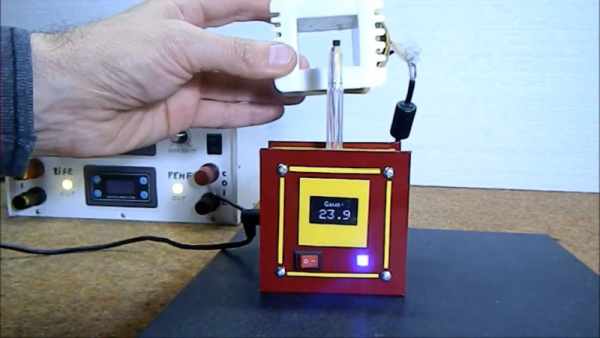
The circuit is extremely simple, comprising the sensor, an Arduino Nano, and an OLED display. This device is handy because its voltage output has a known relationship to the gauss level the sensor is experiencing, so while the accuracy of its calibration isn’t verified it can at least give a believable reading derived from the Arduino’s ADC.
The whole is wrapped up in an attractive case that looks as though it has been made from PCB material, with the sensor protruding on what seems to be the shell of a plastic ballpoint pen. It makes a handy instrument that provides a useful function for not a lot of money, so what’s not to like! Take a look at the video below the break for the full story.
Surprisingly such projects are few and far between here at Hackaday, however it’s not the first magnetic field measurement we’ve seen.
Source: A MAGNETIC FIELD STRENGTH METER USING AN ARDUINO
- What type of Hall effect device is used in this project?
The project uses a UGN 3503U linear Hall effect device. - How does the device measure magnetic field strength?
It uses the known relationship between the sensor's voltage output and the gauss level experienced by the sensor. - Can the accuracy of the calibration be verified?
The article states that the accuracy of its calibration is not verified. - What component provides the digital or analog conversion?
The Arduino ADC derives the believable reading from the sensor's voltage output. - Is the circuit design complex?
No, the circuit is described as extremely simple. - What material is the attractive case made from?
The case appears to have been made from PCB material. - Where is the sensor located on the finished device?
The sensor protrudes on what seems to be the shell of a plastic ballpoint pen. - Does this project provide a cheap way to measure static magnetic fields?
Yes, it provides a useful function for not a lot of money.
