
Summary of ANAVI GAS DETECTOR – AN ESP8266-POWERED AIR QUALITY MONITOR
ANAVI Gas Detector is an open-source, ESP8266-based Wi-Fi development board designed for air quality monitoring and gas detection. It supports analog MQ sensor modules (MQ-135, MQ-2, MQ-3), features slots for a mini OLED display and up to three I2C sensors, and integrates with Home Assistant, ThingSpeak, Arduino IDE, and PlatformIO. The project utilizes KiCAD and OpenSCAD for design, requires no soldering, and is manufactured in Bulgaria.
Parts used in the ANAVI Gas Detector:
- ESP8266 microcontroller
- Analog MQ gas sensor modules (MQ-135, MQ-2, MQ-3)
- Mini OLED display slot
- Three additional I2C sensor module slots
- KiCAD design files
- OpenSCAD design files
ANAVI Gas Detector is an ESP8266-powered, open source, Wi-Fi dev board for monitoring air quality and detecting dangerous gases.
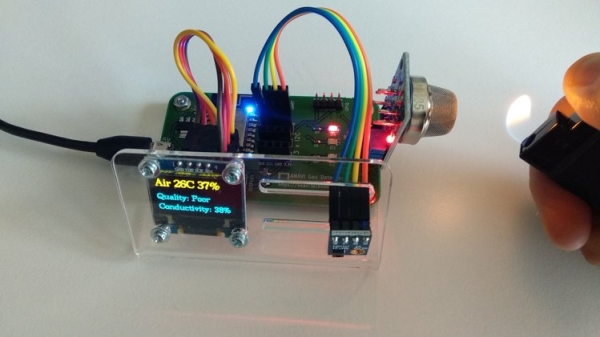
ANAVI Gas Detector is an ESP8266-powered, open source, Wi-Fi dev board for monitoring air quality and detecting dangerous gases. It supports popular analog MQ gas sensor modules such as MQ-135, MQ-2, MQ-3, etc. Furthermore, it comes with slots for mini OLED display and up to three additional I2C sensor modules. All these features make ANAVI Gas Detector appropriate for developers, makers, students and open source enthusiasts interested in home automation.
ANAVI Gas Detector is fully compliant with Arduino IDE, PlatformIO, the popular open source home automation software, Home Assistant via the lightweight messaging protocol MQTT and ThingSpeak, the open IoT platform with MATLAB analytics. With ANAVI Gas Detector it is easy for developers to focus on the software by easily building and flashing their own versions of the source code. Tech savvy users can easily integrate ANAVI Gas Detector in their existing open source home automation platforms.
ANAVI Gas Detector is an entirely open source project that combines open source hardware with free and open source software. KiCAD and OpenSCAD were used to design ANAVI Gas Detector. Source code and schematics are available at GitHub. All units will be manufactured in Plovdiv, Bulgaria. Getting started with ANAVI Gas Detector is easy. No soldering is required. Comprehensive user’s manual with exact steps for using ANAVI Gas Detector will be provided.
Read more: ANAVI GAS DETECTOR – AN ESP8266-POWERED AIR QUALITY MONITOR
- What is the ANAVI Gas Detector?
It is an ESP8266-powered, open source, Wi-Fi dev board for monitoring air quality and detecting dangerous gases. - Which gas sensor modules does it support?
It supports popular analog MQ gas sensor modules such as MQ-135, MQ-2, and MQ-3. - Can I connect extra sensors to this board?
Yes, it comes with slots for a mini OLED display and up to three additional I2C sensor modules. - Does the project require soldering?
No, getting started with ANAVI Gas Detector is easy and no soldering is required. - How can I integrate this device into home automation?
It is fully compliant with Home Assistant via MQTT and ThingSpeak for integration. - What software tools were used to design the hardware?
KiCAD and OpenSCAD were used to design ANAVI Gas Detector. - Where are the units manufactured?
All units will be manufactured in Plovdiv, Bulgaria. - Is the source code available for developers?
Yes, source code and schematics are available at GitHub.
