
Summary of A visit to the Arduino factory on DomusWeb
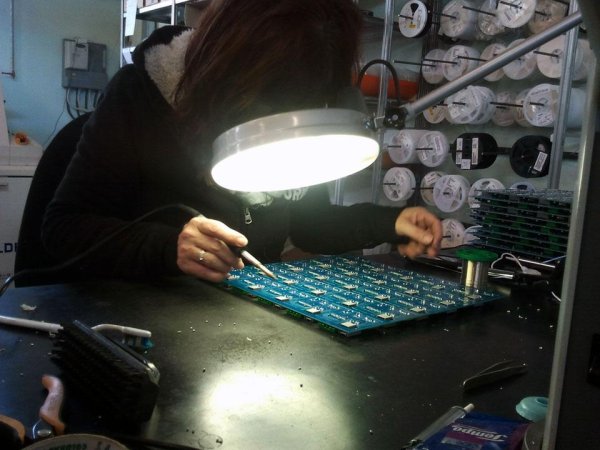
Arduino boards are largely manufactured in and around Strambino, near Ivrea, Italy, within a cluster of small and medium enterprises characteristic of Italian industrial districts. The region’s electronics expertise traces back to Olivetti’s legacy, which influenced local know-how and institutions such as the Interaction Design Institute housed in a former Olivetti building noted for blue tiles — echoing the color of Arduino boards.
Parts used in the Arduino manufacturing project:
- Arduino boards (assembled PCBs)
- Purchased electronic components (certain unspecified parts)
- Printed circuit board materials
- Surface-mount and through-hole components
- Solder and soldering equipment
- Testing and programming equipment
- Packaging materials
- Factory tooling and assembly machines
The entire manufacturing process (except for certain purchased components) [of Arduino boards] takes place in and around Strambino, Ivrea, in a context dominated by the small- and medium-sized companies that are typical of Italian industrial districts and of the “Made in Italy” phenomenon itself.
Ivrea’s history is another interesting part of the picture. The city was intimately tied to the presence of Olivetti, a company with a legacy of incredible electronics know-how, and an entire generation of experts. In fact, the Interaction Design Institute was established in a former Olivetti building randomly covered with blue tiles — just like the Arduino boards.
For more detail: A visit to the Arduino factory on DomusWeb
- Where does the Arduino manufacturing process take place?
Mostly in and around Strambino, Ivrea, Italy. - Are all components produced locally?
No, certain components are purchased rather than manufactured locally. - What kind of companies dominate the manufacturing context?
Small- and medium-sized companies typical of Italian industrial districts. - How is Ivrea historically connected to electronics expertise?
Ivrea was tied to Olivetti, which left a legacy of electronics know-how and experts. - Did Olivetti influence local institutions?
Yes, the Interaction Design Institute was established in a former Olivetti building. - Is there any symbolic link between the building and Arduino boards?
The former Olivetti building is covered with blue tiles, similar to the blue of Arduino boards.
