
Summary of 60GHZ RF ANTENNA MODULE USES OPTIMISED ANTENNA BEAMFORMING
Murata introduced the LBKA0ZZ1NH-317, a high-gain millimeter-wave RF antenna module supporting IEEE802.11ad at 60 GHz for speeds up to 4.62 Gbps. Designed for next-gen wireless networks, it addresses bandwidth demands from 4K video and AR/VR while reducing wired infrastructure costs. Utilizing proprietary LTCC circuit boards, the module enables optimized beamforming, multi-module linking for extended ranges, and reliable outdoor operation due to high heat resistance and low moisture absorption.
Parts used in the LBKA0ZZ1NH-317 Project:
- Murata LBKA0ZZ1NH-317 module
- Low temperature co-fired ceramics (LTCC) circuit board
- Modularised RFIC package
- Antenna package
- Millimeter-wave RF circuitry components
- Mobile phone base station units
- Wi-Fi hotspot units
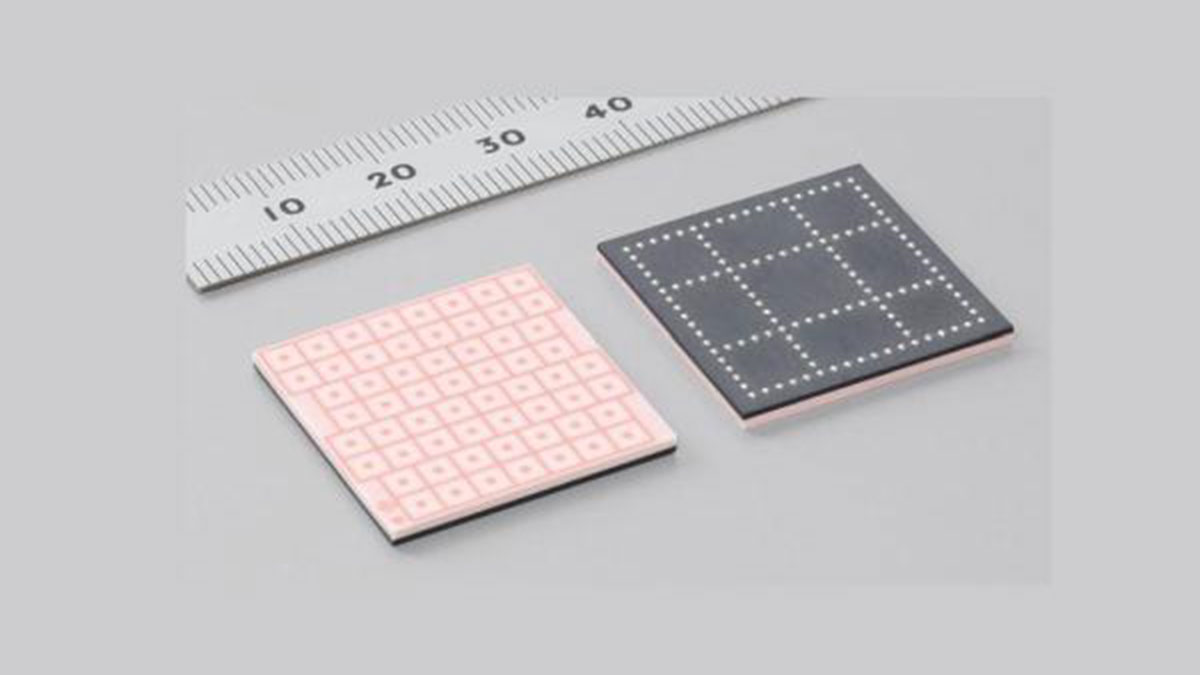
Murata has released a high gain antenna module that facilitates communication up to 4.62 Gbps. The new millimeter-wave RF antenna module will contribute to the creation of next generation wireless networks that utilise the 60 GHz frequency by supporting the IEEE802.11ad millimeter-wave wireless LAN standard.
The need is growing for faster internet communications in line with the increase in bandwidth required by internet contents such as ultra-high definition (HD, 4K) video, augmented reality (AR), and virtual reality (VR). In addition, constructing wired networks that cover wide areas requires enormous amounts of cables and labour, and the costs of constructing and maintaining this infrastructure are also considerable.
Dubbed LBKA0ZZ1NH-317, the new module is anticipated to be utilised in a wide range of applications such as for communication between mobile phone base stations including next-generation 5G wireless communication, for communication between Wi-Fi hotspots, and for use in wireless communication networks in smart cities.
Murata’s RF module realises optimised antenna beamforming using a proprietary low temperature co-fired ceramics (LTCC) circuit board capable of facilitating high-precision 60 GHz band communication. In addition to communication via a standalone module, by combining multiple modules it is possible to extend the communication range and link outdoor base stations several hundred meters apart for multi-gigabit communication. The LTCC circuit board’s high heat resistance and low moisture absorption ensure excellent operational reliability and enable use even in outdoor base station environments.
The highly efficient antenna module operation realises low transmission line loss between the IC and the antenna thanks to the low-loss material characteristics of the LTCC. The modularised RFIC and antenna package eliminates the need to design new millimeter-wave RF circuitry, which reduces the amount of labour required for developing new network equipment.
Read more: 60GHZ RF ANTENNA MODULE USES OPTIMISED ANTENNA BEAMFORMING
- What is the maximum communication speed of the new Murata module?
The module facilitates communication up to 4.62 Gbps. - Which wireless standard does the LBKA0ZZ1NH-317 support?
It supports the IEEE802.11ad millimeter-wave wireless LAN standard. - How can users extend the communication range beyond a single module?
By combining multiple modules to link outdoor base stations several hundred meters apart. - Why is the LTCC circuit board suitable for outdoor environments?
Its high heat resistance and low moisture absorption ensure excellent operational reliability. - Does this module require designing new millimeter-wave RF circuitry?
No, the modularised RFIC and antenna package eliminates the need to design new circuitry. - What types of applications are anticipated for this technology?
Applications include mobile phone base stations, Wi-Fi hotspots, and smart city wireless networks. - How does the module handle transmission line loss between the IC and antenna?
It realises low transmission line loss thanks to the low-loss material characteristics of the LTCC. - What content types drive the need for faster internet communications mentioned in the article?
Ultra-high definition video, augmented reality, and virtual reality increase bandwidth requirements.
