
Summary of XMOS VocalFusion- Background Noise Not a Problem Anymore
XMOS introduced the VocalFusion XVF3500, a voice processor featuring true stereo-AEC support for far-field linear microphone arrays. This technology enables accurate voice recognition in noisy environments, facilitating integration with Amazon Alexa and improving security and usability across various devices. The solution addresses challenges like accents and background noise, aiming to accelerate voice-enabled product deployment.
Parts used in the VocalFusion Project:
- VocalFusion XVF3500 device
- VocalFusion 4-Mic Dev Kit
- VocalFusion XVF3000 device
- Far-field linear microphone array
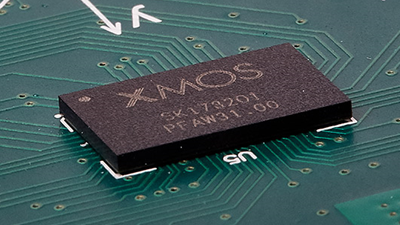
XMOS is one of the many companies that has ventured in voice recognition technology. They created the VocalFusion XVF3500 device, the first voice processor to have true stereo-AEC support in a far-field linear microphone array solution. Voice recognition is a relatively new technology for consumers which we came to know with Siri, google home, Alexa etc. However, this technology has been developed since 1950s with a very limited understanding of numbers. Nowadays, voice recognition software can answer all kind of questions, perform activities (such as calls, notes and web searches), and even answer to sarcastic questions. Experts predict that 50 % of all web searches will be made using voice by 2020.
Voice recognition is not only about not using keyboards, but also about security and usability. Thanks to software such as Siri people can now make phone calls in the car without even looking at their phone, play music and send messages. The biggest problem is accuracy specially when dealing with accents which the voice software may not be able to comprehend.
Speech recognition works by analyzing the sound, filtering what you say and digitalizing it into a form that the computer can read, and then analyzing it for meaning. It has become increasingly complex to program this kind of software because of language, dialects, accents, and phrasing. Also, background noise can easily throw off the interpretation of your speech.
At CES 2018, XMOS plans to display their new XVF3500 voice processor alongside the VocalFusion 4-Mic Dev Kit, which was the first far-field linear array solution to achieve Amazon AVS (Alexa voice service) qualification, delivering easy integration of Amazon Alexa into commercial and industrial electronics. The kit is based on the VocalFusion XVF3000 device which provides acoustic echo cancellation and advanced noise suppression. This will allow developers to build Alexa enabled products which will accelerate it’s deployment in new systems and new devices giving customers the ability to access Alexa from more places.
Read more: XMOS VocalFusion- Background Noise Not a Problem Anymore
- What is the main feature of the XVF3500 device?
It is the first voice processor to have true stereo-AEC support in a far-field linear microphone array solution. - How does speech recognition work according to the text?
It analyzes sound, filters what you say, digitalizes it into a form the computer can read, and then analyzes it for meaning. - What problem does the VocalFusion 4-Mic Dev Kit solve?
It provides acoustic echo cancellation and advanced noise suppression to handle background noise. - Which voice service did the 4-Mic Dev Kit achieve qualification for?
The kit achieved Amazon AVS (Alexa voice service) qualification. - Can developers build products using this technology?
Yes, the kit allows developers to build Alexa enabled products to accelerate deployment in new systems. - Why is programming voice software becoming increasingly complex?
Complexity arises from language, dialects, accents, phrasing, and background noise affecting interpretation. - When was voice recognition technology first developed?
Voice recognition technology has been developed since the 1950s.
