
Summary of WORLD’S FIRST MOS FET RELAY MODULE “G3VM-21MT” WITH SOLID STATE RELAY IN “T-TYPE CIRCUIT STRUCTURE”
OMRON released the G3VM-21MT MOSFET relay module (Dec 2, 2019), the first solid-state relay module using a T-type circuit structure. It integrates three MOSFET relays in a compact, surface-mount package (SPST-NO + T-switch) to minimize leakage current (1 pA max at VOFF = 20 V), enable high-precision measurements in semiconductor test equipment, reduce PCB mounting space, and extend test equipment maintenance intervals.
Parts used in the G3VM-21MT Project:
- MOS FET relay module G3VM-21MT
- T-type circuit structure (three MOS FET relays)
- Surface-mount package
- SPST-NO (1a) contact form with T-switch function
OMRON Corporation of Kyoto, western Japan globally released its new MOS FET (*1) relay module “G3VM-21MT” on December 2, 2019.
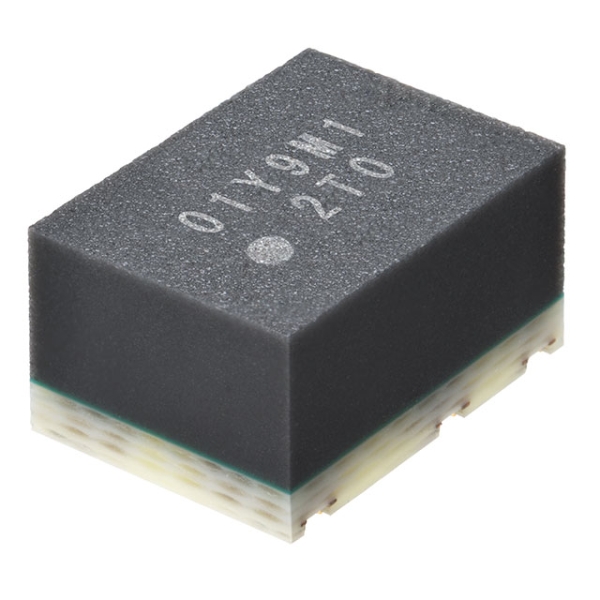
The product is the first electronic component in the world (2) to adopt a “T-type circuit structure” (3). With a T-type circuit structure consisting of compact-size and longer-lifecycle solid-state relays that output signals using no physical contact, the relay module minimizes the leakage current (*4) that has long been a problem with semiconductor test equipment. G3VM-21MT allows high-precision measurement and improves the productivity of electronic components.
Features
- Contribute to reduce the mounting space on the print circuit board by small package
- Current leakage when the main line is open and sub line is close :1 pA (Maximum) at VOFF =20 V
- Contact form: 1a (SPST-NO) + T-switch function
- Surface-mounting
G3VM-21MT enables switching measurement signals in test equipment mainly used to perform electrical tests for semiconductor devices. In addition to the MOS FET relay features of compact size and longer lifecycle, G3VM-21MT is the world’s first MOS FET relay module with “T-type circuit structure” which consists of three MOS FET relays that help reduce the leakage current to a minimal level without affecting test equipment’s inspection accuracy while allowing high-precision measurement and decreasing maintenance frequency of test equipment.
Read more: WORLD’S FIRST MOS FET RELAY MODULE “G3VM-21MT” WITH SOLID STATE RELAY IN “T-TYPE CIRCUIT STRUCTURE”
- What is the G3VM-21MT?
The G3VM-21MT is a MOS FET relay module released by OMRON that adopts a T-type circuit structure consisting of three MOS FET relays. - What is unique about the G3VM-21MT?
It is the world’s first MOS FET relay module to adopt a T-type circuit structure to minimize leakage current. - What is the maximum leakage current of the G3VM-21MT?
The maximum leakage current is 1 pA when the main line is open and the sub line is closed at VOFF = 20 V. - What contact form does the G3VM-21MT use?
It uses a 1a (SPST-NO) contact form with a T-switch function. - Is the G3VM-21MT surface-mountable?
Yes, the G3VM-21MT is surface-mounting. - What applications is the G3VM-21MT intended for?
It is intended for switching measurement signals in test equipment used to perform electrical tests for semiconductor devices. - How does the T-type circuit structure benefit test equipment?
The T-type circuit structure reduces leakage current to a minimal level, enabling high-precision measurement and reducing maintenance frequency.
