
Summary of VISHAY’S INTEGRATED RGBC-IR COLOR SENSORS WITH I²C INTERFACE IN LOW PROFILE PACKAGES
Vishay released VEML3328 (top-looking) and VEML3328SL (side-looking) RGBC-IR color sensors that sense red, green, blue, clear, and IR light on a single CMOS chip. They offer higher sensitivity, better linearity, temperature compensation, programmable gain and integration time, and an ambient light photodiode for applications like auto white balance, LCD backlight adjustment, LED color monitoring, and indoor/outdoor lighting differentiation.
Parts used in the VEML3328 RGBC-IR Color Sensor Project:
- VEML3328 (top-looking) RGBC-IR sensor
- VEML3328SL (side-looking) RGBC-IR sensor
- Integrated photodiodes (red, green, blue, clear, IR) on CMOS chip
- On-chip amplifiers
- On-chip analog circuits
- On-chip digital circuits
- Ambient light photodiode
- I2C interface (digital communication)
Vishay Intertechnology, Inc.today broadens its optoelectronics portfolio with new RGBC-IR sensors for applications such as automatic white balancing and color cast correction in digital cameras; automatic LCD backlight adjustment; and active monitoring of LED color output for IoT and smart lighting. The new VEML3328 (top-looking) and VEML3328SL (side-looking) sensors offer better linearity and higher sensitivity compared to previous generation devices, as well as new features including an infrared (IR) channel.
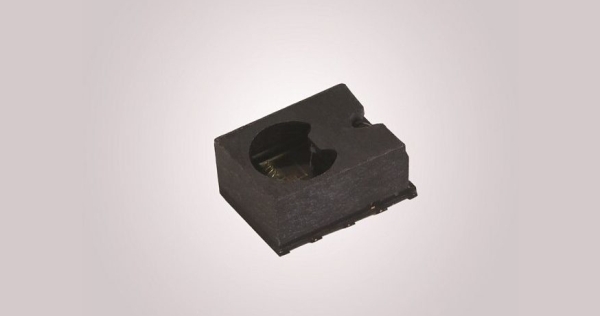
The sensors released today sense red, green, blue, clear, and IR light by incorporating photodiodes, amplifiers, and analog / digital circuits into a single CMOS chip. With the ability to calculate color temperature and sense ambient light, the devices offer a compact solution for adjusting backlighting in consumer electronics and notebook computers. They can also help to differentiate indoor from outdoor lighting environments to ensure that displays maintain consistent true color and ideal brightness levels based on the current environment lighting conditions.
In addition to digital camera and TV applications, the VEML3328 and VEML3328SL will also be used in various industrial and consumer applications where their excellent temperature compensation capability will keep the sensors’ output stable under changing temperatures.
The sensors’ built-in ambient light photodiode offers extremely high sensitivity, allowing the devices to operate in applications with dark lens designs. A programmable analog gain and integration time function, as well as the additional IR channel, allow designers to tailor the VEML3328 and VEML3328SL to their applications.
Read more: VISHAY’S INTEGRATED RGBC-IR COLOR SENSORS WITH I²C INTERFACE IN LOW PROFILE PACKAGES
- What are the primary applications for the VEML3328 and VEML3328SL?
Automatic white balancing and color cast correction in digital cameras, automatic LCD backlight adjustment, and active monitoring of LED color output for IoT and smart lighting, among other consumer and industrial uses. - What light channels do these sensors detect?
They detect red, green, blue, clear, and infrared (IR) light. - How are the photodiodes and circuitry implemented?
Photodiodes, amplifiers, and analog and digital circuits are incorporated into a single CMOS chip. - Do these sensors support ambient light sensing?
Yes, they include a built-in ambient light photodiode with extremely high sensitivity. - Can the sensors operate in devices with dark lens designs?
Yes, the high sensitivity of the ambient light photodiode allows operation in applications with dark lens designs. - Are there configurable settings for sensitivity and timing?
Yes, they offer programmable analog gain and integration time functions. - Do these sensors maintain stable output across temperature changes?
Yes, they have excellent temperature compensation capability to keep outputs stable under changing temperatures. - What interfaces do the sensors use for communication?
They use an I2C interface. - How can these sensors help display color and brightness?
By calculating color temperature and sensing ambient light, they enable compact solutions for adjusting backlighting and maintaining consistent true color and brightness based on environment lighting conditions.
