
Summary of Two-dimensional piezoelectric material forms basis of world’s thinnest electric generator
Researchers at Columbia University and Georgia Tech report the first observation of piezoelectricity in an atomically thin material. They built the world's thinnest electric generator from two-dimensional molybdenum disulfide (MoS2). Using optical methods to determine crystalline orientation, they placed single- and few-layer MoS2 on flexible substrates; only crystals with specific orientations and an odd number of atomic layers show piezoelectric behavior. The work follows prior nanogenerator advances led by co-leader Zhong Lin Wang and collaborator James Hone.
Parts used in the World’s Thinnest Electric Generator:
- Two-dimensional molybdenum disulfide (MoS2) thin layers
- Flexible plastic substrate
- Optical tools for crystal lattice orientation determination
- Electrodes or contacts for harvesting generated electricity
- Handling and transfer equipment for placing MoS2 on substrates
Researchers from Columbia University and the Georgia Institute of Technology are laying claim to having observed piezoelectricity in an atomically thin material for the first time. The effect was demonstrated in the world’s thinnest electric generator made from a two-dimensional molybdenum disulfide (MoS2) material, which had previously been predicted to exhibit such properties.
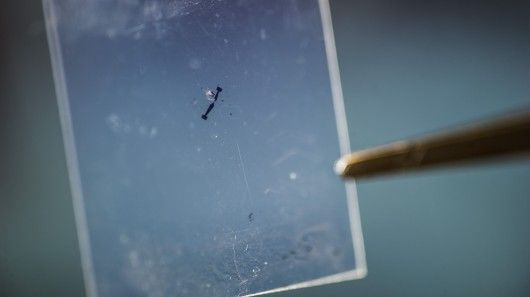
Co-leader of the research, Zhong Lin Wang, has previously been involved in developing the world’s first practical piezoelectric nanogenerator, followed by the first self-powered nanodevice with wireless data transmission, and a low-cost, large-scale nanogenerator. Now, with colleagues including fellow co-leader James Hone, Wang has been involved in developing the world’s thinnest electric generator.
The device was created by placing thin layers of MoS2, a material made up of a single layer of atoms, on flexible plastic substrates and using optical techniques to determine how the material’s crystal lattices were oriented. This process is required because MoS2‘s crystalline structure makes the material piezoelectric only in certain orientations. It is also highly polar, meaning that an odd number of atomic layers are needed to ensure the piezoelectric effect isn’t canceled out
For more detail: Two-dimensional piezoelectric material forms basis of world’s thinnest electric generator
- What material was used to make the world's thinnest electric generator?
The device was made from two-dimensional molybdenum disulfide (MoS2). - How was the MoS2 prepared or placed for the device?
Thin layers of MoS2 were placed on flexible plastic substrates. - How did researchers determine which crystals would be piezoelectric?
They used optical techniques to determine the crystal lattice orientations. - Does MoS2 always show piezoelectricity?
No; MoS2 is piezoelectric only in certain crystalline orientations and when it has an odd number of atomic layers. - Why is an odd number of layers required for piezoelectric effect in MoS2?
Because MoS2 is highly polar, an odd number of atomic layers is needed so the piezoelectric effect is not canceled out. - Who led the research on this atomically thin piezoelectric material?
The work was co-led by Zhong Lin Wang and James Hone, among others. - Is this the first observation of piezoelectricity in an atomically thin material?
Yes; the researchers claim this is the first observation of piezoelectricity in an atomically thin material. - What previous work had co-leader Zhong Lin Wang done related to nanogenerators?
He previously helped develop the first practical piezoelectric nanogenerator, the first self-powered nanodevice with wireless data transmission, and a low-cost, large-scale nanogenerator.
