
Summary of Quantum Transistor Harnesses New Effect
This article describes the development of a topological field-effect transistor (TFET) by MIT researcher Xiaofeng Qian at Texas A&M University. The device utilizes the quantum spin Hall effect in transition metal dichalcogenide (TMDC) materials thinned to three atomic layers. Unlike bulk versions, this thin sheet conducts electricity only at its edges, which can be switched on and off via an electrical gate. Crucially, electron flow direction depends on electron spin, creating a novel spintronic device confirmed by the Texas Advanced Computer Center.
Parts used in the Topological Field-Effect Transistor:
- Transition metal dichalcogenide (TMDC)
- Crystalline lattices
- Electrical gate
- Perpendicular electrical field
PORTLAND, Ore. — A new type of transistor harnesses a new effect–called the quantum spin Hall effect — to create a topological field effect transistor (TFET) according to a Massachusetts Institute of Technology (MIT) researcher who recently moved to the newly formed Department of Materials Science and Engineering at Texas A&M University where the Texas Advanced Computer Center (TACC) confirmed the researcher’s results.
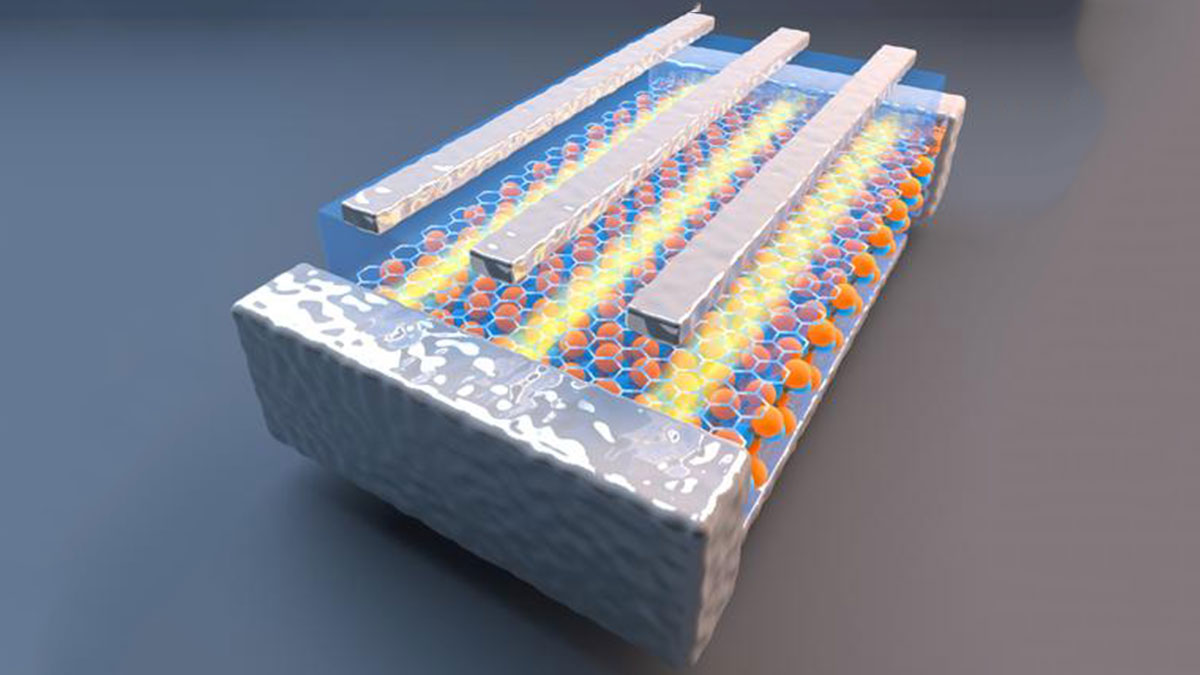
“We found that when deposited in a flat sheet just three atoms thick, our crystalline lattices exhibited a new electronic effect we call the quantum spin Hall effect,” professor Xiaofeng Qian told EE Times.
In bulk topological materials like, the transition metal dichalcogenide (TMDC) used here, they conduct on the top and bottom, but are insulators in their interiors. What Qian and colleagues discovered was that when thinned down to just three-atomic-layers thick, they conducted only on the edges and not in the middle. What’s more their conduction could be switched — turned on and off with a gate — like a normal FET just by applying a perpendicular electrical field. Even more unusual, making the TFET a spintronic device, was that the electrons conducting along the edges traveled in different directions depending upon their spin.
FOr More Details: Quantum Transistor Harnesses New Effect
- What new electronic effect does the TFET harness?
The device harnesses the quantum spin Hall effect. - How thick is the crystalline lattice layer?
The material is deposited as a flat sheet just three atoms thick. - Can the conduction be switched on and off?
Yes, conduction can be turned on and off with a gate by applying a perpendicular electrical field. - How do electrons travel along the edges?
Electrons traveling along the edges move in different directions depending upon their spin. - Where did the researcher work when confirming results?
The Texas Advanced Computer Center confirmed the results at Texas A&M University. - Does the material conduct in its interior?
No, the three-atomic-layer material conducts only on the edges and not in the middle. - What type of device does making the TFET spintronic create?
It creates a spintronic device where electron direction is determined by spin. - What happens to TMDCs in bulk form compared to thin sheets?
In bulk form they conduct on the top and bottom but are insulators in their interiors, whereas thin sheets conduct only on edges.
