
Summary of Physicists Of University of Rochester Have Created Polariton – A Particle With Negative Mass
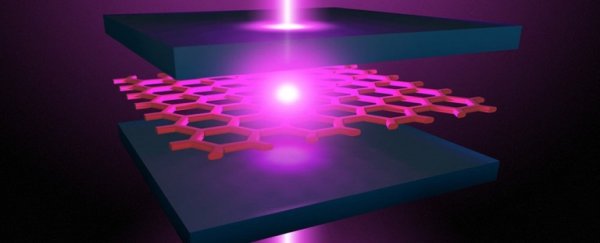
Researchers at the University of Rochester, led by Nick Vamivakas, created a device generating laser light with minimal energy using negative mass particles. This is achieved by trapping light in an optical microcavity formed by two mirrors and implanting atomically thin Molybdenum diselenide semiconductor. The interaction between captured photons and excitons from the semiconductor forms polaritons, which exhibit negative mass properties where they move toward applied forces rather than away.
Parts used in the Negative Mass Laser Device:
- Two mirrors
- Optical microcavity
- Molybdenum diselenide semiconductor
- Excitons
- Photons
- Polaritons
A group of researchers led by Nick Vamivakas from the University of Rochester has successfully produced particles which have negative mass in an atomically thin semiconductor material. According to the researchers, they have created a device that can generate LASER light using a significantly small amount of energy. All made possible with the help of this so-called negative mass particles. Quantum physicist Nick Vamivakas from Rochester’s Institute of Optics says,
It also turns out the device we’ve created presents a way to generate laser light with an incrementally small amount of power. Interesting and exciting from a physics perspective,
Mass is often observed as a resistance or response to a force. It’s harder to push and to stop a bowling ball than a marble because of the inertia associated with the mass of the object. All objects that are made of matter must have the property of ‘mass’. Even elementary particles without rest mass have something called relativistic mass. They react to an externally applied force in the way you expect them to. Particles with ‘negative mass’ however exhibit the opposite reaction to an applied force. They tend to move toward the applied force direction than to move away from it.
That’s kind of a mind-bending thing to think about because if you try to push or pull it, it will go in the opposite direction from what your intuition would tell you,” says Vamivakas.
The device they created to make negative mass consists of two mirrors. It is used to make an optical microcavity to capture light at different colors of the spectrum depending on the mirror spacing. An atomically thin Molybdenum diselenide semiconductor is then implanted into the microcavity. This interacts with the captured light. The small particles called excitons from the semiconductor combine with photons of the trapped light to form polaritons. This process of an exciton giving up its identity to a photon to produce a polariton results in an object with negative mass associated with it. Simply means when you try to push or pull it, it goes off in the opposite direction to the way you would assume.
Read more: Physicists Of University of Rochester Have Created Polariton – A Particle With Negative Mass
- How did researchers create negative mass particles?
By combining excitons from Molybdenum diselenide with trapped photons in an optical microcavity to form polaritons. - What material was implanted into the microcavity?
An atomically thin Molybdenum diselenide semiconductor was implanted into the microcavity. - Can this device generate laser light with low power?
Yes, the device can generate laser light using a significantly small amount of energy. - How do negative mass particles react to force?
They move toward the direction of the applied force instead of moving away from it. - What components make up the optical microcavity?
The optical microcavity consists of two mirrors that capture light based on mirror spacing. - What happens when excitons interact with trapped light?
Excitons combine with photons to produce polaritons that possess negative mass. - Who led the research team at the University of Rochester?
Quantum physicist Nick Vamivakas led the group of researchers. - Why is the behavior of negative mass considered mind-bending?
It defies intuition because objects move opposite to the expected direction when pushed or pulled.
