
Summary of ONIO.ZERO MICROCONTROLLER RUNS WITHOUT A BATTERY
This article highlights the limitations of traditional batteries in IoT, such as high cost, environmental harm, and short shelf life. ONiO's team developed ONiO.zero, an ultra-low-power wireless microcontroller that operates without batteries by harvesting energy from its surroundings. Unlike traditional solutions requiring 15 components, this device needs only one, significantly reducing the Bill of Materials and enabling smaller, greener designs for wearables and machine parts.
Parts used in the ONiO.zero Project:
- Ultra-low-power wireless microcontroller
- Energy harvesting technology
- Single external component (replacing 15+)
It’s becoming quite obvious that traditional batteries are limiting the progress of IoT devices. They are expensive, they contain harmful chemicals and most importantly All-Batteries-Will-Die. Vemund Kval Bakken chief technology officer and co-founder at ONiO say the real problem with the battery approach to IoT comes when you actually consider the battery shelf life as well as the environmental aspects. A battery shelf life between 5 to 10 years means that 99% of the batteries’ capacity was depleted during storage. The shelf life degrades significantly to less than 5 years in temperate regions due to much higher leakage. There are obvious solutions to this problem, you could just use a charger, or, you could use very specific battery topology or chemistry. Both make the devices quite expensive and difficult to export. They hinder the Deploy and Forget vision for IoT devices.
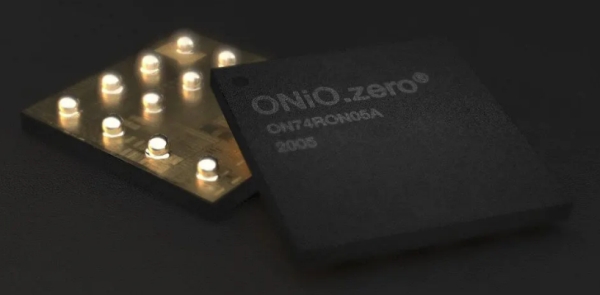
His team has created ONiO.zero to address this problem. In their own words,
ONiO.zero is an ultra-low-power wireless microcontroller that uses energy harvesting technology. It operates solely with energy from its surroundings. No coin-cell, no supercapacitor, no lithium, no battery at all”.
In practice, there are no limitations on the lifetime of the chip. Also, while traditional solutions require about 15 external components and inductors to work. ONiO requires just one. This implies tremendous savings for your Bill of Materials.
The real promises here are fewer components and smaller designs, which is needed in a wide range of solutions, watches, wearables, machine parts – you name it. But more importantly, it means greener and more climate-friendly devices.
Read more: ONIO.ZERO MICROCONTROLLER RUNS WITHOUT A BATTERY
- What problem do traditional batteries cause for IoT devices?
Traditional batteries are expensive, contain harmful chemicals, have a limited shelf life where 99% capacity is lost during storage, and hinder the Deploy and Forget vision. - How does ONiO.zero operate without a battery?
It uses energy harvesting technology to operate solely with energy from its surroundings, eliminating the need for coin-cell, supercapacitor, lithium, or any battery. - Does the chip have a lifetime limitation?
No, there are no limitations on the lifetime of the chip because it does not rely on a depleting power source. - How many components does ONiO require compared to traditional solutions?
ONiO requires just one component, whereas traditional solutions typically require about 15 external components and inductors. - What is the impact on the Bill of Materials?
The reduction from 15 components to just one implies tremendous savings for the Bill of Materials. - Can this technology be used in watches and wearables?
Yes, the smaller design and fewer components are needed for a wide range of solutions including watches, wearables, and machine parts. - Why are traditional solutions difficult to export?
Using chargers or specific battery topologies makes devices quite expensive and difficult to export. - What happens to battery capacity during storage?
A battery shelf life between 5 to 10 years means that 99% of the batteries' capacity was depleted during storage.
