News & Updates

Powering Circuits through Pulse Energy Harvesting

Powering Circuits through Pulse-Energy Harvesting

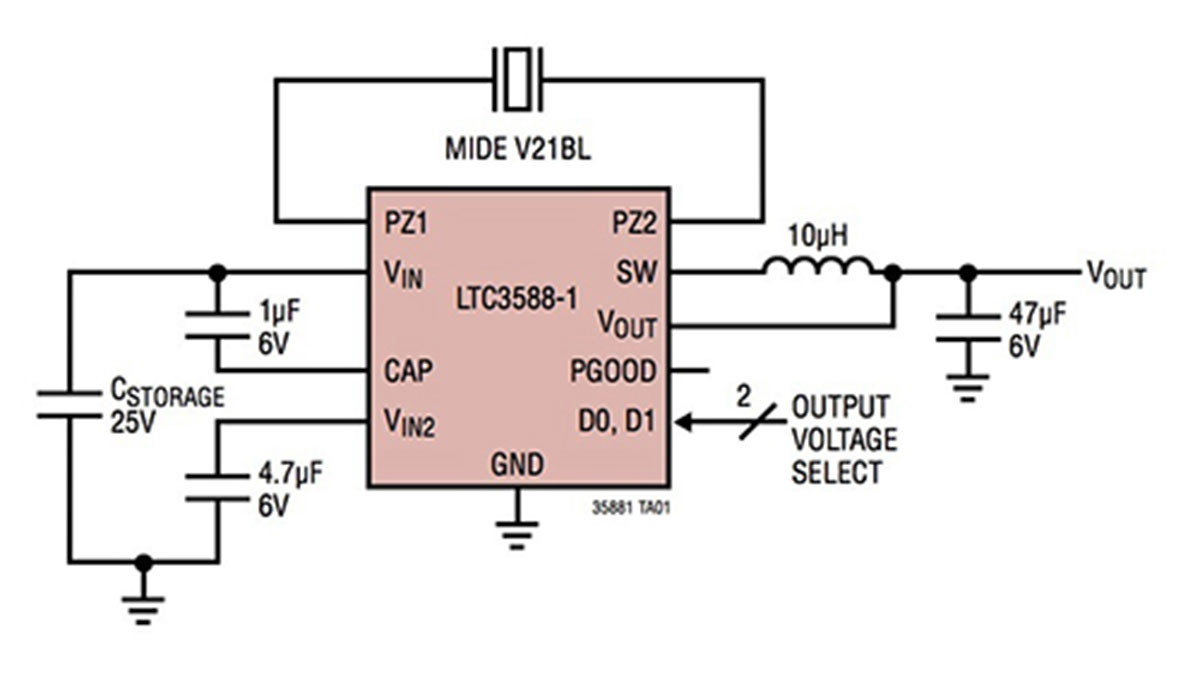
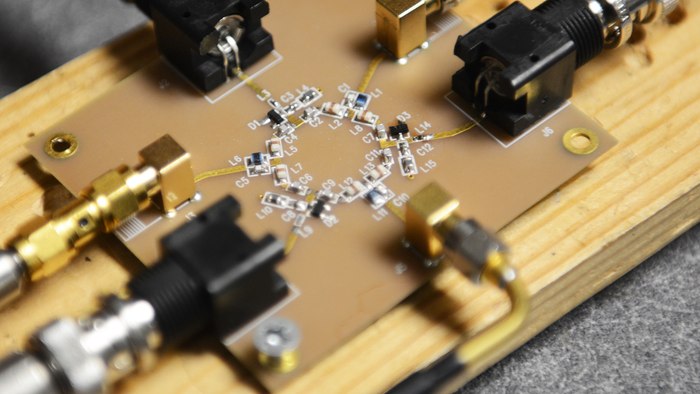
Pulse-energy-harvesting applications convert bursts of energy to sufficient power for operating simple circuits such as wireless switches, wireless data loggers, remote controls, and the like. To build these designs, engineers can draw on a wide variety of available ultra-low-power ICs and energy transducers from manufacturers including EnOcean, Linear Technology, Linx Technologies, Maxim Integrated, Measurement Specialties,

Powering Circuits through Pulse-Energy Harvesting Continue Reading

LTC4121 LTC4121 4.2 40V 400mA Synchronous Step Down Battery Charger

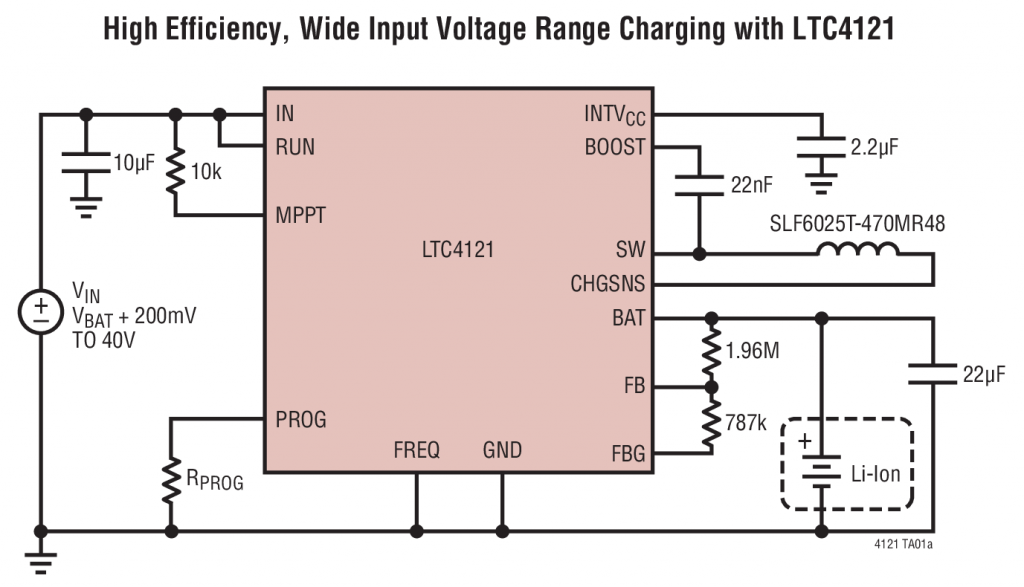
LTC4121/LTC4121-4.2 – 40V 400mA Synchronous Step-Down Battery Charger

Features Wide Input Voltage Range: 4.4V to 40V Temperature Compensated Input Voltage Regulation for Maximum Power Point Tracking (MPPT) Adjustable Float Voltage 3.5V to 18V (LTC4121) Fixed 4.2V Float Voltage Option (LTC4121-4.2) High Efficiency: Up to 95% 50mA to 400mA Programmable Charge Current ±1% Feedback Voltage Accuracy Programmable 5% Accurate Charge Current Thermally Enhanced, Low Profile (0.75mm) 16-Lead

LTC4121/LTC4121-4.2 – 40V 400mA Synchronous Step-Down Battery Charger Continue Reading

Rigol DS1000Z DS2000 Oscilloscope Jitter Problems

Rigol DS1000Z & DS2000 Oscilloscope Jitter Problems

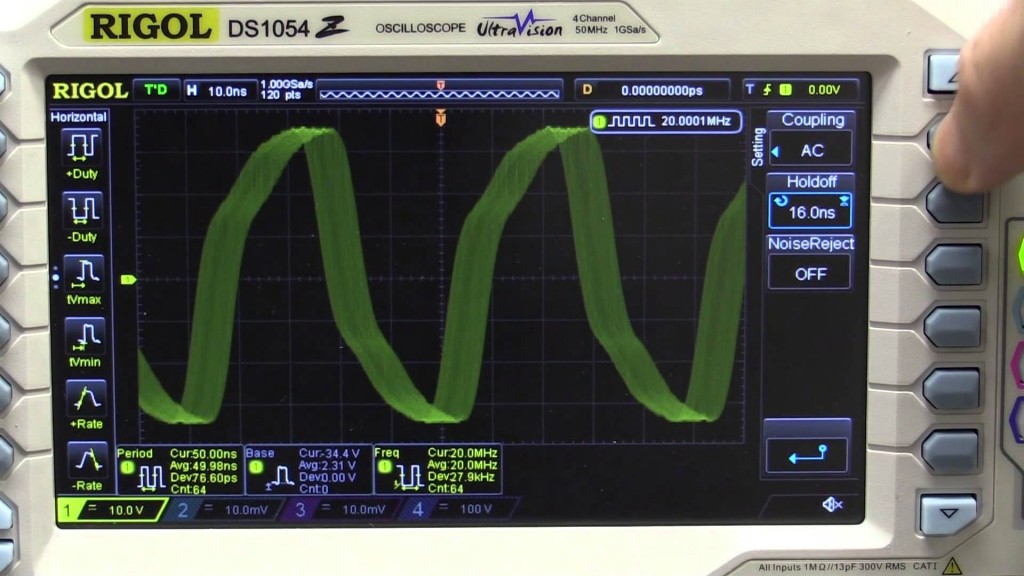
Dave investigates two very serious issues with jitter on the Rigol DS1000Z series oscilloscopes, including the DS1104Z and new DS1054Z Some sort of modulated sampling/trigger jitter problem at 5 microsecond intervals (the “5us jitter problem”). And severe jitter with the AC coupled trigger mode, a problem which is also present on the DS2000 series scopes

Rigol DS1000Z & DS2000 Oscilloscope Jitter Problems Continue Reading

New technique for generating electricity from mechanical vibrations

New technique for generating electricity from mechanical vibrations

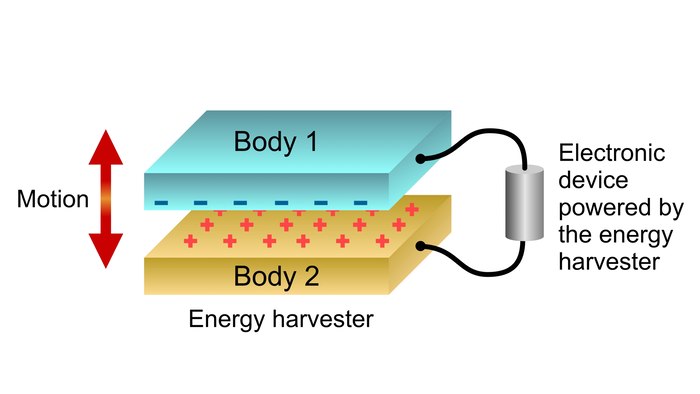
Electrical energy is normally generated through heat, motion, nuclear transformation, or chemical reactions, but now scientists at VTT Technical Research Center of Finland have devised a new method that involves mechanical vibrations. They figured out how to “harvest” the vibrational energy that occurs naturally when two surfaces with different work functions are connected via electrodes,

New technique for generating electricity from mechanical vibrations Continue Reading

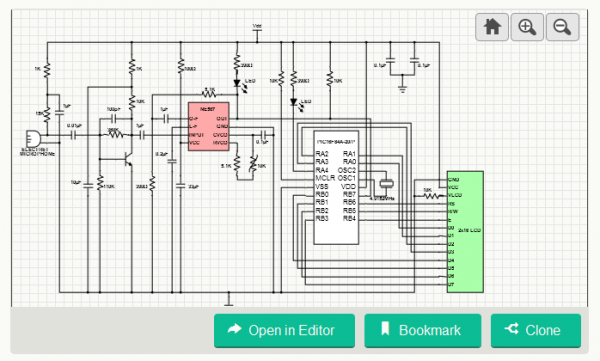
Morse Code Decoder

Morse Code Decoder

Morse code is used in telecommunication; it is a method of transmitting and receiving coded information. Each character (letter or numeral) is coded/represented by a unique sequence of dots and dashes. Compared to voice, Morse code is less sensitive to poor signal conditions, yet still comprehensible to humans without a decoding device, therefore, a useful

Morse Code Decoder Continue Reading

Scroll to Top