
Summary of A new type of glass could double your smartphone’s battery life
Researchers at ETH Zurich developed vanadate-borate glass to enhance lithium-ion battery performance. By combining powdered vanadium pentoxide with borate compounds, they created a stable electrode material that overcomes the instability issues of traditional crystalline vanadium-based cathodes. This innovation promises to nearly double smartphone battery life and significantly extend electric vehicle range, offering a simple and inexpensive manufacturing solution for longer-lasting energy storage.
Parts used in the Vanadate-Borate Glass Battery Project:
- Vanadium pentoxide
- Borate compounds
- Lithium-ion batteries
The batteries inside our smartphones and laptops are fighting a losing battle when it comes to keeping these devices juiced up, but researchers from ETH Zurich have discovered a new type of glass material that could make a major difference: vanadate-borate glass. The glass can be used as an electrode material in lithium-ion batteries to almost double the amount of time they last between charges.
Scientists Semih Afyon and Reinhard Nesper are responsible for leading a the team of ETH researchers to the discovery, which has been several years in the making, and it could have a substantial impact in the way devices large and small are powered in the future.
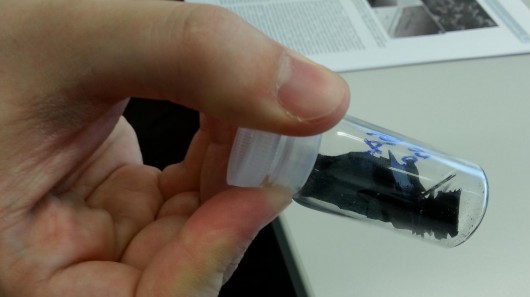
Various challenges had to be overcome to find a material that could both store battery capacity effectively and take a frequent number of charge cycles, while staying stable enough to be viable for use in modern-day electronics.
Chief among these challenges was to harness the potential of vanadium-based compounds, which can take more charge than materials currently used in cathodes, but become unstable after a few charge/discharge cycles because of their crystalline structure. To overcome this, the researchers mixed powdered vanadium pentoxide with borate compounds to create vanadate-borate glass – a material with a high capacity and stable structure that, according to Dr Afyon, is also simple and inexpensive to manufacture.
“What we need is new chemistry and novel compounds to obtain safe, better and longer-lasting batteries,” says Dr Afyon of the motivations behind the research. He added that the vanadate-borate glass compound his team has developed could extend smartphone battery life by 1.5 to 2 times and allow electric cars to travel 1.5 times further, though these numbers are still theoretical projections for now.
For More Details: A new type of glass could double your smartphone’s battery life
- What material did ETH Zurich researchers discover?
They discovered a new type of glass material called vanadate-borate glass. - How can this glass affect smartphone battery life?
The compound could extend smartphone battery life by 1.5 to 2 times. - Why were vanadium-based compounds difficult to use previously?
They become unstable after a few charge/discharge cycles due to their crystalline structure. - How was the stability issue solved?
Researchers mixed powdered vanadium pentoxide with borate compounds to create a stable glass structure. - Is the new manufacturing process expensive?
No, Dr Afyon states the material is simple and inexpensive to manufacture. - What impact could this have on electric cars?
It could allow electric cars to travel 1.5 times further based on theoretical projections. - Who led the research team at ETH Zurich?
Scientists Semih Afyon and Reinhard Nesper led the team. - What specific component serves as the electrode in this project?
The vanadate-borate glass is used as an electrode material in lithium-ion batteries.
