
Summary of MOKEYLASER: A DIY LASER ENGRAVER THAT YOU CAN EASILY BUILD
Mark aka Mokey built MokeyLaser, a DIY X-Y laser engraver using Fusion 360 models, 2040 aluminum extrusion framing, an Arduino+CNC shield running GRBL, and a Sainsmart FL55 5.5W laser module. The project includes full F360 source and a bill of materials (~$400). Planned upgrades: a modern 32-bit controller, a more powerful laser, and air assist to improve cutting. Sources and files are on the mokeylaser GitHub, and a build video is available.
Parts used in the MokeyLaser:
- 2040 aluminum extrusions
- Sainsmart FL55 5.5W laser module
- Arduino (with CNC shield)
- CNC shield
- GRBL firmware
- Fusion 360 source files (mokeylaser GitHub)
- Linear motion components for X-Y bot (rails, belts, pulleys as typical for 2040 builds)
- Fasteners and brackets for extrusion assembly
- Power supply appropriate for laser and electronics
- Miscellaneous wiring and connectors
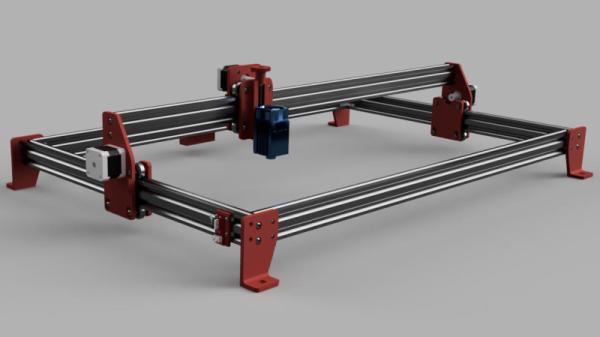
Obviously, MokeyLaser is by no means the only such beast we’ve featured, here’s the engravinator for starters. For even more minimalism, we covered a build with some smart optics doing all the work. But what if you don’t happen to have a 5W laser module “lying around” then perhaps try a more natural heat source instead?
Source: MOKEYLASER: A DIY LASER ENGRAVER THAT YOU CAN EASILY BUILD
- What did Mark use for the frame of MokeyLaser?
He based the frame on 2040 aluminum extrusions. - Which laser module was used in the build?
He used a Sainsmart FL55 5.5W laser module. - What controller hardware and firmware does MokeyLaser use?
An Arduino with a CNC shield running GRBL. - How much does the bill of materials for MokeyLaser cost approximately?
The bill of materials is about $400. - Where can I find the Fusion 360 source files and BOM?
The full Fusion 360 source and bill of materials are on the mokeylaser GitHub. - What upgrades does Mark plan for MokeyLaser?
He plans to upgrade to a more modern 32-bit controller, use a more powerful laser, and add air assist. - Why is air assist recommended for the build?
Air assist clears smoke from the beam path and increases laser penetration, improving cutting performance. - Is MokeyLaser intended as a final product or a starting point?
It is presented as a reasonable starting point for further development.
