
Summary of HIGH DEMAND FOR IMAGE PROCESSING SYSTEMS IN THE MEDICAL SECTOR
This article highlights the critical role of image processing and AI in healthcare, particularly for mass screening during health crises like the coronavirus pandemic. It details a specific non-contact thermal imaging system used by a British company to detect elevated body temperatures in real-time at high-traffic locations such as airports. The system combines thermal cameras with visible light sensors to ensure accurate identification of symptomatic individuals without physical contact.
Parts used in the FevIR Scan 2 System:
- Thermal imaging camera
- Visible USB 2 uEye LE CMOS camera (UI-1642LE-C model)
- Sealed housing unit
- Laptop PC running Thermoteknix FevIR Scan 2 software
- Thermal reference source with constant temperature
- 1.3 megapixel CMOS sensor from ON Semiconductor
Health has become the dominant topic worldwide. Research and development to protect the physical well-being of each individual as well as the entire population have an unprecedented significance. More than ever, laboratories and pharmaceutical companies are striving to accelerate their processes, for example by increasing the throughput of tests or speeding up the production and distribution of medicines. Airports are making increasing use of access controls, whether in the form of ID checks or temperature measurement devices, to identify travelers with symptoms of illness.
In all these areas, image processing can make an important contribution to protecting people and thus also saving lives. The possible applications are already almost unlimited and are becoming increasingly diverse in the age of Industry 4.0 – not least due to the use of artificial intelligence.
A British company is currently using IDS cameras together with thermal imaging cameras to detect people with elevated temperatures and so potentially have the corona virus. The non-contact thermal imaging and measurement system designed for mass screening, detects temperature differences of less than 0.6 °C and with an accuracy of less than 0.3 °C. “The Thermoteknix FevIR Scan software tracks people in real time as they walk in front of the camera and shows their maximum face temperature on screen,” Richard Hames, Sales Director at Thermoteknix Systems Ltd., explains.
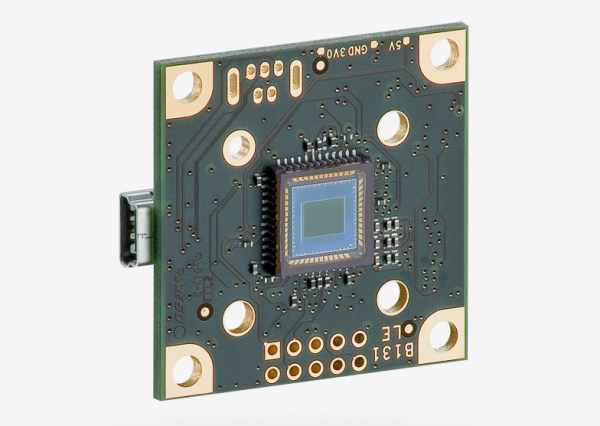
The so-called FevIR Scan 2 system consists of a thermal imaging camera and a visible USB 2 uEye LE CMOS camera in a sealed housing that is connected to a laptop PC running Thermoteknix FevIR Scan 2 software. The USB 2.0 uEye LE board-level version is particularly lightweight and compact – ideal for finding a place next to the thermal imaging camera in the small FevIR Scan 2 housing. A thermal reference source with constant temperature is included in front of the thermal imaging camera. It allows for constantly calibration of the thermal imager for accurate temperature measurement to detect persons with elevated skin temperature. The UI-1642LE-C model is used to detect people passing through the system. It is equipped with a 1.3 megapixel CMOS sensor from ON Semiconductor, which has a resolution of 1280 x 1024 pixels and a frame rate of 25 frames per second. This frame rate enables screening in places with a high volume of people, such as airports or entrance halls.
Source: HIGH DEMAND FOR IMAGE PROCESSING SYSTEMS IN THE MEDICAL SECTOR
- How does the system identify people with symptoms?
The system uses non-contact thermal imaging to detect temperature differences of less than 0.6 °C with an accuracy of less than 0.3 °C. - What software tracks people in real time?
Thermoteknix FevIR Scan software tracks people as they walk in front of the camera and displays their maximum face temperature. - Can the system be used in high volume areas?
Yes, its frame rate of 25 frames per second enables screening in places with high traffic like airports or entrance halls. - What is the purpose of the thermal reference source?
The thermal reference source provides a constant temperature to allow for continuous calibration of the thermal imager for accurate measurements. - Does the system require physical contact to measure temperature?
No, it is a non-contact thermal imaging and measurement system designed for mass screening. - What resolution does the visible camera have?
The UI-1642LE-C model features a resolution of 1280 x 1024 pixels using a 1.3 megapixel CMOS sensor. - Why is the USB 2.0 uEye LE version chosen?
This board-level version is lightweight and compact, making it ideal for placement next to the thermal imaging camera in the small housing. - Who explains the functionality of the tracking software?
Richard Hames, Sales Director at Thermoteknix Systems Ltd., explains how the software shows maximum face temperatures on screen.
