
Summary of GENIATECH LAUNCHES AI-ENHANCED RK3399PRO BASED SBC AND 5 OTHERS
Geniatech launched the DB3399 Pro and standard DB3399 single-board computers (SBCs) powered by RK3399Pro and RK3399 SoCs, respectively. The Pro model features an integrated Neural Network Processing Unit (NPU) for AI tasks and runs Android 8.0 with up to 6GB LPDDR3 memory. The standard DB3399 lacks the NPU, runs Android 7.1, uses LPDDR4, and omits specific ports like RS232 and SATA found on the Pro version. Both boards support extensive media interfaces including HDMI, MIPI-DSI, and USB Type-C.
Parts used in the Geniatech DB3399 Project:
- RK3399Pro SoC
- RK3399 SoC
- Cortex-A72 CPU cores
- Cortex-A53 CPU cores
- Mali-T860 GPU
- Neural Network Processing Unit (NPU)
- LPDDR3 Memory
- LPDDR4 Memory
- eMMC Storage
- Android Operating System
- HDMI In/Out ports
- eDP Interface
- MIPI-DSI Interface
- USB Type-C port
- MIPI-CSI Camera Interfaces
- GbE Port with Power-over-Ethernet
- WiFi-ac module
- Bluetooth 4.2 module
Geniatech has posted about the launch of their DB3399 and DB3399 Pro SBCs equipped with the RK3399 and RK3399Pro SoCs, and their specifications. The Android 8.0-powered DB3399 Pro SBC runs the new AI-enhanced RK3399Pro version of the hexacore SoC. A similar DB3399 SBC is also launched with the standard RK3399 SoC, as well as a smaller, RK3399-based Developer Board 9 (DB9) SBC.
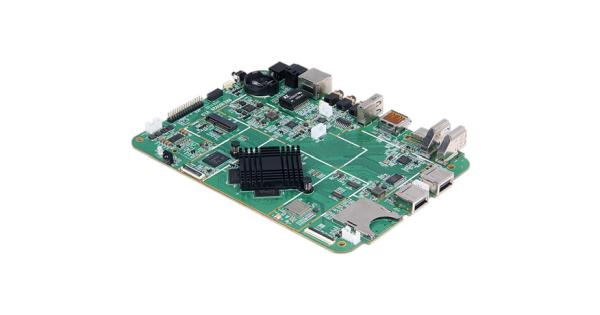
The DB3399 Pro is quite powerful as it’s based on the RK3399Pro SoCs – the same SoC that also drives Vamrs’Toybrick RK3399Pro, as well as the upcoming, crowdfunded Khadas Edge-1S SBC from Shenzhen Wesion’s Khadas project. The RK3399Pro is the same as the original RK3399 SoC with 2x 1.8GHz Cortex-A72, 4x 1.4GHz -A53, and a Mali-T860 GPU, except for the addition of an up to 3.0-TOPS performing Neural Network Processing Unit (NPU). The NPU supports Tensorflow, Tensorflow Lite, Caffe, and other deep learning models.
The DB3399 Pro is powered by Android 8.0 and is equipped with 3GB to 6GB LPDDR3 and 8GB to 32GB eMMC. The similar DB3399 board is a lower-spec version of the Pro one. It’s listed with Android 7.1 and offers 2GB to 6GB LPDDR4. The DB3399 defaults to 16GB eMMC, although you can purchase it with 8GB or 32GB. It lacks the Pro model’s RS232 and SATA ports, as well as its GPS, UART, and reset button. There are 5x USB 2.0 interfaces instead of six. A GbE port with Power-over-Ethernet (PoE) is available along with WiFi-ac and Bluetooth 4.2.
Media features include HDMI in and out ports, eDP, and MIPI-DSI interfaces, and a USB Type-C port with DisplayPort support. You also get 2x MIPI-CSI for attaching camera modules, plus SPDIF, a speaker, and several analog audio jacks.
Read more: GENIATECH LAUNCHES AI-ENHANCED RK3399PRO BASED SBC AND 5 OTHERS
- What is the main difference between the DB3399 and DB3399 Pro?
The DB3399 Pro includes a Neural Network Processing Unit (NPU) for AI tasks and runs Android 8.0, while the standard DB3399 lacks the NPU and runs Android 7.1. - Does the RK3399Pro SoC support deep learning models?
Yes, the NPU supports Tensorflow, Tensorflow Lite, Caffe, and other deep learning models. - How much memory does the DB3399 Pro support?
The DB3399 Pro is equipped with 3GB to 6GB of LPDDR3 memory. - Can the DB3399 board use Power-over-Ethernet?
Yes, both boards feature a GbE port with Power-over-Ethernet (PoE) capability. - What video interfaces are available on these SBCs?
The boards include HDMI in and out ports, eDP, MIPI-DSI interfaces, and a USB Type-C port with DisplayPort support. - Which camera interfaces do the DB3399 series offer?
You get 2x MIPI-CSI interfaces for attaching camera modules. - Does the standard DB3399 have an RS232 port?
No, the standard DB3399 lacks the RS232 port found on the Pro model. - What wireless connectivity options are included?
The boards come with WiFi-ac and Bluetooth 4.2 capabilities.
