
Summary of FAST PAPER TAPE FOR THE NUCLEAR FAMILY
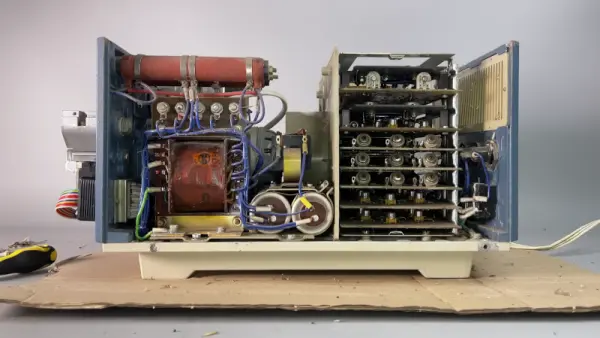
This article explores a high-speed paper tape reader from the Chornobyl nuclear reactor control system, capable of processing 1,500 data units per second. After decades in a chicken shed, the device was restored through cleaning and painting. Unlike brush-based readers, this unit utilized light sensors for speed and featured a large motor driving both a cooling fan and a tape transport mechanism similar to a 3D printer extruder.
Parts used in the Paper Tape Reader:
- Light sensors
- Large motor
- Cooling fan
- Tape transport mechanism
We’ve enjoyed several videos from [Chornobyl Family] about the computers that controlled the ill-fated nuclear reactor in Chornobyl (or Chernobyl, as it was spelled at the time of the accident). This time (see the video below) they are looking at a high-speed data storage device. You don’t normally think of high-speed and paper tape as going together, but this paper tape reader runs an astonishing 1,500 data units per second. Ok, so that’s not especially fast by today’s standards, but an ASR33, for example, did about 10 characters per second.
An IBM2400 tape drive, for reference, could transfer at least 10 times that amount of data in a second, and a 3400 could do even better. But this is paper tape. Magnetic tape had much higher density and used special tricks to get higher speeds mechanically using vacuum columns. It was still a pretty good trick to move 4 meters of paper tape a second through the machine.
The reader needed a bit of TLC after spending decades stored in a chicken shed. What do you think it looked like after living with the chickens? Yep. That’s exactly what it looked like. Cleaning and painting ensued.
Most tape readers used either brushes to sense the holes or light sensors. This reader used light sensors because you can more easily reach high speeds with that technique. Also inside is a very large motor that runs a fan to cool the electronics. The same motor pulls the tape through the path using a mechanism that reminded us of a cheap 3D printer extruder.
And move it does. You can see the machine chew through a tape at the end of the video. A lot different than watching an ASR33 or Flexowriter reading a tape. Making a paper tape reader today isn’t very hard — and you could probably just use a webcam and some vision software. Paper tape wasn’t just for computers. They ran CNC machines, typesetters, and even taught Morse code.
Source: FAST PAPER TAPE FOR THE NUCLEAR FAMILY
- How fast does this paper tape reader operate?
The reader runs at an astonishing 1,500 data units per second. - Does this machine use brushes or light sensors?
This specific reader uses light sensors because they allow for higher speeds. - What is the function of the large motor inside the device?
The motor runs a fan to cool the electronics and pulls the tape through the path. - How does the tape transport mechanism compare to other devices?
The mechanism that pulls the tape reminded observers of a cheap 3D printer extruder. - Can you make a paper tape reader today using modern tools?
Making one today is not very hard and could be done with a webcam and vision software. - Did paper tape have uses beyond computers?
Paper tape also ran CNC machines, typesetters, and taught Morse code. - How did the storage conditions affect the device?
The reader spent decades stored in a chicken shed and required cleaning and painting after restoration.
