
Summary of BUILDING A COMPACT REFLOW OVEN WITH HALOGEN LAMPS
This article details a compact reflow oven designed by [Sergi Martínez] for small PCB runs and limited workshop spaces. Unlike previous attempts with water-based heating elements, this build utilizes halogen lamps for superior performance and lower thermal inertia. The system is controlled by an Arduino Nano running specific firmware, featuring a display for profile monitoring and a cooling fan to maintain optimal temperatures. This approach offers energy efficiency and faster heating cycles compared to larger ovens or classic toaster builds.
Parts used in the Compact Reflow Oven:
- Metal project case
- Halogen lamps
- Arduino Nano
- Firmware developed by 0xPIT
- Screen for monitoring profiles
- Cooling fan
Very often, particularly on the Internet, we’re fooled into thinking bigger is always better. The fact remains that this isn’t always the case. When it comes to reflow ovens, for example if you’re working with short runs of small PCBs, or if you just don’t have a lot of space in the workshop, a smaller oven will be more desirable than a large one. It’s factors like these that drove [Sergi Martínez]’s latest build.
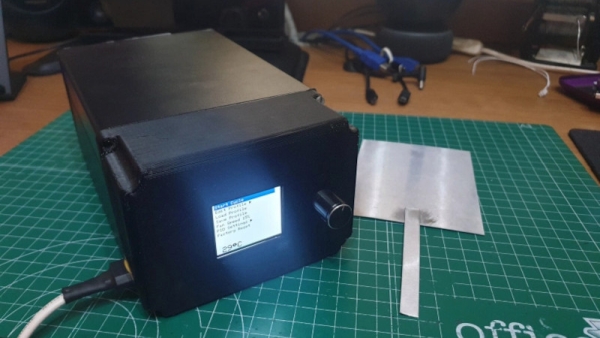
Built inside a metal project case, first attempts involved using an off-the-shelf heating element, with poor results. The element had a high thermal inertia, and was designed for use in water, so didn’t last in the reflow application. Learning from the experience of others, [Sergi] switched to using halogen lamps, netting much greater success. An Arduino Nano is responsible for running the show, using firmware developed by [0xPIT]. There’s also a screen for monitoring reflow profiles, and a cooling fan to help keep temperature in the ideal zone.
It’s a tidy build that would be particularly useful for quickly running batches of small PCBs without the long wait times required to heat a larger oven. Energy efficiency should be better, too. Of course, if you’re a fan of the classic toaster oven builds, we’ve got those too. Video after the break.
Source: BUILDING A COMPACT REFLOW OVEN WITH HALOGEN LAMPS
- Why choose a smaller reflow oven over a large one?
A smaller oven is more desirable for short runs of small PCBs or when there is limited space in the workshop. - What type of heating element was initially tried but failed?
The first attempt used an off-the-shelf heating element designed for water, which had high thermal inertia and did not last. - What component replaced the failed heating element?
Halogen lamps were switched in to achieve much greater success and better performance. - What microcontroller controls the reflow oven?
An Arduino Nano is responsible for running the entire system. - Who developed the firmware for the Arduino Nano?
The firmware was developed by 0xPIT. - What feature helps keep the temperature in the ideal zone?
A cooling fan is included to help regulate and maintain the ideal temperature zone. - Does this build offer energy efficiency benefits?
Yes, the design suggests that energy efficiency should be better than other options.
