
Summary of AIR VELOCITY SENSORS WITH DIGITAL I2C OUTPUT FOR THERMAL MANAGEMENT AND FILTER MONITORING APPLICATIONS
Posifa Technologies introduced the PAV3000 series: compact, surface-mount, MEMS-based air velocity sensors with digital I2C output. They offer fast 125 ms response, solid-state sensing with no moving parts, resistance to clogging and pressure shock, and accurate, repeatable measurements (1% FS repeatability, 5% FS accuracy). Available for 7 m/s (PAV3005V) and 15 m/s (PAV3015V), they operate from 5–5.5 V, draw 20 mA, and function from −25 °C to +85 °C. Targets include thermal management and filter monitoring in space-constrained applications like data centers and HVAC.
Parts used in the PAV3000 series:
- PAV3005V sensor (7 m/s measurement)
- PAV3015V sensor (15 m/s measurement)
- MEMS thermal flow die with pair of thermopiles
- Surface-mount package
- I2C digital output interface
- Solid-state thermal isolation structure
Posifa Technologies announced the new PAV3000 series of economical, high-performance air velocity sensors with digital I2C output and a surface-mount footprint for thermal management and filter monitoring in even the most space-constrained locations. Unlike thermistor-based solutions, the PAV3000 has a MEMS sensor core that is minimally affected by ambient temperature changes and which provides instant real-time feedback on proper air flow at critical locations.
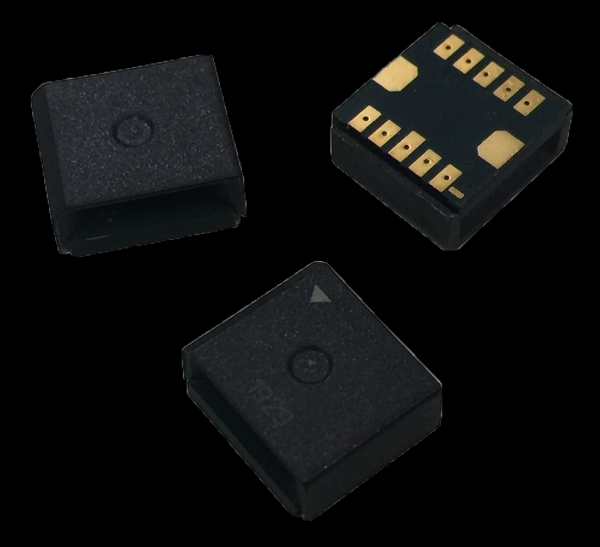
Air velocity data perfectly complement temperature information to provide the best insight into thermal efficiency. Because the PAV3000 helps identify areas that require unusually high air flow to maintain stable temperatures, layouts for rack enclosures with air cooling – such as those found in data centers – can be modified to reduce cooling demands for increased energy savings. In applications such as HVAC systems, air velocity measurements can be used to determine when filters need to be replaced. This ensures hardware is adequately protected during heavy use, and it allows customers with light usage requirements to benefit from extended change intervals.
Key Specifications And Benefits:
- Digital I2C output
- Compact, robust surface-mount package
- Solid-state sensing core
- No moving parts
- Eliminates the need for a surface cavity or fragile membrane
- Resistant to clogging and pressure shock
- Feature Posifa’s third-generation thermal flow die
- Measure air velocity at 7 m/s (PAV3005V) and 15 m/s (PAV3015V)
- Extremely fast response times of 125 ms typical
- Excellent repeatability of 1 % FS
- High accuracy of 5 % FS
- Supply voltage from 5 VDC to 5.5 VDC
- Supply current of 20 mA
- Operating temperature range of -25 °C to +85 °C temperature range
PAV3000 series devices feature Posifa’s third-generation thermal flow die, which uses a pair of thermopiles to detect changes in temperature gradient caused by mass flow. The result is excellent repeatability of 1% FS and an accuracy of 5% FS. The solid-state thermal isolation structure on the sensor die eliminates the need for a surface cavity or the fragile membrane used in competing technologies, making the sensor resistant to clogging and pressure shock.
- What output interface do PAV3000 series sensors use?
They use a digital I2C output. - Do PAV3000 sensors have moving parts?
No, they have a solid-state sensing core with no moving parts. - What are the available measurement ranges for the PAV3000 series?
PAV3005V measures up to 7 m/s and PAV3015V measures up to 15 m/s. - How fast is the response time of the PAV3000 sensors?
They have an extremely fast typical response time of 125 ms. - What accuracy and repeatability do the sensors provide?
They provide excellent repeatability of 1% FS and accuracy of 5% FS. - What supply voltage and current do the PAV3000 sensors require?
They require 5 VDC to 5.5 VDC supply and draw 20 mA. - What operating temperature range do PAV3000 sensors support?
The operating temperature range is −25 °C to +85 °C. - Why are PAV3000 sensors resistant to clogging and pressure shock?
Because the sensor die uses a solid-state thermal isolation structure and no fragile membrane or surface cavity.
