
Summary of A NEW DUAL CHANNEL TEMPERATURE SENSOR WITH RESISTOR PROGRAMMABLE TEMPERATURE SWITCHES
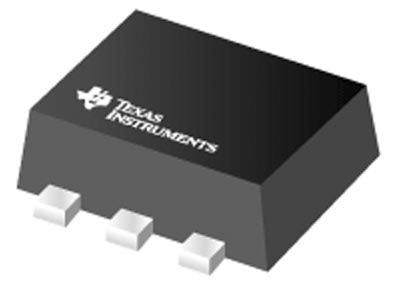
Texas Instruments announced the TMP390-Q1, an AEC‑Q100 qualified dual-channel, ultra-low-power temperature switch that uses two E96-series resistors to program independent trip temperatures and shared hysteresis (5 °C or 10 °C) for overtemperature and undertemperature detection across −40 °C to +125 °C. It offers high accuracy without calibration, 0.5 μA typical supply current, open-drain outputs, a trip-test function for board-level testing, and comes in a 6‑pin SOT‑563 package.
Parts used in the TMP390-Q1 Project:
- TMP390-Q1 IC (dual-channel resistor programmable temperature switch)
- E96-series resistor for SETA (1% tolerance, 1.05 kΩ to 909 kΩ)
- E96-series resistor for SETB (1% tolerance, 1.05 kΩ to 909 kΩ)
- Supply voltage source (1.62 V to 5.5 V)
- Pull-up resistor(s) for open-drain outputs (as required by system design)
- PCB and connectors for SOT-563 (1.60 mm × 1.20 mm) 6-pin package
- Ground reference for SETA and SETB resistor connections
Texas Instruments has announced a new IC that is a part of family of ultra-low power, dual channel, resistor programmable temperature switches that enable protection and detection of system thermal events from –40 °C to 125 °C. The TMP390-Q1 offers independent overtemperature (hot) and undertemperature (cold) detection. The trip temperatures (TTRIP) and thermal hysteresis (THYST) options are programmed by two E96-series resistors (1% tolerance) on the SETA and SETB pins. Each resistor can range from 1.05 kΩ to 909 kΩ, representing one of 48 unique values.
The values of the resistor to ground on SETA input sets the TTRIP threshold of Channel A. The value of the resistor to ground on SETB input sets the TTRIP threshold of Channel B, as well as the THYST options of 5 °C, or 10 °C for both channels, to prevent undesired digital output switching. Resistors accuracy has no impact to TTRIP accuracy.
To enable customer board-level manufacturing, the TMP390-Q1 supports a trip test function where the digital outputs are activated by exercising the SETA or SETB pin.
Features
- AEC-Q100 qualified with the following results:
- Temperature grade 1: –40 °C to +125 °C operating temperature range
- Resistor programmable temperature trip points and hysteresis options
- Resistor tolerances contribute zero error
- Hysteresis options: 5 °C, and 10 °C
- Separate outputs for overtemperature or undertemperature detection
- Channel A (overtemperature): +30 to +124 °C, 2 °C steps
- Channel B (undertemperature): –50 to +25 °C, 5 °C steps
- Accuracy without calibration
- ±1.5 °C (maximum) from 0 °C to +70 °C
- ±3.0 °C (maximum) from –40 °C to +125 °C
- Ultra-low power consumption: 0.5 μA typical at 25 °C
- Supply voltage: 1.62 to 5.5 V
- Open-drain outputs
- Trip test function enables in-system testing
- Available in an SOT-563 (1.60-mm × 1.20-mm), 6-pin package
Read more: A NEW DUAL CHANNEL TEMPERATURE SENSOR WITH RESISTOR PROGRAMMABLE TEMPERATURE SWITCHES
- What temperature range does the TMP390-Q1 support?
The device operates over −40 °C to +125 °C (temperature grade 1). - How are trip temperatures programmed on the TMP390-Q1?
Trip temperatures are set by two E96-series resistors connected to SETA and SETB pins. - What hysteresis options are available and how are they selected?
Hysteresis options of 5 °C or 10 °C are selected by the resistor value on the SETB pin and apply to both channels. - Does resistor tolerance affect TTRIP accuracy?
No, resistor tolerances contribute zero error to TTRIP accuracy. - What are the trip temperature ranges and step sizes for each channel?
Channel A (overtemperature) supports +30 to +124 °C in 2 °C steps; Channel B (undertemperature) supports −50 to +25 °C in 5 °C steps. - What accuracy can be expected without calibration?
±1.5 °C maximum from 0 °C to +70 °C, and ±3.0 °C maximum from −40 °C to +125 °C. - What is the typical power consumption of the TMP390-Q1?
Typical supply current is 0.5 μA at 25 °C. - What supply voltage range does the TMP390-Q1 support?
The device supports a supply voltage from 1.62 V to 5.5 V. - Are the outputs push-pull or open-drain?
The TMP390-Q1 provides open-drain outputs. - Is there a way to perform in-system testing of the trip function?
Yes, the device supports a trip test function that activates digital outputs by exercising SETA or SETB pins for board-level testing.
